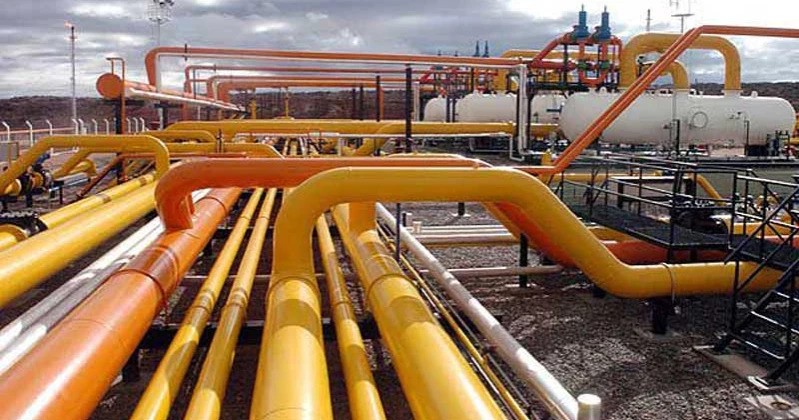

Padma Oil Company is set to begin supplying jet fuel directly to Shah Amanat International Airport in Chattogram through a dedicated pipeline from its Patenga depot on September 23, marking the first time any airport in Bangladesh will receive aviation fuel via pipeline.
The formal inauguration will take place on September 23 with Energy Secretary Mohammad Saiful Islam as chief guest.
“This is a milestone for the country’s energy sector. No other airport has such a facility,” said Padma Oil Managing Director Md. Mofizur Rahman.
Ahead of the launch, about 350,000 litres of jet fuel were successfully supplied on a trial basis between September 10 and 11 through the new line.

According to Padma Oil Company, Shah Amanat International Airport consumes an average of 200,000 to 250,000 liters of jet fuel daily, with demand rising to about 300,000 litres during the annual Hajj season.
Project Director and Assistant General Manager (Engineering) of Padma Oil, Anup Kumar Barua, said the pipeline would save at least Tk 2.5 crore annually while also cutting delivery times significantly.




According to Bangladesh Petroleum Corporation (BPC) officials, work on the Tk 170 crore “Jet A-1 Pipeline from MI to Shah Amanat International Airport (SAIA), Chattogram” began on December 19, 2023.
Currently, 10 to 12 fuel bowsers transport aviation fuel from Padma’s Patenga depot to the airport every day. Once the pipeline becomes fully operational, the airport’s daily demand can be met within just two hours.
The newly built pipeline spans 5.77 kilometres and includes a modern monitoring system. The 8-inch diameter line has the capacity to transport 140 cubic metres of jet fuel per hour.
Earlier, on August 16, the fuel transportation operation through the pipeline from Chattogram to Dhaka was formally inaugurated.
Previously, transporting fuel to Dhaka used to take around 48 hours, but through the pipeline, it now takes only 12 hours.
The 250-kilometer pipeline from Chittagong to Dhaka was built with the capacity to transport 5 million tons of fuel annually. The project aims to ensure safety, reduce system loss, cut the huge costs of transporting oil by waterways, protect the environment, and enable faster, risk-free delivery. The project was implemented at a cost of Tk 3,653 crore.