
Students of Khulna University of Engineering and Technology (KUET) have issued an open letter apologising to their teachers after recent incidents severely strained their relationship.
The letter, posted on the Facebook page “Kuet 19” on the night of 27 April, included signatures from student representatives of all 16 departments.
“If any teacher felt personally attacked during the course of the movement, we express our sincere regret. We offer our heartfelt apologies. If any unintended or misunderstood statement has caused pain, we are genuinely sorry and express deep regret,” the letter stated.
The students acknowledged the teachers as their guardians, expressing hope that, through mutual respect and cooperation, KUET would rise again and continue its journey towards excellence.

Reiterating their stance, the students condemned the violent incident of 18 February and called for a beautiful, safe, and politically neutral campus where every student and teacher can thrive in a healthy environment.
The letter further recalled the events of 18 February, when a “heinous and tragic” attack targeted general students at the KUET campus, allegedly by leaders of opposition parties.
The attack, described as unjust, brutal, and unprecedented, left many students and several faculty members seriously injured, marking one of the darkest chapters in the university’s history.


Students also raised concerns about vested groups attempting to distort facts and justify the attackers through misleading political propaganda, thereby threatening the campus’s peaceful environment.
They clarified that the protest movement was neither anti-teacher nor anti-student. Instead, it was portrayed as a collective initiative for justice, a stand against corruption, and an effort to ensure a safe, politically neutral academic environment at KUET.
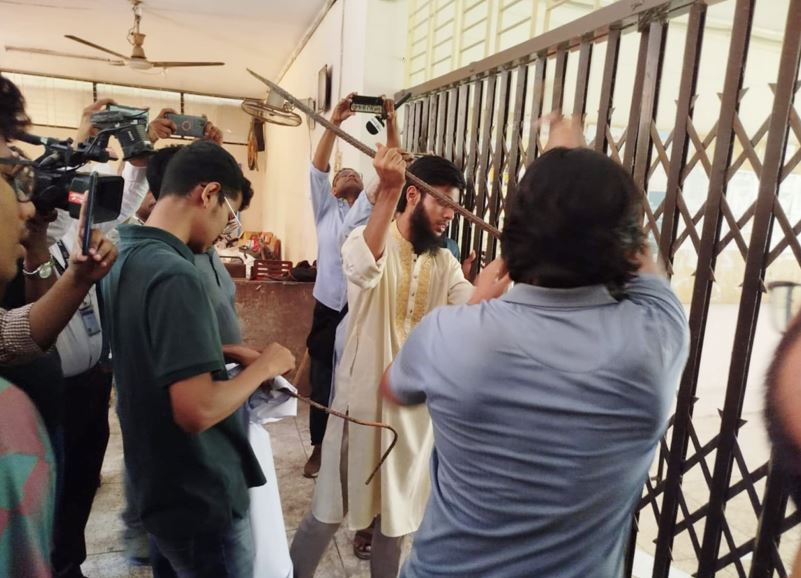
Meanwhile, the relationship between teachers and students has continued to deteriorate since the February clash. The vice-chancellor, pro-vice-chancellor, and several other teachers were humiliated, and confrontations between students and teachers have occurred on multiple occasions.
In response to the situation, the KUET Teachers’ Association declared they would not return to classes until those responsible for humiliating teachers are held accountable.
Md Faruk Hossain, general secretary of the association, told journalists on 24 April that justice must be served, stressing that the demand for justice was separate from the earlier removal of the vice-chancellor.
“A crime is a crime — this is the demand of our students and teachers. Justice must be ensured before we return to the classroom. Otherwise, a proper educational environment cannot be guaranteed,” he said.
The February 18 clash erupted between general students and Chhatra Dal activists, along with outside BNP supporters, amid demands to ban student politics on campus. Around a hundred students were injured in the violence.
Accusing the university administration of siding with the attackers, KUET students launched a 65-day protest movement, culminating in the removal of Vice-Chancellor Mohammad Masud by the interim government.
Throughout the movement, tensions remained high, marked by frequent verbal confrontations between students and teachers.