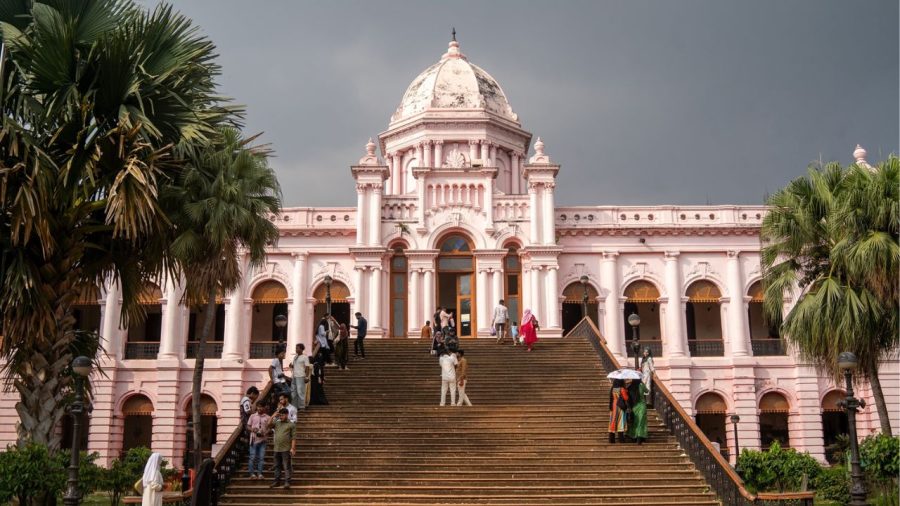



Within the compounds that once housed the royal Nawabs in Old Dhaka, it is common to see couples taking turns photographing each other against the backdrop of the pink grandeur.
Yet, this desire to immortalise affection is not limited to the frozen frame: star-crossed lovers also leave their marks on the walls and tree stems around the palace.
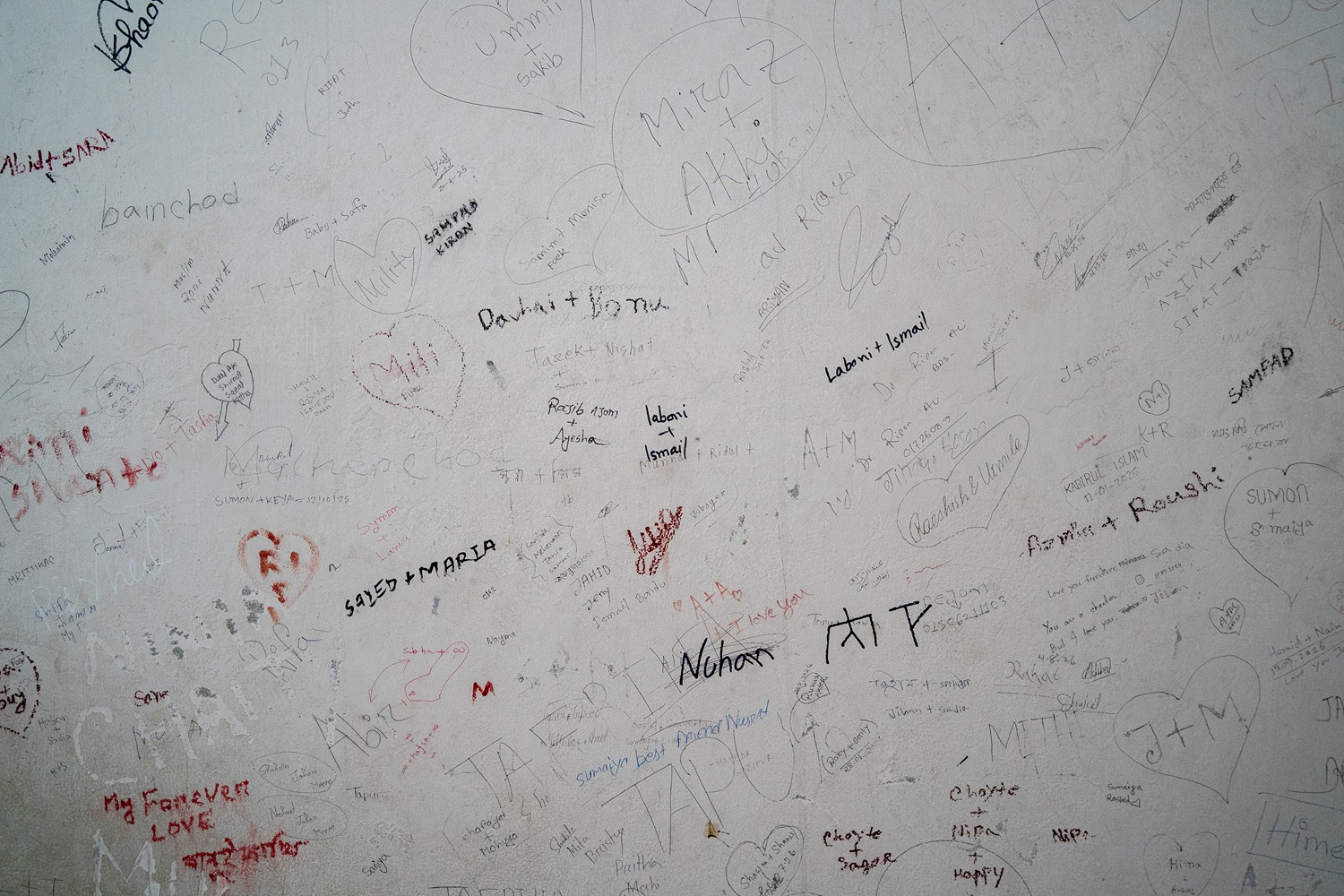
As visitors trail through each chamber, they are greeted by walls plastered with heart-shaped etchings. Many contain name pairings, sometimes topped off with a date to commemorate the occasion.
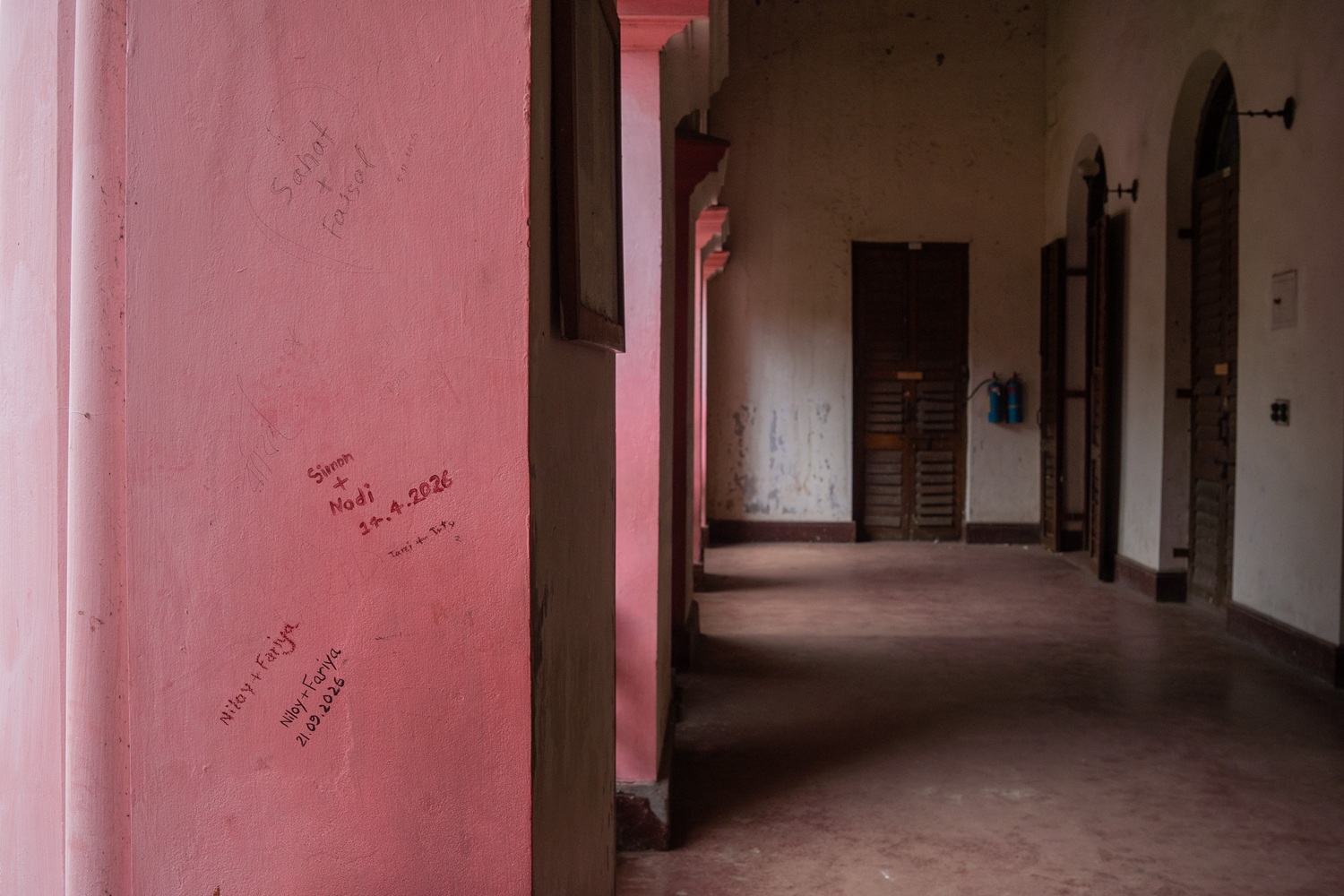
These embellishments inevitably draw attention away from the edifice itself, undermining the overall visual experience.
From a social psychology standpoint, being in awe of a place may naturally prompt an urge to preserve the moment and share it with a community.

In the case of Ahsan Manzil, which has minimal security oversight on its compounds, etchings become a largely unrestrained and cost-free avenue for expressing such sentiments.
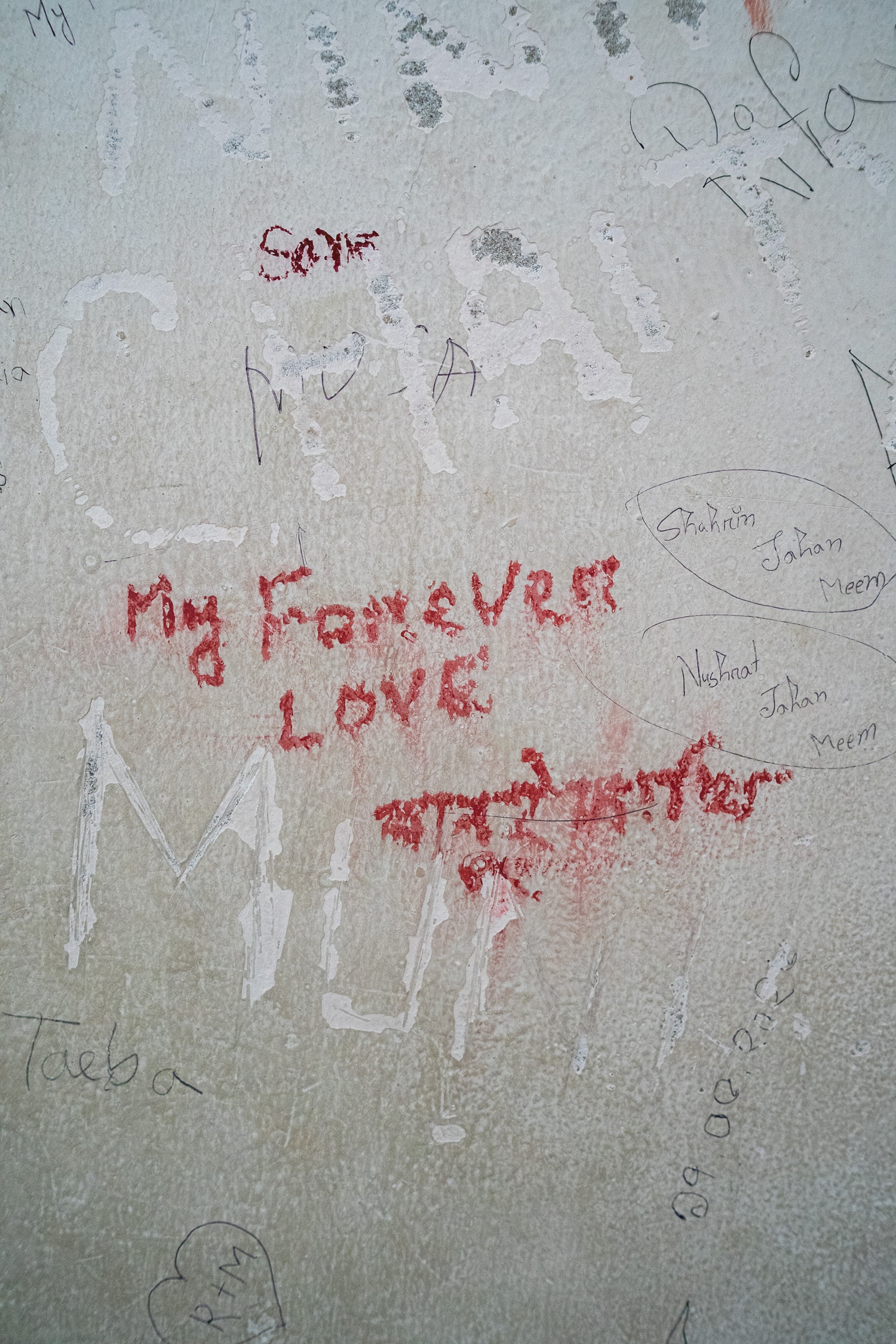
Officially, the protection of historic sites like Ahsan Manzil is enshrined in Clause 19 of the Antiquities Act 1968, which states that no person shall “destroy, break, damage, alter, injure, deface or mutilate, or scribble, write or engrave any inscription or sign on, any antiquity” under guardianship.
Violating this supposedly warrants a punishment ranging from a fine to imprisonment.



What seems to be missing, however, is specificity and enforcement. Without a clear framework and the necessary personnel to carry out enforcement, the Act is essentially a white elephant against destructive acts on Bangladesh’s tangible heritage.
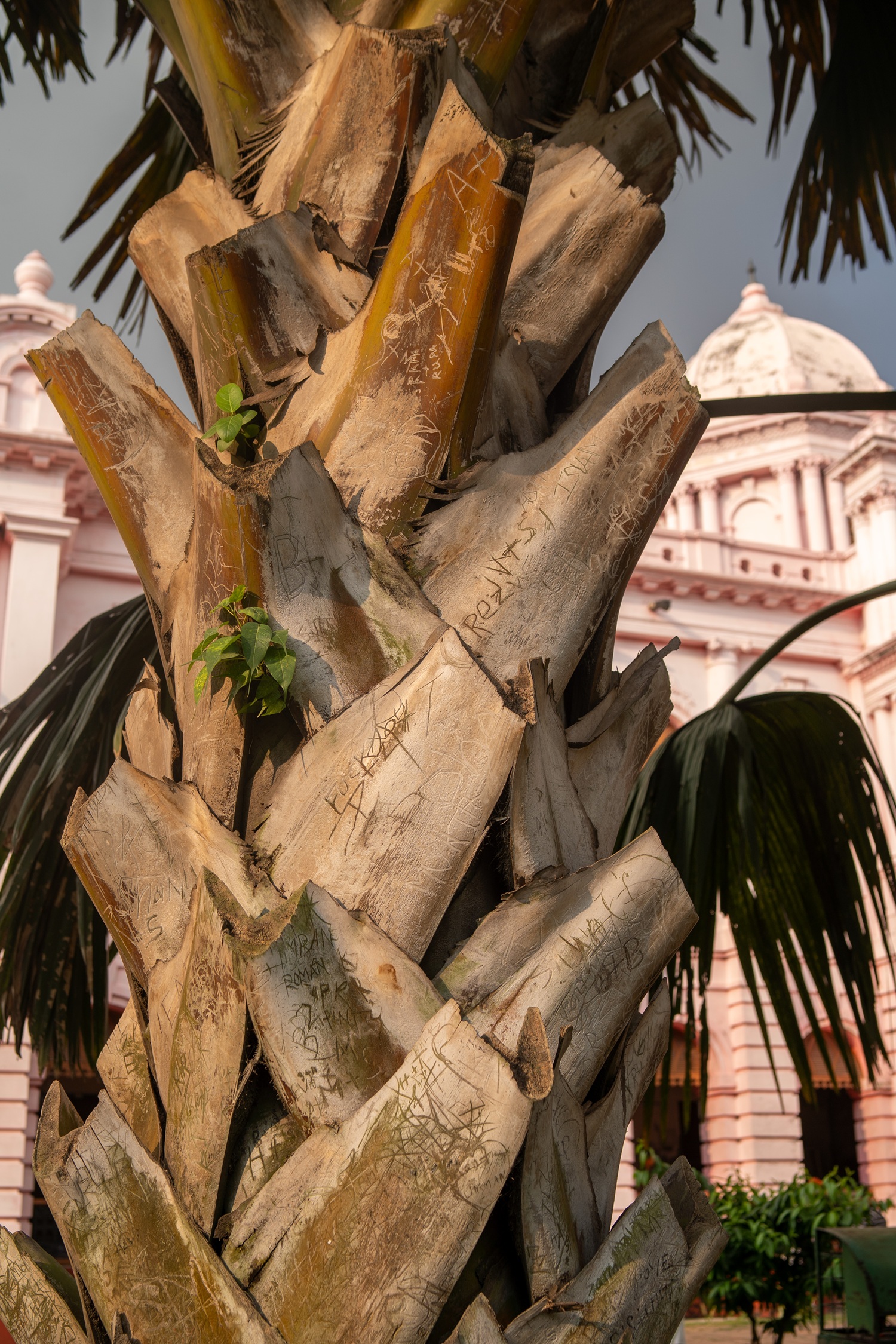
In addition to appropriately punitive measures, alternative avenues could be introduced to allow visitors to document their experiences meaningfully without destroying public property.
At the Namsan Tower in South Korea, for instance, couples pen their names and wishes on purchased padlocks and secure them to the tower’s railings as symbols of unbreakable bonds.
While this example is not immediately applicable to Ahsan Manzil, Bangladesh can still take a leaf from other countries’ tourist management strategies and redirect visitors who might be tempted to vandalise toward other means of self-expression.
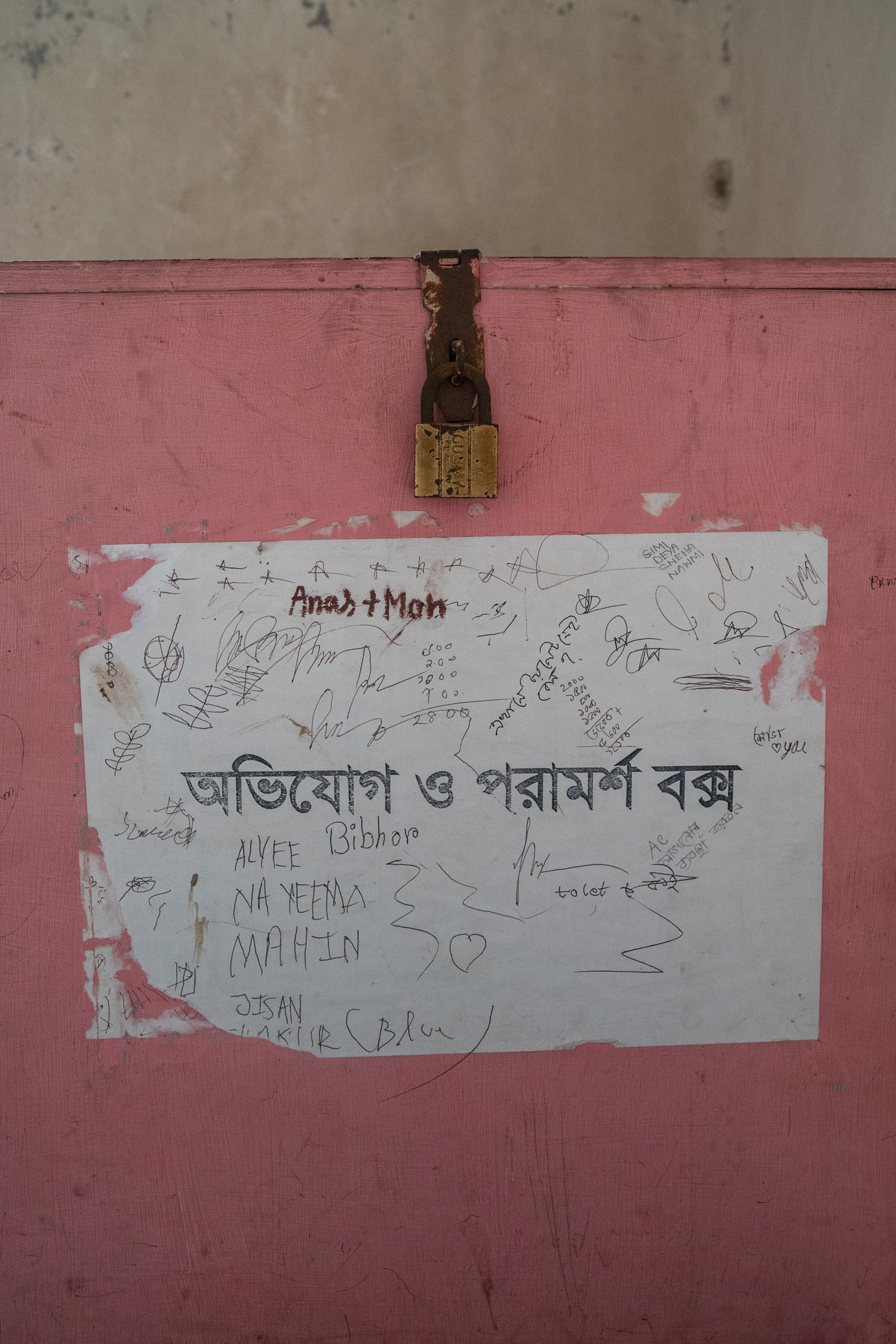
Rules and their enforcement are undoubtedly crucial, but the endeavour of preserving and conserving heritage can only be sustained through genuine care and cooperation from people.
Every seemingly minute personal decision – whether to leave behind trash or scribble on the walls – eventually shapes the culture we live in.
Ask yourselves: What kind of values do we want our children to inherit? Protecting historical monuments is not merely a civic duty, but a solemn responsibility that we owe to the generations that will succeed us.
Ahsan Manzil may have survived a tornado and an earthquake, but it will surely languish away if we do not pledge everlasting affection to it in the right manner.
The palace has stood for over a century and a half, bearing witness to the rise and fall of empires, the birth of a nation, and the passage of time. It deserves better than to be covered in scribbles. It deserves to be remembered, not defaced.
The next time you visit Ahsan Manzil, take a photograph. Buy a postcard. Write in a visitor’s book, if one is available. But leave the walls as they are, so that future generations may see the palace as it was meant to be seen, and not as a canvas for fleeting declarations of love.