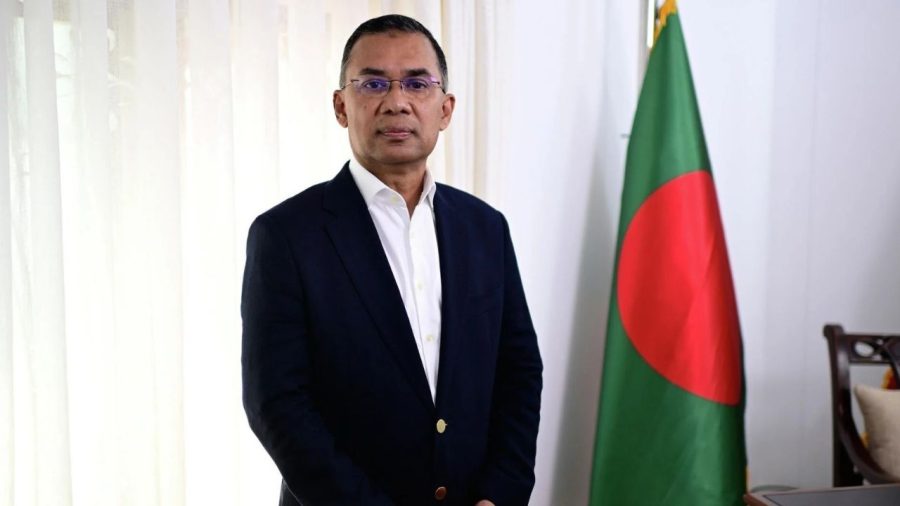



Prime Minister Tarique Rahman is set to visit Tokyo from 26 to 29 October at the invitation of Japanese Prime Minister Sanae Takaichi, with Bangladesh expected to seek lower financing costs for major infrastructure projects and $2 billion in assistance to ease pressure from its energy imports.
The visit is considered significant as Japan is Bangladesh’s largest development partner, having provided billions of dollars in assistance for major infrastructure and development projects since independence.
The foreign ministry is preparing for the visit, and an inter-ministerial meeting was held on Monday at the ministry, with Foreign Secretary Asad Alam Siam in the chair. The meeting discussed a range of bilateral issues and priorities to be raised during the prime minister’s visit.
An official who attended the meeting said several mega projects, including the Matarbari Integrated Development Initiative, are being implemented with Japanese assistance, while negotiations are under way for projects including MRT Line-1 and MRT Line-5 (Northern Route).
“There are several important issues that need to be discussed during the visit. The interest rate on Japanese loans is one of the major concerns, and we need to negotiate on this issue,” the official said.
There is also an unresolved issue between the Civil Aviation Authority of Bangladesh and a Japanese consortium involved in the operation of Hazrat Shahjalal International Airport’s Third Terminal, with disagreements reportedly centring on revenue-sharing and the financial model.
Rising cost of Japanese loans
For decades, Japan’s development assistance to Bangladesh has been particularly attractive because of its concessional financing, with interest rates on some loans remaining below 1%.

However, the financing terms for some new components of major projects are becoming significantly more expensive as Japanese lending rates rise.
According to Planning Commission documents, Bangladesh secured an initial Japanese loan agreement worth Tk13,625.77 crore for MRT projects in 2019 at interest rates ranging from 0.6% to 0.9%. However, financing terms for the remaining portion of the project had not been fixed at that time.
For MRT Line-1, which will connect Hazrat Shahjalal International Airport with Kamalapur, Japanese financing has now increased to Tk85,535.55 crore, according to the Economic Relations Division.
The additional financing, however, will have to be secured under prevailing lending conditions. Japan International Cooperation Agency (Jica) loan rates have recently reached 3.06% and are projected to rise to 3.50% in October, according to Planning Commission documents.
As Japan reviews its lending rates twice a year, further increases remain possible when the rates are reset next April.




A senior government official said Bangladesh would seek to contain the rising financing costs during the prime minister’s talks in Tokyo.
“Reduction of the interest rate will be one of the major agendas of the government, as the higher rate will push up the project cost to an exorbitant level,” the official said.
The issue is particularly important because Japan is involved in some of Bangladesh’s largest infrastructure projects, including metro rail development, the Hazrat Shahjalal International Airport Third Terminal and the Matarbari development initiative.
Dhaka seeks $2b energy support
Bangladesh is also seeking $2 billion in assistance from Japan to help meet rising energy import costs and ease pressure on the country’s balance of payments.
Japan launched the $10 billion POWERR Asia Initiative in April 2026 to support Asian developing economies facing energy supply disruptions and rising crude oil costs amid the conflict in the Middle East. Bangladesh is among the countries identified as potential beneficiaries, alongside ASEAN economies and South Korea.
“Energy import costs are gradually increasing and putting pressure on the balance of payments. Dhaka wants to ease this pressure and has urged Tokyo to provide a $2 billion fund to meet the additional cost,” another government official said.
Bangladesh is yet to receive a response from Japan on the proposal, and the issue is likely to be discussed during the prime minister’s visit, the official added.
Balancing China and Japan
Beyond development assistance and economic cooperation, the Tokyo visit is expected to have a broader geopolitical dimension as Bangladesh seeks to maintain a balance in its relations with China, Japan and other major powers in the Indo-Pacific.
A potentially sensitive issue is the language used in the joint statement expected to be issued after the visit.
During Prime Minister Tarique Rahman’s visit to China in June, the two sides agreed in their joint communiqué to uphold the outcomes of World War II and support the post-war international order established by the Cairo Declaration, the Potsdam Proclamation and other international legal instruments, including the UN Charter.
The reference to the Cairo Declaration and Potsdam Proclamation carries particular sensitivity for Japan because those documents are closely associated with the post-World War II settlement in East Asia.
Japan had opposed the inclusion of the language in the Bangladesh-China joint communiqué and informally urged Dhaka to remove the paragraph, according to diplomatic sources.
A former Bangladeshi ambassador, speaking on condition of anonymity, said both sides would have their own priorities during the Tokyo visit.
“Bangladesh has lots of demands and it is also true for Japan. Tokyo’s priority is a free and open Indo-Pacific,” he said.
Japan is also a member of the Quad, alongside the United States, India and Australia, a grouping widely viewed as an important component of efforts to maintain a free and open Indo-Pacific amid growing Chinese influence.
“There needs to be a delicate balance between China and Japan and other Quad members when negotiating the joint statement, which is expected to be declared after the visit,” the former ambassador said.
“It would be interesting to see how Dhaka negotiates on this issue.”
With Japan playing a central role in Bangladesh’s infrastructure development and Tokyo seeking stronger strategic engagement with Dhaka in the Indo-Pacific, the prime minister’s visit is expected to go beyond traditional development cooperation and test Bangladesh’s ability to balance its economic and geopolitical interests.