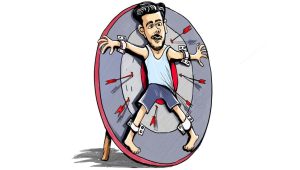



Economic vulnerability and patronage are among the main forces driving adolescent gangs, with criminal networks exploiting disadvantaged young people who are often outside education and employment, in addition to lacking adequate family supervision.
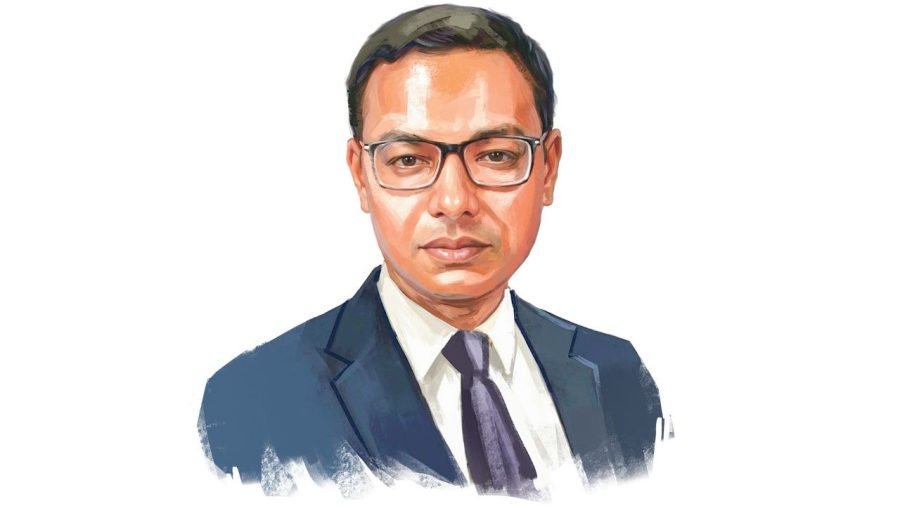
TIMES’ Kamruzzaman Khan sits down in an exclusive interview with Tawohidul Haque, associate professor at the Institute of Social Welfare and Research at the University of Dhaka.
Haque, a crime expert whose work focuses on criminological factors, the crime economy and crime prevention, has spent years studying adolescent criminal groups and the networks that sustain them.
What are the main reasons behind the spread of juvenile crime or adolescent gangs in Bangladesh?
There are several reasons. One of the main factors is the role of patrons or “big brothers” who form gangs using adolescents, making them commit crimes. Much of the money generated from those crimes ultimately benefits the patrons. This criminal economy is a major driver of adolescent gangs.
Adolescents are used in extortion, land grabbing, vandalism, political intimidation, violence, drug trafficking and as musclemen in business disputes. In many cases, crime is deliberately used to create more crime and produce new offenders.
Another major factor is economic and social vulnerability. Many adolescents are outside education and employment and lack proper parental care. Criminal patrons exploit that vulnerability.
We also see politically connected individuals using adolescent gangs to control opponents, carry out attacks and vandalism, issue threats or influence the electoral environment.

The main question is what kind of life system a country creates for its adolescents. If their physical and mental energy is not given opportunities for positive development, that energy can find negative outlets.
Why do the patrons or masterminds remain beyond reach?
Those who create and patronise adolescent gangs are often powerful. They may have political influence, economic strength or connections with people in authority.
Law enforcement agencies often identify and arrest gang members, but the people who recruit, finance and use these adolescents frequently remain beyond reach because of that influence.
There are also allegations of financial and other relationships between some patrons and individuals within law enforcement agencies. Such allegations need to be properly investigated.
Arrest drives are currently under way. Will this bring any solution?
Arresting and listing adolescent gang members may have an immediate effect, but it will not produce lasting change unless action is also taken against those who recruit them and sustain the criminal economy.




Adolescent gangs should therefore not be treated simply as a problem involving young people. Family conditions, politics, drugs, criminal networks, social control and state institutions are all connected. A lasting solution requires coordinated action to address those underlying causes.
What role is social media playing in the rise of crime?
Social media has become a space where we see cyberbullying and other antisocial behaviour. Some crime-prone adolescents use it to insult, humiliate or intimidate others.
Misleading information, images and videos are also used to damage the reputation of individuals, including women and public figures. Cyberbullying, cyber victimisation and other forms of cybercrime are increasing.
We also lack proper guidance and social norms around the use of social media, allowing some adolescents to use these platforms as a space for criminal behaviour.
There is also a connection with acting “macho”. Dominating others, intimidating people, displaying weapons or riding motorcycles aggressively can create a sense of power and importance.
If society and the state fail to channel adolescents’ energy and aspirations in positive ways, this kind of machismo can grow.
How deep is the connection between adolescent gangs and motorcycles, weapons and drugs?
Patrons often provide adolescents with motorcycles, weapons and drugs. These can give them a sense of power and status and reinforce the belief that others fear them.
Drugs are particularly dangerous. Some gang members are drawn into both drug use and drug trafficking. Once they become involved in controlling that trade, violence, attacks and even killings can follow.
Drug addiction can also weaken judgement, making it harder for adolescents to understand the consequences of harming others.
What is the responsibility of an adolescent’s family? Where are families failing?
Families play a crucial role in shaping an adolescent’s personality and preparing them for adulthood. But many adolescents involved in gangs come from families where supervision and discipline are weak.
Even when guardians are present, some are unable to provide proper guidance, support and opportunities. Others grow up with little effective supervision.
However, families alone cannot be blamed. Their capacities differ, and the state and society also have a responsibility to support vulnerable families and help create stable environments for children.
People are no longer staying in their own areas for long. They are moving from one area to another. As a result, has social control or community bonding weakened?
Yes. Education, employment and other needs are causing people to move frequently, weakening community bonds.
Previously, respected local figures often played a role in maintaining social discipline. That informal social control has gradually declined.
There is another problem. People who speak out against criminal behaviour sometimes face threats or retaliation. If the police or the state fails to protect them, others become reluctant to get involved.
People then focus on protecting themselves and their families rather than confronting problems in the community. Over time, this weakens collective social strength.
Part of the space once occupied by community leadership has also been taken over by political and criminal actors. As a result, social discipline has weakened and communities have less capacity to restrain crime-prone adolescents.