Transparency International Bangladesh (TIB) has expressed deep concerns and resentment over three recent incidents of lawlessness, warning that they serve as an ominous sign for the government and the ruling party.
The rights watchdog called for exemplary accountability for those involved and an immediate nationwide self-purification drive within the party, read a press release issued Sunday.
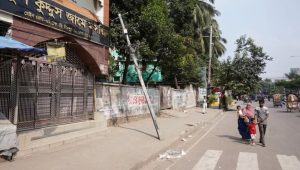
Citing various media sources, TIB pointed out that the incidents include midnight looting, vandalism, and encroachment of the RADDA MCH-FP Centre in the presence of police, allegedly with the support of a lawmaker from a reserved seat.
The non-profit organisation has provided healthcare services to underprivileged and vulnerable mothers and children for fifty years.
The second incident involved a dispute between two local factions of BNP over control of a jalmahal (water body) in Kishoreganj, which resulted in over fifty injuries, alongside the vandalism of a content creator’s office and creative studio.

Describing the demolition of the RADDA MCH-FP Centre as an embarrassing example for the government and ruling party, TIB Executive Director Dr Iftekharuzzaman highlighted that the ruling party received a historic electoral mandate following the violent July uprising that overthrew an authoritarian kleptocracy.
He questioned what message leaders and activists were conveying to citizens when the reckless conduct of the previous authoritarian government remains fresh in public memory.
‘Widespread extortion, free-for-all dominance’
Dr Iftekharuzzaman stated that since August 2024, following the fall of the Awami League government, a section of BNP leaders and activists across various levels – including the grassroots – claimed the mantle of victory and began acting recklessly.




He noted widespread allegations of encroachment, extortion, and efforts to establish dominance, with extortion and encroachment changing hands and turning the situation into a free-for-all.
Such abuses have occurred across major bus terminals in Dhaka (including Sayedabad, Mohakhali, and Gabtoli), as well as terminals in Chattogram, Sylhet, and Khulna.
Extortion and encroachment have also taken place on footpaths, in markets, in water bodies, at sand mills, in local bazaars, within cable and internet connection services, in waste collection businesses, and at both upazila and union levels.
This has frequently led to violent internal sabotage and unhealthy rivalry involving daily, monthly, and one-off extortion.
Dr Iftekharuzzaman also criticised a government minister who repeatedly declared that “extortion is not corruption, but a negotiated transaction.”
With the government taking no action against this position, extortion and encroachment have become normalised, marking an ominous sign for the administration.
Culture of impunity, institutional failure
Although the senior leadership of the party has in some cases taken organisational measures, including expulsions, TIB stressed that stronger preventive strategies are lacking.
Because those involved in these abuses of power are directly or indirectly affiliated with the ruling party, law enforcement agencies have been left unable to take effective action.
Consequently, a culture of arbitrariness, corruption, irregularities, and impunity is re-establishing itself, for which the government will have to bear responsibility on many fronts.
Warning that these events threaten to overshadow all the government’s good deeds and initiatives and leave a bad impression on the public, TIB urged the ruling party to honour its anti-corruption electoral commitments.
The organisation urged the party to take effective self-purification measures immediately before it loses the ability to control such misconduct.
TIB strongly demanded that the authorities properly investigate each incident without delay and ensure exemplary punishment for those responsible.