
Chittagong Development Authority (CDA) is considering making rooftop solar panels and rainwater harvesting mandatory for new buildings to promote sustainable, environmentally friendly urban development in Chattogram.
Stakeholders, however, proposed separate zoning for industrial, educational, healthcare and residential facilities in the Greater Chattogram Master Plan, being prepared for a 25-year period from 2025 to 2050.
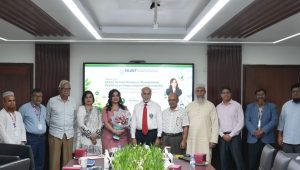
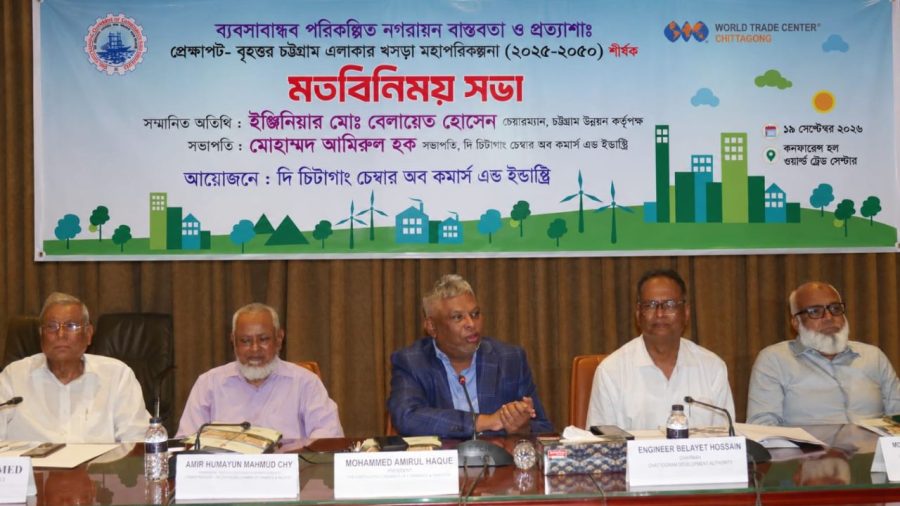
The proposals came at a Chittagong Chamber of Commerce & Industry (CCCI)-CDA discussion on Saturday.
CDA Chairman Md Belayet Hossain said a high-level committee has been formed to examine how provisions for rainwater harvesting and rooftop solar power can be incorporated into the legal framework for new buildings.

CDA aims to make Chattogram a planned, liveable city free from waterlogging, traffic congestion and pollution, he said.
CDA is also simplifying building design approvals. Under a proposed one-stop service, approvals will be issued within 30 to 45 days, Belayet Hossain said.




CCCI President Mohammed Amirul Haque called for clear, detailed zoning for industrial, educational and healthcare institutions in the new master plan.
“Educational institutions should be established in education zones, and hospitals in hospital zones,” he said. Amirul also sought mapping for industries, including petrochemical plants, uniform laws for public and private institutions, and rehabilitation of street and footpath hawkers, citing traffic congestion and lost tax and VAT revenue.
Former CCCI President Ali Ahmed proposed rooftop solar panels and rainwater harvesting, and pedestrian-only zones in parts of the old city.
Former CCCI President Amir Humayun Mahmud Chowdhury called for upgrading the Outer Ring Road to eight lanes, citing pressure after Bay Terminal and Karnaphuli Tunnel coastal road projects. He also proposed rainwater harvesting from Mirsharai to Chattogram and a riverside walkway from Sadarghat to the Karnaphuli Bridge.
Mohammed Al-Amin, Academic Pro-Vice-Chancellor of the University of Chittagong, stressed a comprehensive waste-management system, ward-based planning for educational institutions and decentralised hospital services. He also sought green coverage through rooftop solar power and carbon-trading initiatives.
Other speakers stressed stronger coordination among government agencies. They proposed integrating road, rail and waterway connectivity, expanding coastal afforestation against cyclones and storm surges, and introducing designated bus bays and parking in building designs.
They also sought inclusion of inner and outer ring road networks in the master plan.