
Bichnakandi, one of Bangladesh’s most celebrated tourist destinations, is located in Rustampur Union of Gowainghat upazila in Sylhet.
As transportation has improved in recent years, the flow of tourists has surged again on holidays, with people from across the country rushing to witness its mesmerising blend of water, stones, and hills.
Yet behind this natural beauty, troubling signs have emerged.
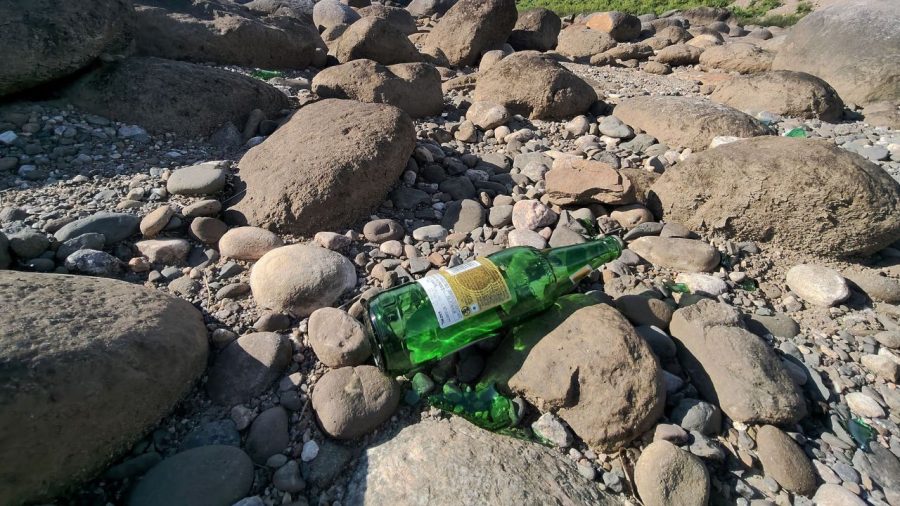
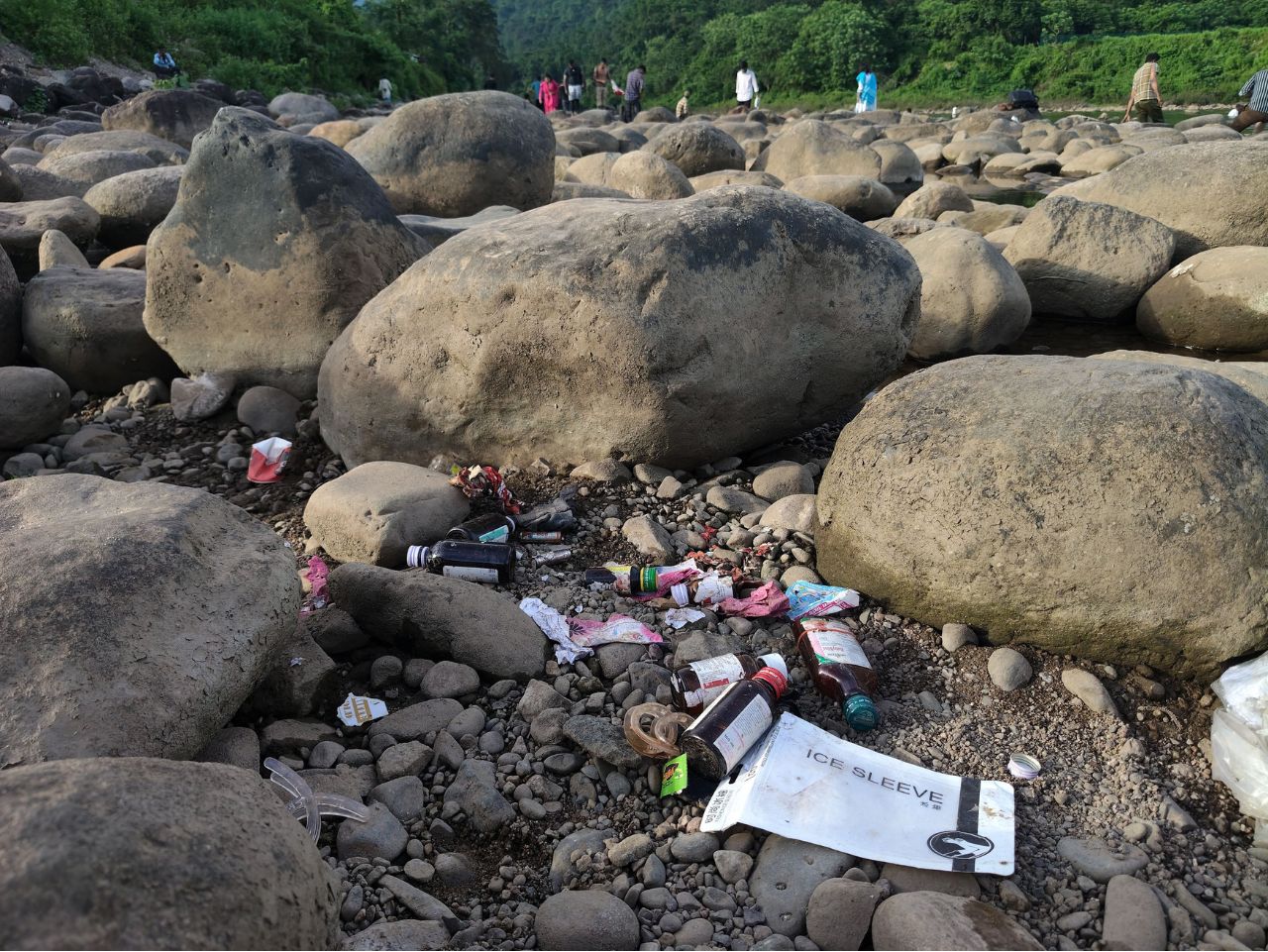
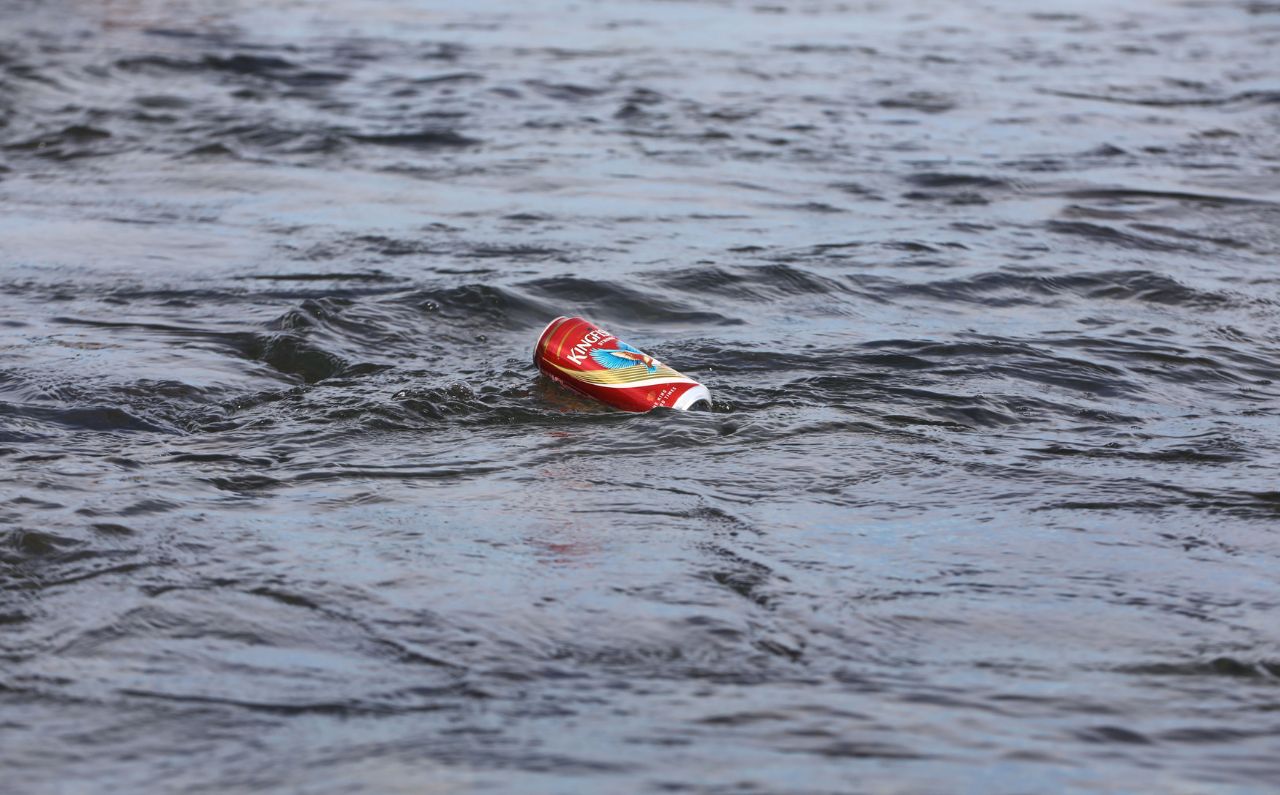
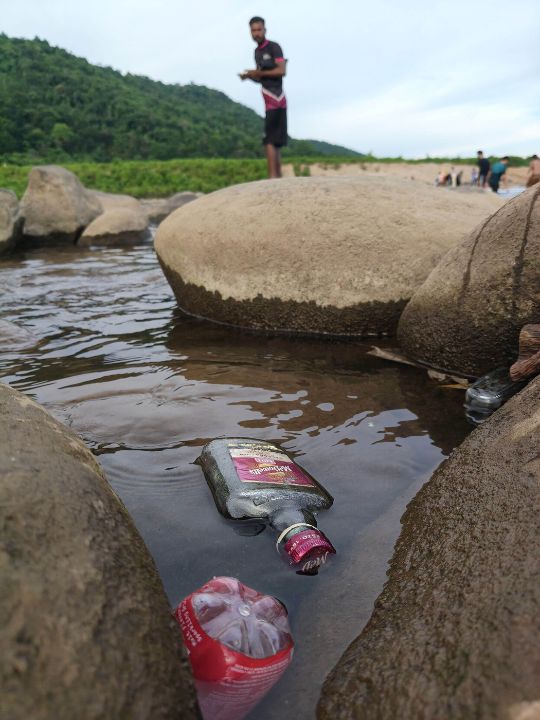
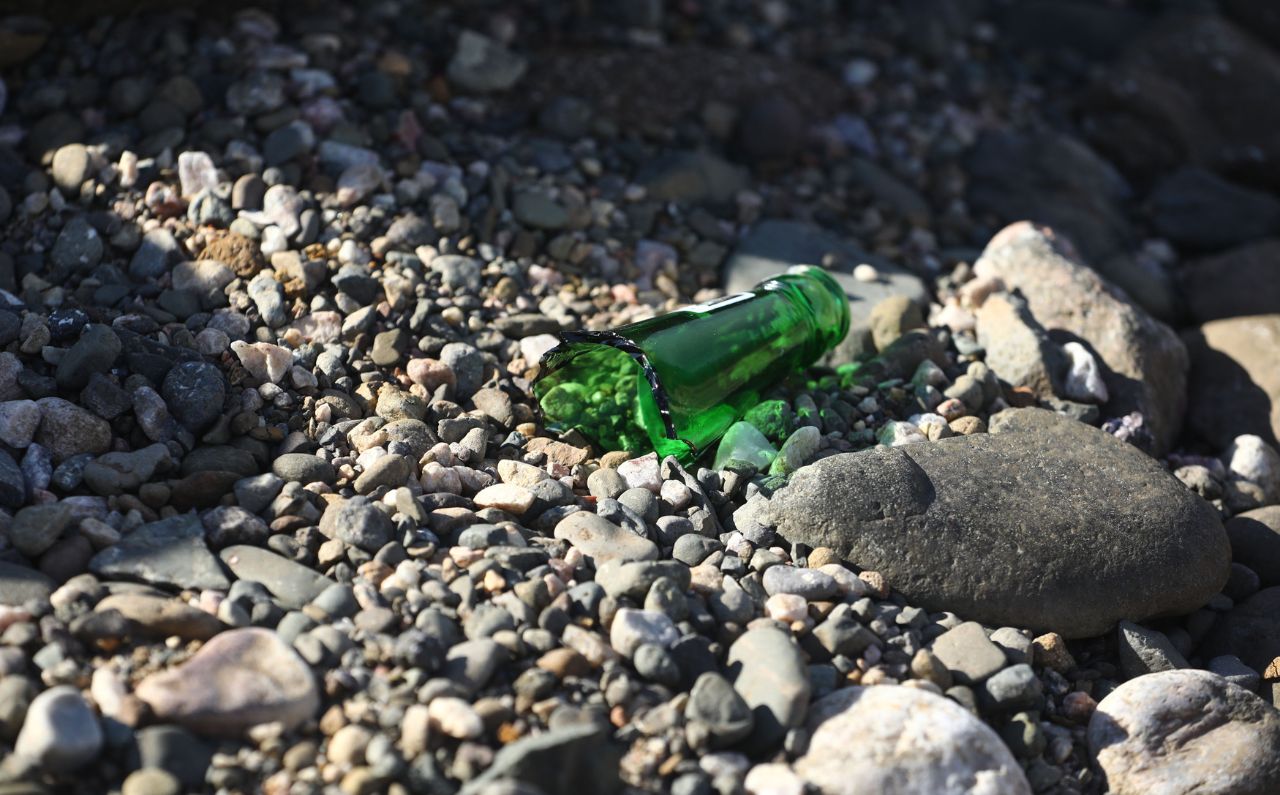
Chief among them is drug use. Empty bottles of beer, liquor, and phensedyl lie scattered in the crevices between the water and the stones.

Tourists wading into the water or walking across the rocky bed are cutting their feet on broken glass.
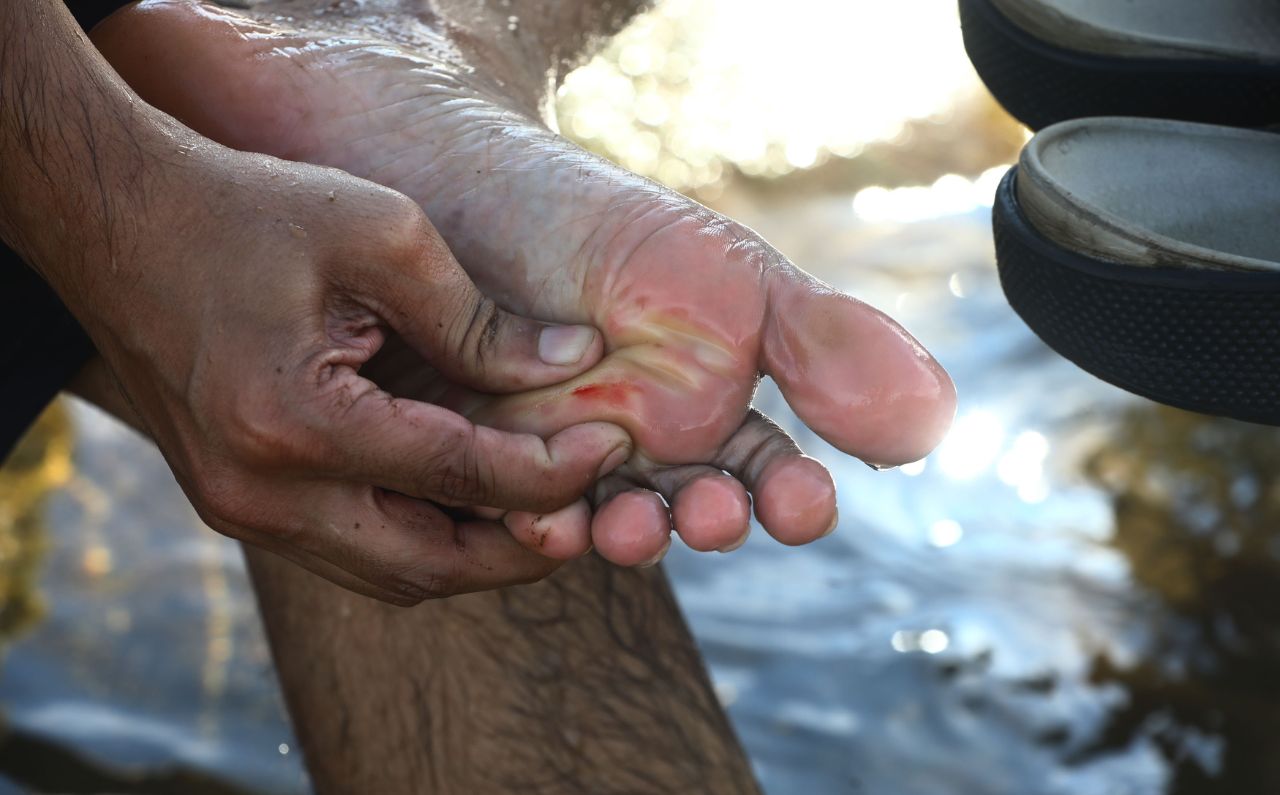
Despite these visible signs of drug use, questions remain about regular monitoring and supervision across the tourist spot.




Drugs are not the only concern. Illegal sand and stone extraction is steadily altering Bichnakandi’s natural environment.
There are allegations of sand and stones being extracted by boat day and night, while stones have also been removed from the hills on the Bangladesh side.
As a result, large stones have vanished from parts of the Piyain River, and deep pits have formed in others.
The river and its rocky bed now bear visible scars.
Shops have sprung up inside and around the river, and due to unchecked sand and stone extraction, a floating restaurant has tilted to one side, an ominous sign of the instability creeping into the landscape.
Bichnakandi was once among tourists’ favourite destinations, admired for its unique harmony of water and stone.
Today, it faces a triple crisis: drugs, safety hazards, and mismanagement.
The question now being raised is whether Bichnakandi’s familiar beauty will gradually be lost due to a lack of care, and whether the authorities will act before one of the country’s natural treasures is damaged beyond repair.