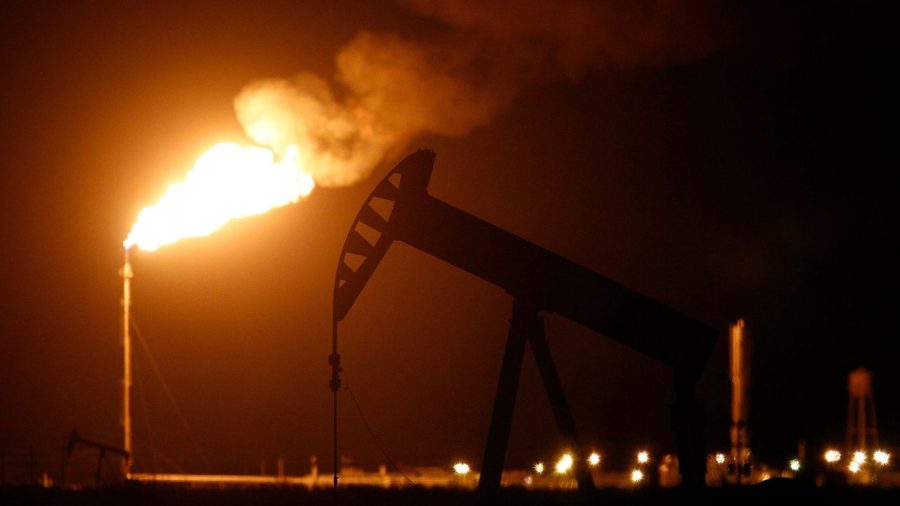

A national programme to drill 150 new gas wells has commenced as a medium-term measure to address Bangladesh’s gas crisis, with plans already being formulated for an additional 150 wells in the subsequent phase, the Prime Minister’s Office (PMO) announced on Wednesday.
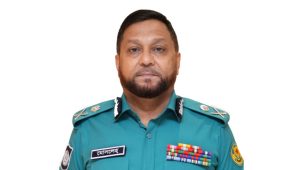
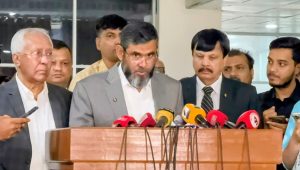
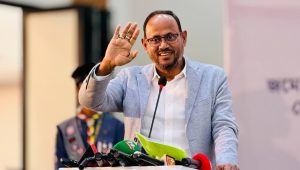
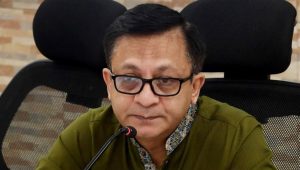
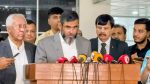
Speaking at a press conference at the PMO marking seven months of the administration led by Prime Minister Tarique Rahman, PMO Spokesperson Mahdi Amin stated that gas distribution across the country has increased significantly following direct instructions from the prime minister.
He confirmed that gas flow has visibly improved to support industrial operations, with the positive trend expected to persist in the coming days.
Mahdi explained that Tarique recently held meetings with business leaders and media personalities to formulate practical solutions to the gas supply crisis, directing authorities to take maximum possible realistic steps to ensure factories could resume normal operations and keep the national economy moving forward on its potential trajectory.
Multi-pronged energy and power strategy
To reinforce long-term energy security, the government is expanding its floating storage regasification unit (FSRU) infrastructure from two to five units in phases, aiming to launch a third FSRU prior to 2028 if feasible.
In addition, in-principle approval has been granted for the direct procurement of 18 Liquefied Natural Gas (LNG) cargoes from global suppliers, while $1 billion in international financing has been secured to expand the Eastern Refinery in Chattogram.

In the power sector, technical disruptions were resolved to restore 1,046.73 megawatts of electricity to the national grid. The government has also outlined plans for a 500MW power plant and a large fertiliser manufacturing facility in Bhola, added 200MW of solar energy to the grid, and launched a five-year plan to convert diesel-powered irrigation pumps to solar energy.
To protect consumers from added financial pressure, substantial government subsidies are being maintained on fuel, keeping domestic diesel prices comparatively lower than in neighbouring countries.
Seven-month performance, economic governance
Reflecting on the government’s performance over its first seven months, Mahdi noted that while it was impossible to resolve every legacy issue completely in a short timeframe, positive progress in public welfare had been achieved under specific action plans and administrative accountability.
He emphasised that the current elected and accountable government, drawing its authority from the people, is working with sincerity and goodwill to rebuild the nation from the “ruins” left after 17 years of previous rule.

On economic management, Bangladesh successfully repaid $2.0476 billion, equivalent to Tk 25,163 crore, in foreign debt principal and interest over the past five months. Remittance inflows expanded by 13.1 per cent over six months, alongside initiatives to reopen the Malaysian labour market and progress in sending Bangladeshi workers legally to Italy and Oman.
Moreover, Bangladesh resolved 48 out of 61 trade barriers identified by the European Union, signed a bilateral investment protection and promotion agreement with Hong Kong, and secured up to £2 billion in financing under UK Export Finance.
Public welfare, education, and agriculture
Over the past month, government interventions spanned seven key policy domains: youth empowerment, education, IT and innovation; overall public welfare and living standards; women’s advancement and social protection; environment-friendly energy and industrialisation; health infrastructure; transport management; and institutional good governance and foreign relations.
Public welfare measures introduced include a new national pay scale ranging from Tk 20,000 to Tk 1.56 lakh for government employees, extended institutional mobile allowances across all grades, up to a 100 per cent increase in maximum net pensions, and a Tk 3,000 monthly allowance for retired employees’ children with special needs.
Administrative reforms saw the elimination of mandatory prior Finance Division approval for outsourcing recruitment and renewals, alongside strict steps to prevent long-term postings of officials in land administration offices.
Social legislation and community support were bolstered by passing laws ensuring parents’ lifetime possession and use of property even after transferring ownership through donation, special national awards of Tk1 lakh each for 100 meritorious teachers, increased grants for the Journalist Welfare Trust, and expanded coverage for Family Cards, Farmers’ Cards, and allowances for imams and muezzins.
For women and youth, the government initiated a joint cybersecurity framework to prevent online harassment against women, universal stipends for female primary and secondary students, school nutrition programmes, and modern raincoats for 20,000 female tea workers.
In agriculture, a fertiliser stock of 5.155 million metric tonnes is being maintained – 1.568 million tonnes above demand through February – supported by a central monitoring control room and the reopening of Chittagong Urea Fertiliser Limited.
Health infrastructure, transport, and governance
In healthcare, plans feature 15-storey specialised general hospitals in Dhaka and eight divisional cities, an international corporate management model for the new super-specialised hospital, expanding dialysis services to every district and upazila, and increasing bed capacity at Bogura Shaheed Ziaur Rahman Medical College Hospital to 1,800 beds.
Further health initiatives include a specialised burn centre at Rangpur Medical College, a national e-health platform, restored medical supplies for community clinics, over 19.771 million children vaccinated against measles and rubella, and a nationwide dengue prevention campaign.
Transport infrastructure plans include feasibility designs for electric trains on the Dhaka-Chattogram corridor, a four-lane expressway to City Gate in Chattogram, extending the Dhaka-Cox’s Bazar express train, a cashless RFID toll system within four months, and relocating Karwan Bazar market to Gabtoli and Fulbaria bus terminal to Keraniganj.
On state governance, courts sentenced seven leaders of the former regime to death for genocide-related offences, permanent government jobs were presented to eligible families of 74 martyrs of the July mass uprising, honorific titles were removed, and biometric attendance was introduced in land offices.
In defence and security, Bangladesh entered the final stage of procuring 20 J-10C fighter aircraft from China and acquiring surveillance drones for Border Guard Bangladesh, while providing $1 million in flood relief to Nepal.
Press Secretary Saleh Shibly and Additional Press Secretary Atikur Rahman Rumon also addressed the briefing, with senior PMO officials and physicians present.