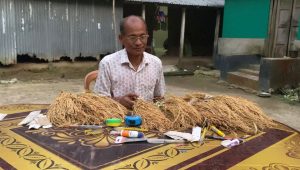
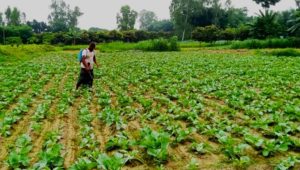
While the government insists that fertiliser reserves are more than adequate for the ongoing Aman cultivation season, farmers across the country report acute shortages, inflated prices, and severe difficulties in securing supplies ahead of the peak demand period.
The disconnect between official claims and ground reality is particularly stark in two contrastingly located districts – Kurigram in the north and Magura in the south-west. In both regions, government records indicate bountiful stocks, yet farmers describe an increasingly desperate struggle to obtain basic inputs.
Agriculture officials maintain that monthly allocations match local requirements precisely, noting that dealers were authorised to lift September supplies in late August to prevent bottlenecks.
Farmers, however, report that shops frequently turn them away even when money is offered. Retailers are also reportedly refusing to break down bulk 50-kilogram sacks, forcing smallholders needing smaller quantities to buy far more than they can afford.
Protests and police presence in Kurigram
In Kurigram, where Aman has been planted across 1,10,550 hectares, the state allocated 53,950 tonnes of urea for the current financial year. Officials insist that permitting dealers to lift September allocations from 25 August successfully insulated the district from shortfalls.
Events on the ground suggest otherwise. In Bhurungamari upazila on Wednesday morning, angry farmers staged a road blockade outside M/s Rakibul Traders, a Bangladesh Agricultural Development Corporation (BADC) dealer in Sonahat Bazar.
When told no fertiliser would be issued that day, the crowd blocked the primary access route to the Sonahat Land Port.

Order was only restored after officials from the Department of Agricultural Extension (DAE), local government administrators, police, and Border Guard Bangladesh (BGB) members intervened. Fertiliser was subsequently distributed under armed guard.
The dealer, Hayrat Ali, stated he had taken delivery of 235 sacks of DAP, 95 sacks of TSP, and 90 sacks of MOP.
“Yesterday was not a scheduled distribution day,” Ali said. “However, when more than a hundred farmers became agitated, we issued the stock with administrative support.”
Local administrative officers reiterated that no structural shortage exists. Yet smallholders tell a very different story.

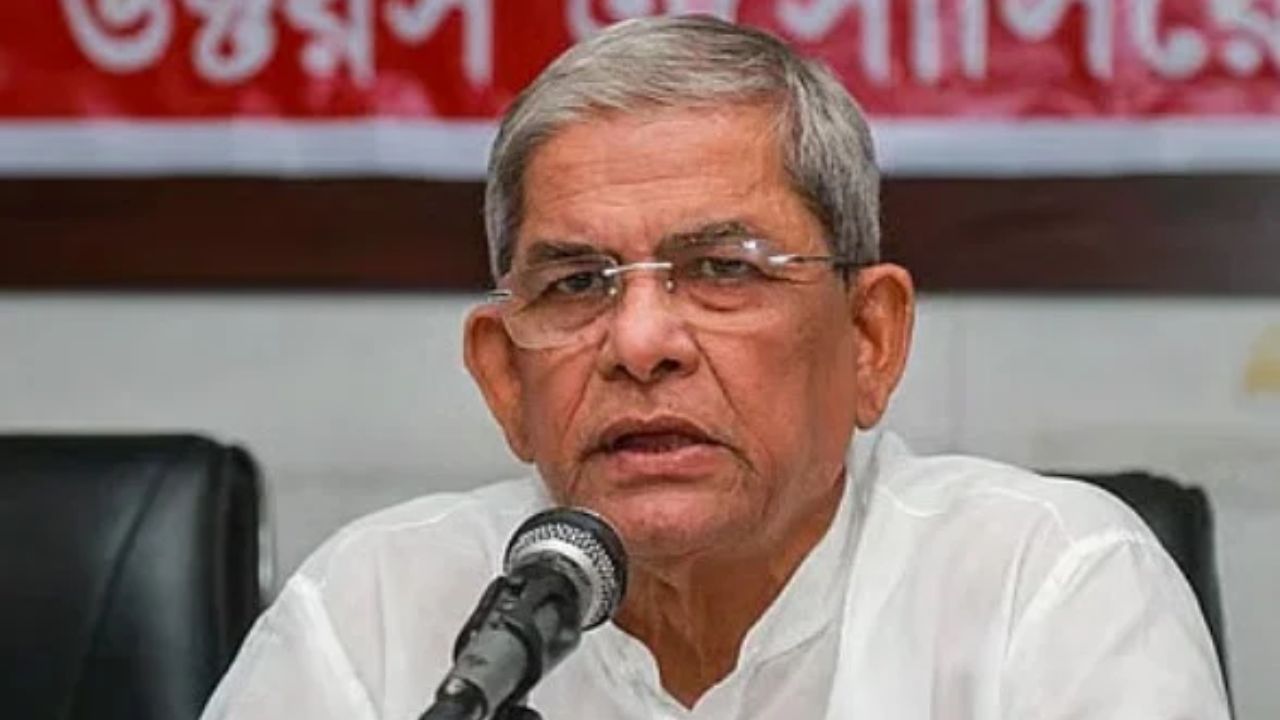


Abdus Sabur, a farmer cultivating five acres in Kurigram Sadar, highlighted the compounding threats to his crop. “First we faced drought, and now we cannot get fertiliser,” he said. “The crop is in poor condition. I managed to secure some supply only after endless negotiating, and I had to pay Tk5 extra per kilogram.”
Others complain of forced bulk purchases. Ruhul Amin, another local grower, said: “Retailers claim they have no stock, while big dealers refuse to sell by the kilo. I need 10 kilograms. What am I supposed to do with a full sack?”
Market analysis shows that urea supplies are most severely constrained. Farmers buying on the open market face surcharges of Tk2 to Tk5 per kilogram above official rates. Triple Super Phosphate (TSP), officially capped at Tk27 per kilogram, is fetching Tk35 to Tk40.
Di-ammonium Phosphate (DAP), officially priced at Tk21 per kilogram, sells for up Vigorous black-market rates of Tk30 to Tk32.
Allegations of artificial hoarding gained traction following an incident at Dhaldanga Bazar in Bhurungamari, where local growers forcibly seized 10,000 kilograms of fertiliser from a private warehouse. Farmers noted that local availability improved only after an official inquiry found evidence of deliberate dealer negligence.
“Dealers only display nominal stocks at their official retail outlets,” one farmer alleged. “Their actual inventory is hidden in illegal warehouses where inspectors never go.”
Kurigram DAE Deputy Director Abdullah Al Mamun defended the administration, claiming allocations exceeded previous years and noting that retail licenses had been expanded to improve local access.
Systemic rationing and black-market pricing in Magura
A similar pattern is unfolding in Magura, where farmers report severe shortfalls of TSP and DAP across 61,955 hectares of Aman fields. Growers report being rationed to fractions of their required inputs or forced to purchase unwanted chemicals to secure essential items.
Official DAE estimates for Magura’s August requirement stood at 4,575 tonnes of urea, 735 tonnes of TSP, 837 tonnes of DAP, and 763 tonnes of MOP. Acting DAE Deputy Director Md Azam Uddin insisted these targets were fully met and early distribution ordered.
Local growers report little tangible benefit. Idul Mia, a farmer working six bighas in Islambag, said retailers are openly demanding price premiums. In Bagdanga, farmer Smitiranjan reported being denied adequate TSP and DAP unless he simultaneously bought excess urea and potash.
“If the inputs we actually need are not available on time, how are we expected to maintain yield?” Smitiranjan asked.
Warehouse statistics support official claims of high national inventory. BADC Assistant Director BM Mahmud Hasan confirmed Magura’s state warehouses hold 5,004 tonnes of TSP, 4,453 tonnes of DAP, and 536 tonnes of MOP. Bangladesh Chemical Industries Corporation (BCIC) data recorded 1,712 tonnes of urea in local reserves as of late August.
Furthermore, BADC official S. M. Mahbubur Rahman confirmed that 210 dealers across Magura and Jhenaidah had drawn their full six-month allocation of 26,700 tonnes.
Local retailers, however, acknowledge a mismatch between supply logistics and field demand. Md Aslam Hossain, a local retailer, admitted that demand for DAP and TSP drastically outstrips actual delivery, while dealer Md Tipu Shikdar urged the ministry to raise district quotas further.
Hoarding remains an entrenched issue. Official records show law enforcement seized 140 illicitly stored sacks in Khanpara in December, 549 sacks near Ganganalia Bazar later that month, and a further 29 sacks near Barasia Bazar in March – all of which were subsequently confiscated and auctioned at official rates.
The immediate crisis facing the Aman harvest is therefore not one of national scarcity, but of broken distribution pipelines, weak regulatory oversight, and rampant market manipulation.
Without effective enforcement to rein in rogue dealers, Bangladesh’s farmers face rising costs and threatened yields at a critical juncture in the agricultural calendar.