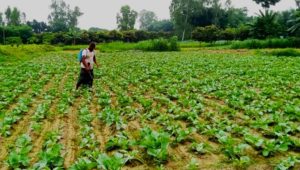
Farmers in several districts are being forced to pay more for fertiliser at the beginning of the Aman season, amid allegations of artificial shortages, unauthorised trading and diversion of government allocations.
Farmers say the main demand for Aman fertiliser will emerge in another two weeks, raising fears that the situation could worsen unless the administration takes strict action.
They allege that distributors are supplying only a nominal amount through authorised channels while handing most of the fertiliser to traders, forcing farmers to buy it at higher prices in retail markets.
Some distributors are also allegedly supplying fertiliser to sub-dealers on a commission basis, in violation of regulations. In some cases, half of an allocation reportedly changes hands before the fertiliser is even lifted from warehouses. There are also allegations that government-allocated fertiliser is being repackaged in sacks bearing foreign brands and sold at higher prices.
In Raninagar upazila of Naogaon, farmers are paying Tk350 to Tk450 more per sack. Although the administration has fined several traders for selling fertiliser at inflated prices, irregularities have reportedly resumed at the same shops the following day.
Government officials say there is no fertiliser shortage, while distributors claim they too are having to buy fertiliser at higher prices.
There are 11 Bangladesh Chemical Industries Corporation (BCIC) and 19 Bangladesh Agricultural Development Corporation (BADC) distributors in the upazila. Around 600 tonnes of fertiliser has been allocated through BADC for August, while BCIC distributors have also received special allocations.

Md Manjur Rahman, deputy director of the district Department of Agricultural Extension, advised farmers to collect receipts when buying fertiliser from distributors.
However, a farmer who bought fertiliser from Munna Traders at Abadpukur Bazar last Wednesday said he was given a receipt for Tk5,750 for five sacks but was charged Tk6,400.
“What can I do if they charge more?” he said.
Several other farmers also alleged that they were being charged above the government-set prices.
Sobuj Hossain, owner of Messrs Sonar Bangla Traders at Khanpukur Bazar, said he was a sub-dealer and had to stock fertiliser to sell pesticides despite making little profit. He alleged that unlicensed sellers were charging even more.

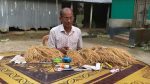

Raninagar Upazila Additional Agriculture Officer Zahid Kamal said, “Several traders have already been fined for selling fertiliser at higher prices. Our drives are continuing.”
In Domar upazila of Nilphamari, non-urea fertiliser is being sold for Tk500 to Tk700 more per sack at Gomnati and Ambari markets.
A large network has emerged in Domar despite its members not being authorised fertiliser distributors. Domar Upazila Agriculture Officer Rafiqul Islam confirmed to TIMES that the traders involved are not government-approved distributors.
The group includes Madhu Traders of Gomnati Bazar, traders Rashidul Islam and Nur Alam, and several others. Raju, director of Madhu Traders, said he sells 250 to 300 sacks a day, while Nur Alam and Rashidul claimed to sell around 4,000 sacks daily.
Locals said 15 to 20 trucks of fertiliser are unloaded at Gomnati Bazar every day before being supplied to markets in different upazilas and neighbouring districts.
Asked how such large quantities were being sold by non-distributors, Nilphamari Deputy Commissioner Mohammad Nairuzzaman said, “If we receive a specific complaint, we will investigate and take necessary action.”
In Rajshahi, farmers are returning empty-handed from distributors’ shops with their agricultural cards. In some places, they are told stocks have run out, while elsewhere only small quantities are available against allocations. Yet the same fertiliser is available at higher prices in retail markets.
Dulal Hossain, a farmer from Paba upazila, said he returned twice from a distributor’s shop before buying fertiliser at a higher price from the retail market.
“Basically, distributors are not keeping fertiliser in their shops. They are secretly storing it elsewhere and selling it at higher prices,” he said.
Farmers are suffering most when buying TSP and DAP. Abir Ahmed, a farmer from Durgapur upazila, said, “Farmers are being charged extra money by creating an artificial shortage.”
No fertiliser was found at Messrs Haque & Sons Enterprise, a BADC-approved distributor in Nowhata Bazar. Its owner, Abdul Haque, said he received 22 sacks of TSP, 70 sacks of MOP and 110 sacks of DAP in July, all of which were sold within two to three days.
Farmers allege that distributors previously sold allocation letters to black-market traders before receiving their allocations. Now, they say, fertiliser is being sold to retailers even before it is lifted from warehouses. They also allege that fertiliser allocated for one district or upazila is being diverted elsewhere.
Additional Director of the Department of Agricultural Extension Azizur Rahman was contacted for comment but did not answer.
In Dinajpur, farmers say a sack of urea priced at Tk1,350 is being sold for Tk1,600. Potash priced at Tk1,050 is being sold for Tk1,400 to Tk1,500, while phosphate priced at Tk1,050 is being sold for Tk1,350.
In Mymensingh’s Gafargaon upazila, farmer Jahangir Alam alleged that traders were charging Tk150 to Tk250 more per sack of urea at village markets.
However, Md Enamul Haque, deputy director of the Department of Agricultural Extension, said no one had complained about fertiliser being sold at higher prices. He said officials had been instructed to remain vigilant against artificial shortages while new distributors are appointed.
Abdul Awal from Rajshahi, Abdus Salam from Dinajpur and Saiful Islam from Mymensingh also contributed to this report.