As Prime Minister Tarique Rahman’s and his BNP government completes six months in office today, it does so against a mixed backdrop, one in which some indicators point to stabilisation. In contrast, others suggest the country’s post-transition troubles are far from resolved.
Inflation
Inflation, the government’s most politically sensitive number, has eased but not enough. Headline inflation fell to 9.16 per cent in June, down from a 16-month high of 9.42 per cent in May, according to Bangladesh Bureau of Statistics data.
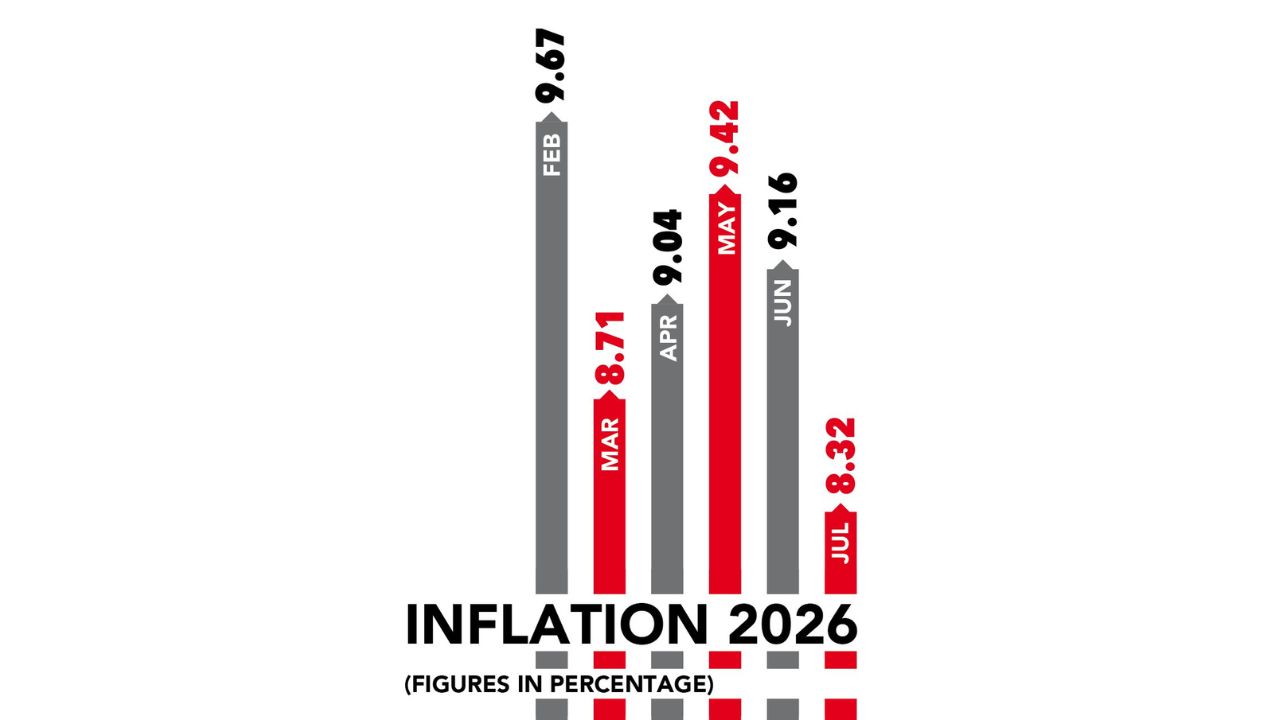
Average inflation for the fiscal year that ended in June stood at 8.68 per cent- well above the government’s revised 7 per cent target. The government has now set a fresh target of 7.5 per cent for the current fiscal year, one economists say may prove equally difficult to hit.
Economic growth
International lenders have grown more cautious. The IMF cut its growth forecast for the fiscal year beginning this July to 3.5 per cent, down sharply from its earlier estimate of 4.3 per cent, citing banking-sector weakness and stalled revenue reforms.
The World Bank and Asian Development Bank remain slightly more optimistic, projecting 4.6 per cent and 4.5 per cent respectively.
Development spending
Annual Development Programme implementation for the fiscal year, spanning both the outgoing interim administration and the new government’s first months, closed at a record-low 67.52 per cent, according to the Implementation Monitoring and Evaluation Division.

There were early signs of a pickup under the new administration: February spending of Tk 1,277 crore was nearly double the same month a year earlier, though officials caution that roughly 1,300 ongoing projects remain under review, slowing disbursement.
Law and order
Police data show 915 murder cases nationwide in the government’s first three full months, March through May, more than ten killings a day, and above the 767 recorded over the same months in 2025.

Monthly tallies from the Human Rights Support Society show political violence has fluctuated rather than fallen: 113 incidents in March left at least 18 dead, easing to 64 incidents in May before rising again to 58 incidents and nine deaths in June.
Separately, HRSS recorded 71 deaths in 132 mob-related incidents across the four months spanning the election and the government’s early weeks, prompting Home Minister Salahuddin Ahmed to publicly warn that “mob culture” would not be tolerated.



Press freedom
Bangladesh fell three places to 152nd of 180 countries in the 2026 World Press Freedom Index, placing it in Reporters Without Borders’ “very serious” category.
The Committee to Protect Journalists, marking the government’s first 100 days, said police were conducting background checks and profiling journalists nationwide, and renewed its call for the government to withdraw cases against journalists Farzana Rupa and Mozammel Haq Babu, both still jailed on charges CPJ describes as politically motivated despite a BNP campaign pledge to protect the press.
Health services
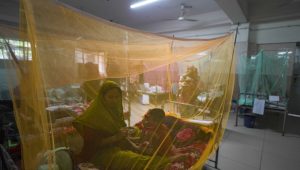
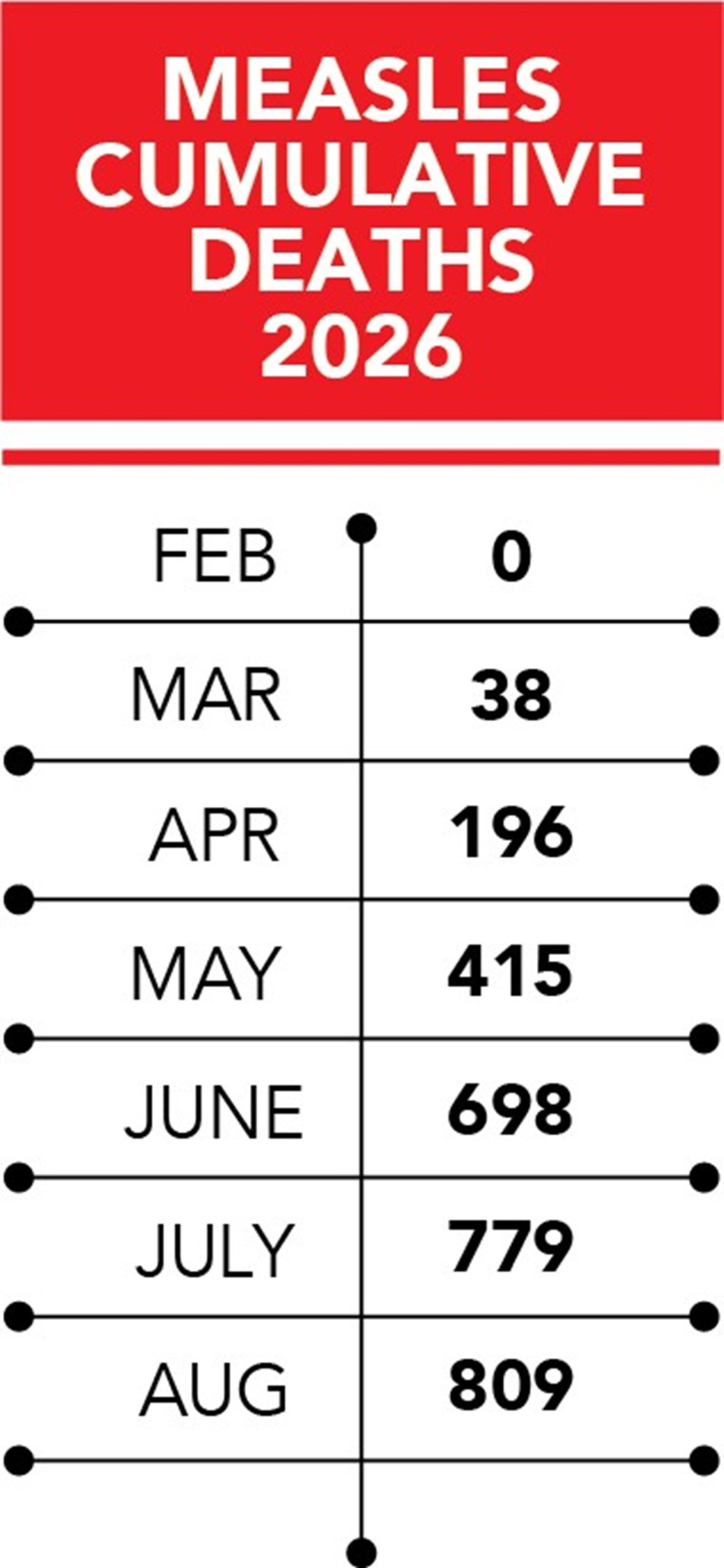
What the government could once point to as an early success has since become one of its most severe crises. The measles outbreak that had produced roughly 1,400 confirmed cases and at least 128 deaths by April has since spiralled into what health authorities now describe as the largest measles outbreak in the world by case count.
As of the first half of August, the Directorate General of Health Services had recorded close to 809 confirmed and suspected deaths, more than 17,000 laboratory-confirmed cases and upward of 136,000 suspected cases since the outbreak began in mid-March, with children under five accounting for the large majority of infections.
An emergency immunisation drive has since reached more than 19 million children, exceeding its original target, and the 2,161 new hospital beds approved since the government took office have added badly needed capacity.
But researchers tracking the outbreak have traced much of its scale to a policy decision that predates the current government: a shift away from the Gavi-supported, UNICEF-managed vaccine procurement system by the end of 2025, compounded by broader aid cuts that disrupted routine immunisation infrastructure well before the first cases were confirmed.
Energy and power
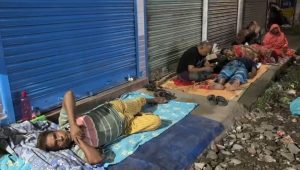
The power situation has deteriorated sharply since the summer began. Chronic shortages of gas, LNG and coal have pushed load-shedding beyond levels recorded during the notorious 2023 crisis, with the shortfall peaking above 3,750 megawatts this month, surpassing the previous record of 3,419MW set in June 2023.
Rural consumers in the worst-affected districts have reported outages running as long as 12 to 16 hours a day, and for the first time since the crisis began, the disruption has reached Dhaka itself, with residents in parts of the capital now facing repeated cuts after weeks in which urban areas had largely been shielded.
Much of the shortfall traces to reduced supply from the Excelerate Energy-operated floating LNG terminal in Cox’s Bazar, disrupted since 21 July and only partially back online, compounded by technical faults curbing coal-fired output.

On Prime Minister Rahman’s instruction, following consultation with opposition leader Shafiqur Rahman, the government has begun extending load-shedding into urban areas to spread the burden more evenly — a move State Minister for Power, Energy and Mineral Resources Aninda Islam Amit told parliament reflected “the spirit of the July uprising.”
The Bangladesh Palli Bidyut Association, which supplies roughly 80 per cent of the country’s electricity consumers, has since sought police protection for its offices and grid infrastructure amid growing public anger over the outages.
Taken together, the six-month record shows a government that has stabilised the currency and reserve position it inherited, while struggling to translate that stability into faster growth, secure streets, a healthier population, or a freer press – the very promises that carried it to office.
Diplomacy
If the domestic record is mixed, the government’s diplomatic outreach has been more assertively positive – and more closely watched, at least outside India. Prime Minister Rahman’s first overseas tour, a two-nation trip to Malaysia and China in late June, produced Dhaka’s largest single diplomatic haul in years: 15 memorandums of understanding, two agreements and a 16-point joint communiqué with Beijing, alongside a Chinese pledge of roughly $300 million in grant assistance and an agreement to explore a “2+2” foreign-and-defence dialogue.
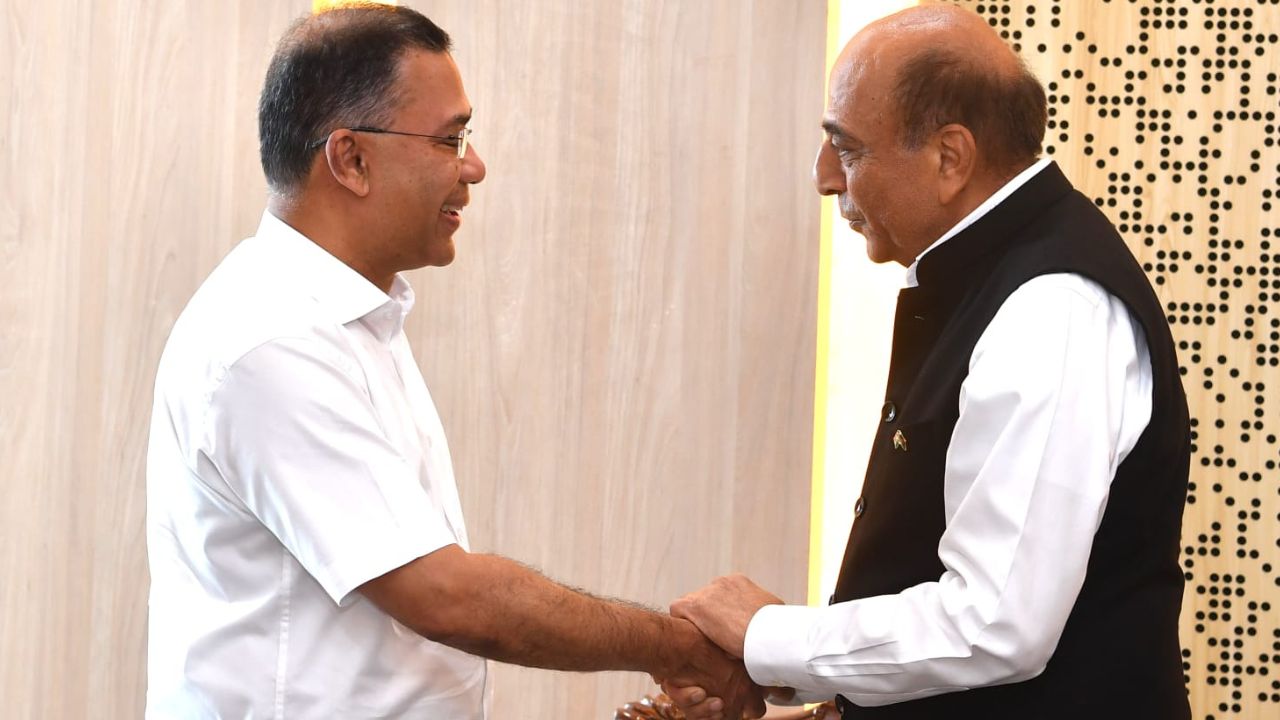
Talks also touched on the long-stalled Teesta River project, modernisation of Chattogram and Mongla ports, and a proposed China-Myanmar-Bangladesh economic corridor.
With India, the picture has been markedly different.
Despite two separate invitations from New Delhi – a bilateral visit offered when Rahman took office in February, and a later invitation to attend next month’s BRICS Summit outreach session in his capacity as current BIMSTEC chair – the prime minister has decided not to travel to India, according to government sources, closing off weeks of unresolved back-channel negotiation.
The decision follows a prolonged standoff over Dhaka’s demand for assurance that ousted former prime minister Sheikh Hasina will not be permitted to engage in political activity from Indian soil, alongside Bangladesh’s continued push for her extradition to face trial at home.