
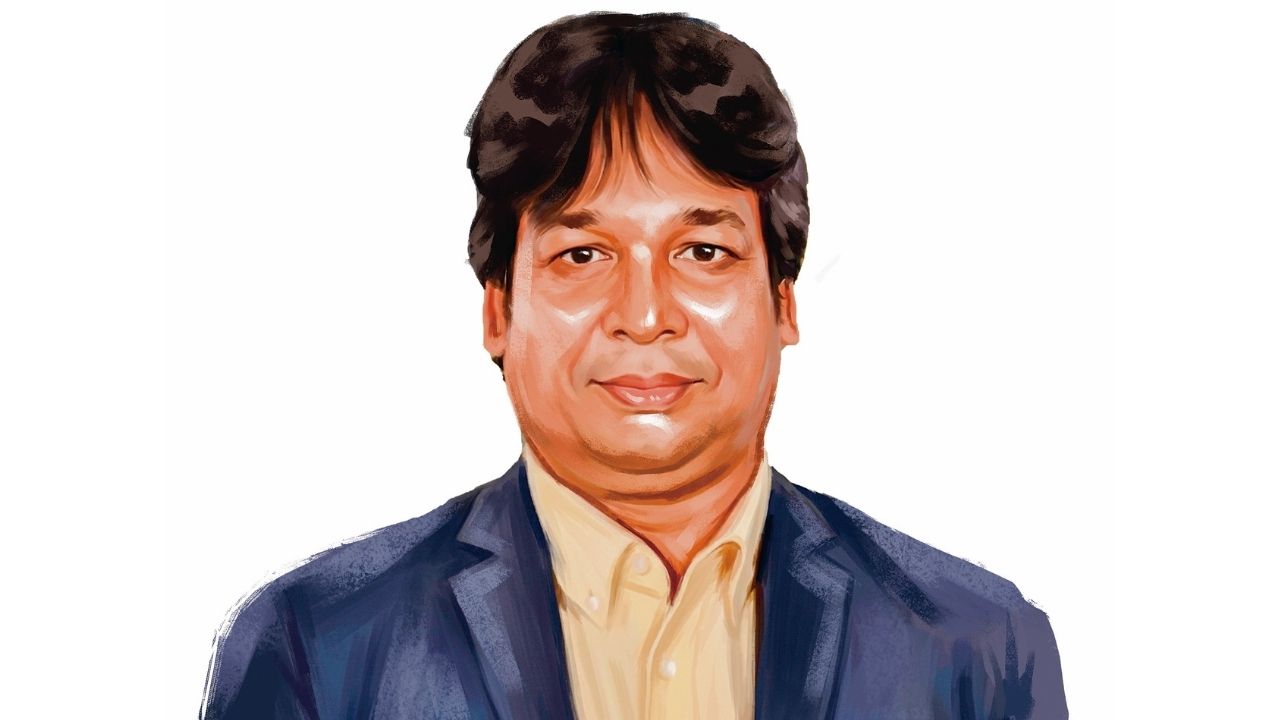

As expected, the ruling BNP candidate, its outgoing Secretary-General Mirza Fakhrul Islam Alamgir, won the presidential election on August 20, becoming Bangladesh’s 23rd President since independence in 1971.
He defeated Col. (Retd.) Oli Ahmad, the candidate fielded by the main opposition alliance, comprising Bangladesh Jamaat-e-Islami, the Gen-Z-led National Citizen Party (NCP), and other smaller Islamic faith-based parties.
According to official results published by the Election Commission, Alamgir secured the presidency by receiving 255 votes against Oli Ahmad’s 88 in the 350-strong unicameral legislature.
The outcome of the indirect election was predictable due to a constitutional provision which forces the MPs to vote along the party directives or face the loss of their parliamentary seats.
Jamaat-e-Islami, historically a long-standing ally of the BNP, drew scrutiny for contesting the election; the common people see it as a mere formality.
Officially, Jamaat leaders stated that they nominated Oli Ahmad – a freedom fighter recognized with a national gallantry award for his role in the 1971 War of Independence against the occupying Pakistan Army and its local civilian auxiliary forces, which included Jamaat and its front organisations – to strengthen the democratic process restored after the downfall of authoritarian Awami League rule in August 2024.
Social media discussions suggested that the Jamaat-NCP alliance might have abstained from fielding a candidate had the BNP nominated Nobel Laureate Muhammad Yunus, making him a president of national consensus.
During a television talk show, a prominent Jamaat commentator noted that his party would have supported a non-partisan figure like Yunus, arguing that the presidency, as the titular head of State in a parliamentary system, should be held by a neutral individual.

However, was Jamaat’s decision to nominate Oli Ahmad – who had launched broadsides against Jamaat for years over its 1971 role – driven solely by a desire to strengthen the democratic system? I think their explanation is partly true, and the move instead represented a mutually advantageous tactical decision for both Oli Ahmad and Jamaat.
An introspection into Oli Ahmad’s political career will help readers understand the probable political mileage Oli Ahmad stands to gain from being the presidential candidate of the Jamaat-NCP alliance with no chance of winning.
A former minister in the BNP government (1991–1996), Oli Ahmad was a close associate of BNP founder and popular military ruler Maj. Gen. Ziaur Rahman, who was assassinated in a military coup on May 30, 1981. He previously served as a member of the BNP’s highest decision-making body, the standing committee.
However, his influence within the party leadership eroded prior to the 2001 general elections due to his open fight with a local Jamaat leader in two constituencies in Chattogram district as the BNP and Jamaat forged a four-party alliance to challenge their common rival, the then-ruling Awami League, in the upcoming general elections. Jamaat had strong political support in Chattogram-14 and 15 seats while Ahmad desperately sought to consolidate his personal political base there.
The BNP-Jamaat could not select a common candidate for one of the two seats, leaving it to an open contest between Oli Ahmad and Jamaat’s candidate Shahjahan Chowdhury. Oli Ahmad lost to Shahjahan Chowdhury, but won a seat in another constituency. The defeat persuaded him to launch frequent anti-Jamaat broadsides in the following years.
In the October 2001 elections, the BNP-Jamaat alliance came to power with a two-thirds majority. Two senior controversial Jamaat leaders were made ministers while Oli was sidelined.




He was also critical of three-time Prime Minister and BNP Chairperson Khaleda Zia for her decision to elevate her eldest son, current Prime Minister Tarique Rahman, to the forefront of party leadership as her successor. Oli Ahmad could not accept the growing influence of Tarique Rahman in the BNP.
At the tail end of the BNP-Jamaat government’s five-year tenure in October 2006, Oli Ahmad, along with some disgruntled MPs, joined another senior BNP leader and former President AQM Badruddoza Chowdhury’s newly floated Bikalpa Dhara party.
The new party joined the opposition Awami League-led alliance, creating political chaos that led to the declaration of a state of emergency on January 11, 2007. Oli Ahmad was one of the former BNP leaders who collaborated with the army-backed caretaker government dictated by Army Chief Gen Moeen U. Ahmed, his close aide Lt. Gen. Masud Uddin Chowdhury, and others.
As part of its political purge policy, the military-backed government arrested the immediate-past Prime Minister Khaleda Zia, her two sons Tarique Rahman and Arafat Rahman, and Awami League chief Sheikh Hasina. Tarique was mercilessly tortured in the army-led cell supervised by Lt. General Masud Uddin Chowdhury.
According to a political deal, the caretaker government forced Tarique Rahman to go into exile in Britain in 2008, citing medical treatment as the reason.
Oli Ahmad left Bikalpa Dhara and formed another platform, the Liberal Democratic Party (LDP). Oli’s LDP was subsequently fragmented into three smaller parties.
In the December 2008 general elections, Oli Ahmad became an MP from a seat in Chattogram with the concession of the Awami League, which formed a government in January 2009. He was elected chairman of the parliamentary standing committee on the Ministry of Planning. His alliance with the Awami League did not last long.
Ahead of the 2014 elections, he joined the opposition BNP-Jamaat alliance against the Awami League. The changed political landscape following the downfall of authoritarian Premier Sheikh Hasina through a mass upsurge in August 2024 left Oli Ahmad’s political career and influence precarious.
Oli Ahmad stood in the midst of a political field where Tarique Rahman was the main political player. He wanted his son Omar Fruk to succeed him as MP for one of the two seats: Chattogram-14 or 15. However, his son was unlikely to survive the contest against the BNP and Jamaat.
To the utter surprise of many, Oli Ahmad joined the Bangladesh Jamaat-e-Islami-led alliance ahead of February 2026. He had called Jamaat an organization of war criminals for decades. His son received the Jamaat’s support for the Chattogram-14 seat but lost to the BNP candidate.
He apparently compromised his ideological position on Jamaat due to two factors. First, he wanted his son to become an MP on the Jamaat’s votes, as the party has a strong presence and influence in the aforementioned two seats in Chattogram.
His son has yet to show political charisma, for which he needs a strong backing from a party like the BNP or Jamaat. The BNP was unlikely to accept either Oli Ahmad or his son due to their weak organisational strength and support. So, Jamaat was his best option.
The second advantage was protecting himself from the probable political vengeance of the BNP, given his role in the “political conspiracy” against the BNP in 2007–08. Lt. Gen. Masud Uddin Chowdhury had already been arrested in connection with a criminal case, but political leaders attribute the arrest to his anti-BNP role two decades ago.
Gen. Masud’s arrest may have alerted Oli Ahmad, prompting him to seek political protection from a big party or alliance. Jamaat was the best-suited party, as any attempt by the BNP to implicate Oli Ahmad in a criminal case would be construed as a purge of the opposition.
Getting a reputed freedom fighter like Oli Ahmad on board is a gift for Jamaat, which is known as a pro-Pakistan party that committed war crimes and crimes against humanity alongside the genocidal Pakistan Army.
The expulsion of its freedom-fighter MP Gazi Nazrul Islam for immoral sexual behaviour – exposed through a leaked viral video in recent months – was a further blow to the party’s image. By making Oli Ahmad their presidential candidate, Jamaat can claim to have reputed freedom fighters in their alliance.
The second gain for the Jamaat-NCP alliance is that it would bring the issue of reform and the implementation of the referendum verdict on constitutional reform to the fore. The NCP chief and Chief Whip of the Opposition in Parliament, Nahid Islam, stated that Oli Ahmad would have been the best guardian of the country at this time.
Party leaders have already started campaigning on claims that the BNP does not respect the July Charter, which called for the reform of Article 70 to allow MPs to vote by secret ballot to elect a president of their choice without party directives.
The third strategy is to send a message to the ruling BNP that Mirza Fakhrul Islam Alamgir – who vehemently criticised Jamaat for its anti-liberation and genocidal role in the post-August 2024 political landscape – is not a consensus candidate. He is a BNP candidate and the BNP’s President.
It is worth mentioning that Alamgir’s anti-Jamaat comments ahead of the elections riled Jamaat leaders and activists, leading him to be portrayed as a pro-India politician – an allegation that was hardly substantiated. The party, however, did not anger the BNP by criticising the presidential election.
The ruling BNP and opposition Jamaat shared a broader understanding that the February 2026 elections were free, fair, and inclusive. By fielding Oli Ahmad as the presidential candidate, the Jamaat-led alliance brought more legitimacy to the election of Mirza Fakhrul Islam Alamgir as President.
The most critical underlying message Jamaat and its allies conveyed to the BNP is that they lack faith in the new President, Mirza Fakhrul Islam Alamgir. In the event of a political crisis in the coming days, the Jamaat-NCP alliance may not cooperate with him.