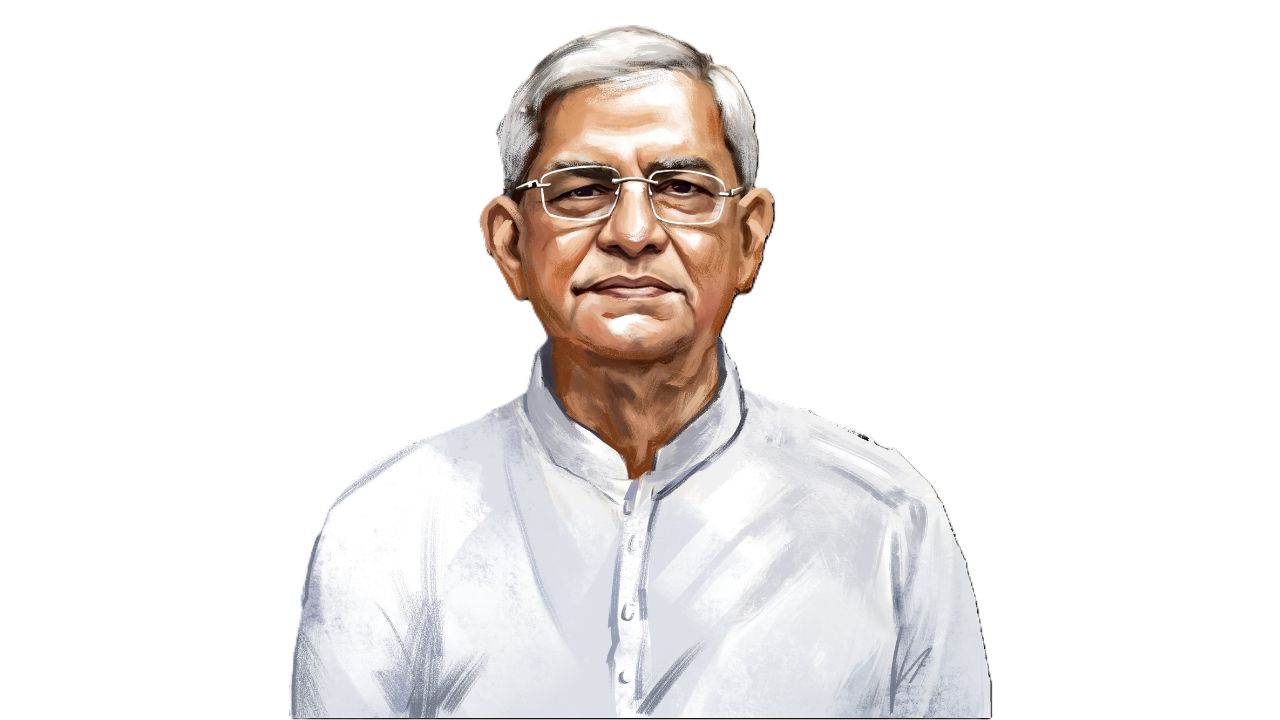



From student politics and leftist activism to teaching, government service and frontline politics — Mirza Fakhrul Islam Alamgir’s journey to the country’s highest constitutional office has spanned more than six decades.
Fakhrul, who is set to become the next president, has built a reputation as a moderate and courteous politician with acceptance beyond his own party. His move to Bangabhaban is now matter of formalities, with constitutional provisions leaving little scope for an alternative outcome.
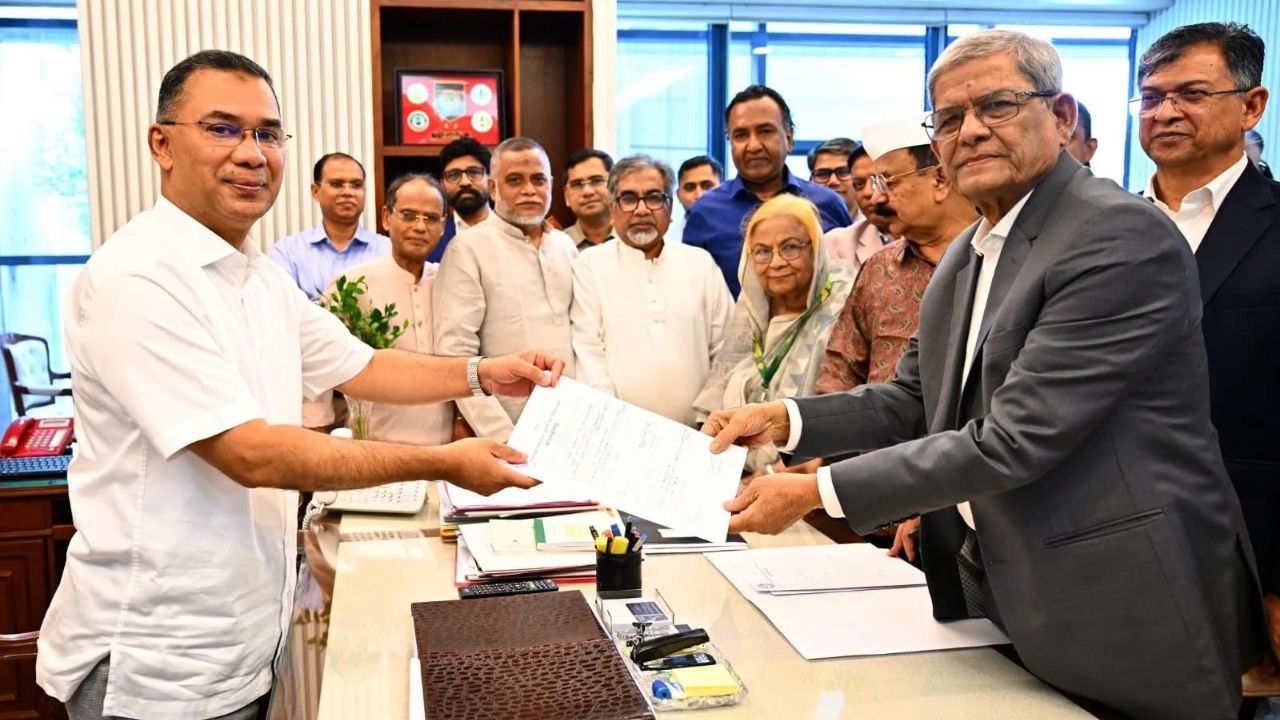
A few hours before the deadline for submitting nomination papers, BNP Chairman and Prime Minister Tarique Rahman handed over the party’s nomination form to Fakhrul.
Tarique finalised Fakhrul’s nomination at a meeting with senior party leaders at the Secretariat on Thursday afternoon. BNP Senior Joint Secretary General Ruhul Kabir Rizvi announced the decision after the meeting.
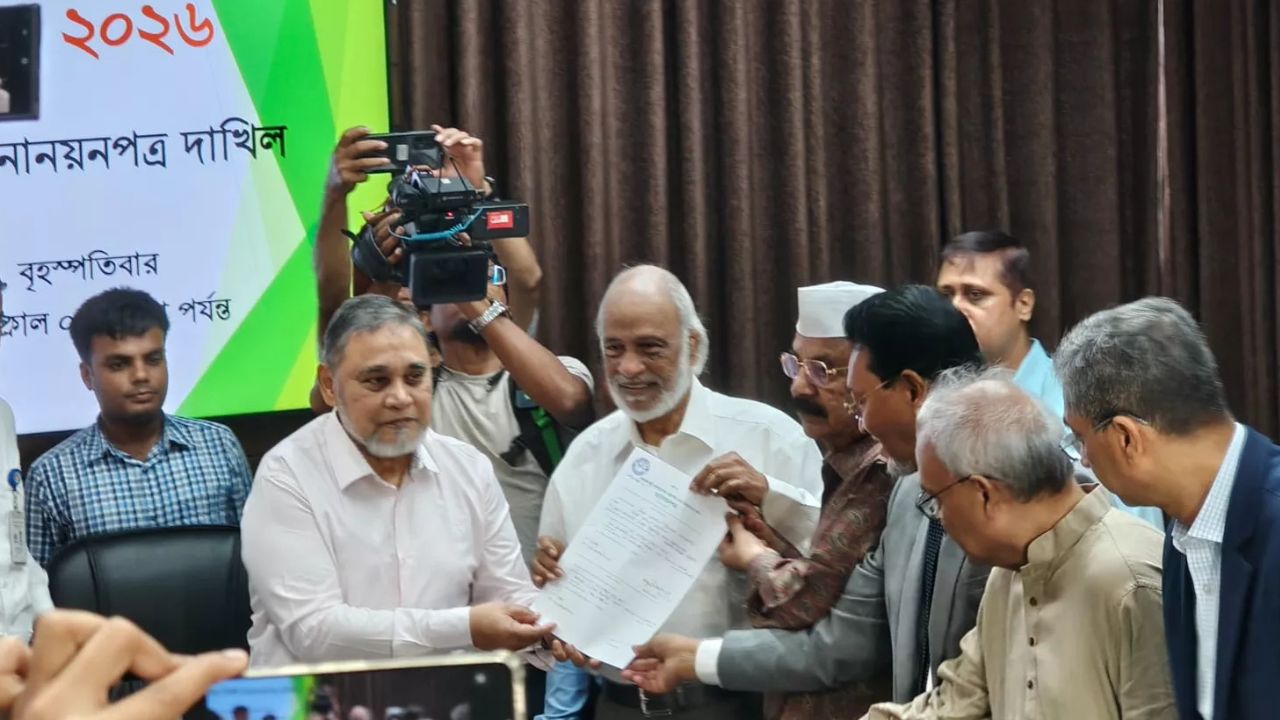
A BNP delegation later submitted Fakhrul’s nomination papers to Election Commission.

Fakhrul later resigned as BNP secretary general and standing committee member following his nomination. He will, however, continue as LGRD minister until his election as president.
The 23rd presidential election will be held on 20 August, according to the election schedule, marking the first presidential vote involving polling since 1991.
Fakhrul became BNP’s acting secretary general in 2011 and was appointed secretary general at the party’s sixth national council in 2016. BNP leaders credit him with helping keep the party united during difficult periods, including the one-eleven political crisis and the long tenure of Awami League government.
During that period, BNP Chairperson Khaleda Zia remained away from active politics due to illness after spending a long period in jail. After her imprisonment in 2018, Tarique Rahman, then staying in the UK, became acting chairman of BNP. Fakhrul coordinated party activities between the two leaders and maintained organisational continuity.



Fakhrul’s only rival in the presidential election is Oli Ahmed, nominated by the Jamaat-led 11-party alliance. However, BNP lawmakers cannot support any candidate outside the party’s decision due to constitutional provisions.
Following the resignation of the 22nd president Md Sahabuddin on 24 July, Speaker Hafiz Uddin Ahmed has been serving as acting president. Several names emerged as possible successors before BNP finalised Fakhrul as its candidate.
Election Commission will scrutinise nominations on 16 August, while candidates can withdraw until 4pm on 18 August. Voting will take place in the parliament chamber on 20 August from 2pm to 5pm.
The election will be the first presidential vote involving multiple candidates in 35 years. A total of 349 MPs will have voting rights, with voting conducted through open ballots. Article 70 of the Constitution will apply, meaning MPs voting against their party decision may lose their parliamentary membership.
Fakhrul’s political journey began in student politics and evolved through teaching, government service and grassroots mobilisation before he emerged as one of BNP’s key leaders.
Born on 26 January 1948 in Thakurgaon, Fakhrul is the son of Mirza Ruhul Amin, a Muslim League leader and member of the Pakistan provincial legislature. His father later served as an MP during the governments of Ziaur Rahman and HM Ershad and was a state minister in the Ershad government.
Fakhrul completed his education in Thakurgaon before earning bachelor’s and master’s degrees in economics from the University of Dhaka. During his university years, he became involved in leftist politics, serving as president of the East Pakistan Chhatra Union unit and general secretary of SM Hall.
After graduation, he taught economics at Dhaka College and worked at the Directorate of Inspection and Audit and the National Commission for UNESCO. In 1986, he resigned from government service to enter full-time politics.

He began his national political career through NAP (Bhashani) before joining BNP. In 1988, he was elected chairman of Thakurgaon municipality and became president of Thakurgaon district BNP in 1992. He later rose through the party ranks to become senior joint secretary general.
His electoral career began in 2001, when he was elected MP from the Thakurgaon-1 constituency on the BNP ticket. During the BNP government, he served as state minister for agriculture and later as state minister for civil aviation and tourism.
In the 2018 parliamentary election, Fakhrul contested from Thakurgaon-1 and Bogura-6 constituencies. Although he won Bogura-6, he did not take oath after BNP rejected the election results over allegations of vote rigging.
Following the July 2024 mass uprising, Fakhrul again contested from Thakurgaon-1. After BNP came to power, he was given charge of the Local Government, Rural Development and Cooperatives Ministry.