


Twenty-seven years after Taal became a landmark musical success, filmmaker Subhash Ghai has revealed the thinking behind his decision to cast then-rising actors Aishwarya Rai and Akshaye Khanna in the 1999 romantic drama.
In a recent conversation, as reported by NDTV, Ghai recalled how he deliberately wanted fresh faces for Taal and took a particular risk with Rai, whose public image at the time was closely associated with the beauty and pageant world.
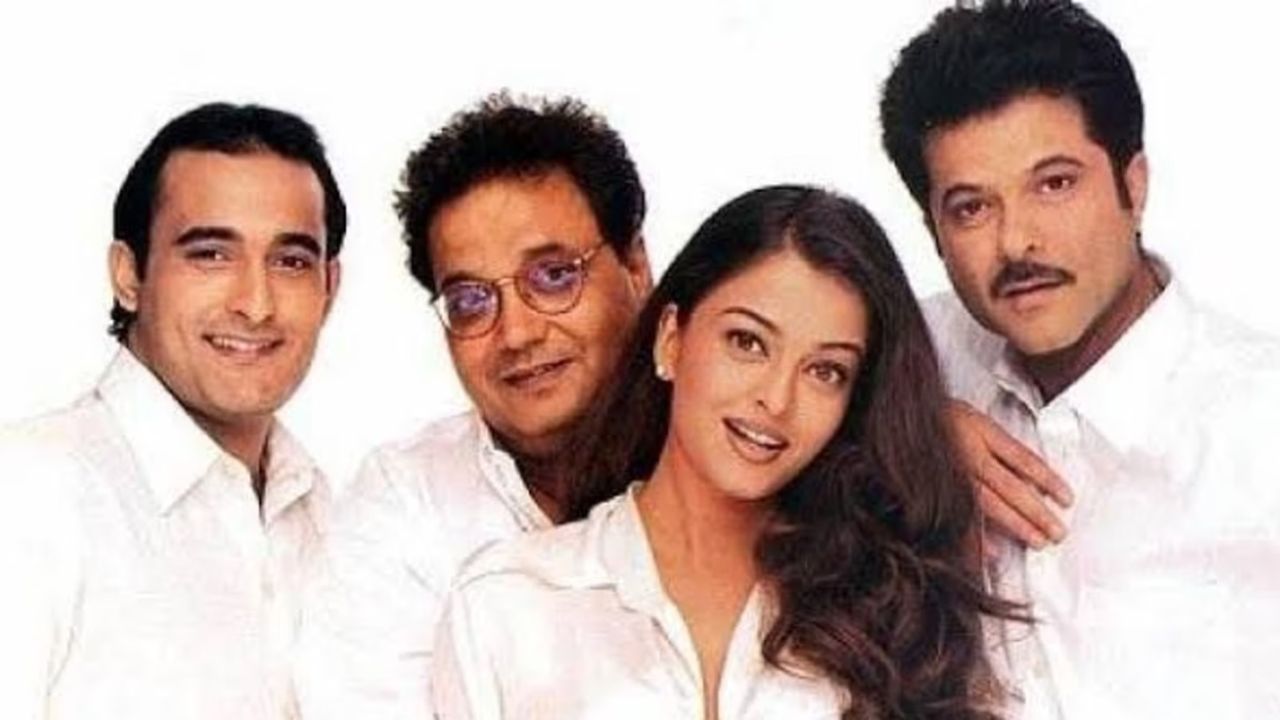
The film brought Rai and Khanna together as Mansi and Manav, while Anil Kapoor played music producer Vikrant. The story follows Manav, a wealthy NRI businessman, who falls for Mansi, a talented singer and dancer from a small town. His family rejects her because of her background. Mansi later finds success after meeting Vikrant, who also falls in love with her but eventually helps reunite her with Manav.
Taal went on to become a major commercial success and made history as the first Indian film to enter Variety’s Top 20 box-office chart.
Ghai recently revealed that Khanna came into the project through his father, actor Vinod Khanna. Ghai said he immediately liked the young actor because he found him intense. Khanna had made his debut in Himalay Putra in 1997, while Rai had made her acting debut the same year in Mani Ratnam’s Tamil political drama Iruvar.

Rai’s casting came through choreographer Saroj Khan. Ghai wanted an actress who could convincingly play Mansi, a gifted singer and dancer. When he asked Saroj Khan whom he could consider apart from Madhuri Dixit, she suggested Rai.
But Ghai did not want Rai’s beauty to define the character. He recalled that he told her he needed to change the image she had developed through the beauty and pageant world.
“I told her that I need to destroy your image,” Ghai recalled, explaining that he wanted her to appear without make-up during the first hour of the film. Rai agreed and told him she would do whatever he asked.




For Ghai, the decision reflected a director’s responsibility to put the character before the actor’s existing image.
The approach helped shape Mansi as a character whose journey goes beyond her appearance. She begins as a young woman from a small town and gradually rises as a performer, while the film builds her relationship with Manav around romance, class and family conflict.
The chemistry between Rai and Khanna also became one of the film’s defining elements. Ghai used music, choreography and visual spectacle to frame their romance, with AR Rahman’s songs, including Taal Se Taal Mila and Ishq Bina, becoming central to the film’s identity.
Ghai also reflected on one of the film’s intimate romantic scenes involving Rai and Khanna. He said the scene was designed around the emotional, mental and spiritual connection between the characters rather than physicality.
For him, the approach reflected the way romance worked in classic Indian cinema. He cited Mughal-e-Azam as an example of a film where emotional and spiritual intimacy came before physical expression.
“I am glad people accepted the spiritual journey of the two lovers,” Ghai said.
The filmmaker also believes Taal might have faced a very different reception had it arrived in the age of social media.
Ghai said the film would probably have faced heavy trolling if it had been released today. He recalled that audiences and television channels initially criticised its slow pace and long songs. The film also faced uncertainty during its first few days in India, even as it began drawing a strong overseas response.
He remembered being in London when his distributors told him that Taal had generated extraordinary demand in New Jersey. At one point, a 21-screen complex was showing the film on 19 screens because of the rush.
Ghai said he and his team wondered why overseas audiences were responding to the film while some Indian viewers remained unconvinced. His distributors suggested that industry rivals and detractors were trying to prevent the film from receiving recognition.
The uncertainty did not last. The film gradually found its audience and became an enduring part of Bollywood’s musical legacy.
Today, Taal remains closely associated with its lush visual style, romance, dance and AR Rahman’s music. For Ghai, the film’s lasting appeal also validates the risk he took in casting actors who had yet to become the stars they would eventually become.