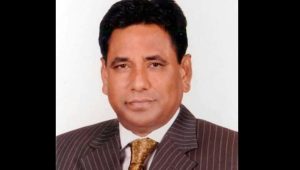
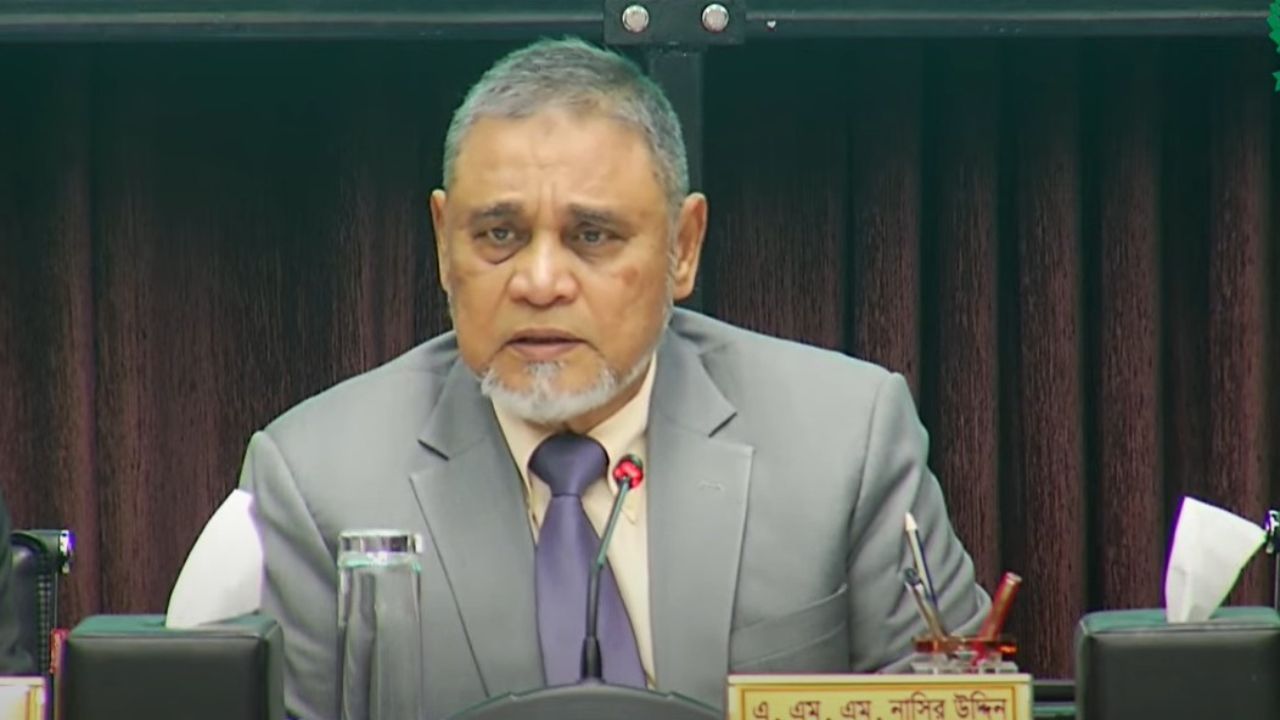
The Bangladesh government has moved to have the bail granted by a Dubai court to former police chief Benazir Ahmed cancelled as part of its efforts to bring him back home to face corruption and other charges.
Multiple police sources said a court in the United Arab Emirates granted Benazir three months’ conditional bail on 27 July. He was released from prison last Thursday, three days after the order was issued.
As soon as the news emerged on Sunday, Home Minister Salahuddin Ahmed said the government had instructed its appointed law firm in Dubai to seek cancellation of the bail.
The conditions include a ban on leaving the UAE, although the government is still trying to obtain a certified copy of the court order to determine whether any further restrictions were imposed.
“As soon as I heard the matter, I spoke to the Home Secretary. The secretary then contacted our ambassador in Dubai,” Salahuddin told reporters after an event at the Bangladesh Police Academy in Sarda, Rajshahi.
“We appointed a law firm a few days ago solely to deal with this matter. It has been instructed to seek cancellation of the bail,” he said.

The minister expressed hope that the bail would be revoked and Benazir could be returned to Bangladesh at the earliest possible time.
Earlier on Sunday, the National Central Bureau, the Interpol wing of Police Headquarters in Dhaka, claimed it had no information about Benazir’s release.
At around the same time, Prime Minister’s Foreign Affairs Adviser Humayun Kabir told reporters at the Secretariat that the Home Ministry had begun the process of bringing him back.
The Anti-Corruption Commission has filed six corruption cases against Benazir. Trial proceedings are under way in one case, while the remaining five are still being investigated.




Interpol issued a Red Notice against him on 11 April 2025. Dubai Police later arrested him on the basis of that notice, and the UAE authorities informed the Bangladesh government by email on 12 June.
Home Minister Salahuddin told parliament on 14 June that Bangladesh had to submit a formal extradition request through diplomatic channels within 30 days of the arrest. He said the government would coordinate with NCB Abu Dhabi to bring Benazir back swiftly.
Media reports have since referred to exchanges of correspondence among the ACC, Police Headquarters and Interpol over the extradition process.
Benazir served as inspector general of police from 15 April 2020 to 30 September 2022. He previously headed Dhaka Metropolitan Police and the Rapid Action Battalion.
The United States imposed sanctions on Benazir and six other former and serving RAB officials in December 2021 over allegations of serious human rights violations.
Details of Benazir’s and his family’s vast wealth emerged several months before the Awami League was ousted in the 2024 mass uprising, prompting the ACC to launch an investigation.
Reports later surfaced that he and his family had left Bangladesh in May 2024.
On 15 December that year, the ACC filed four cases against Benazir, his wife Zeeshan Mirza and their two daughters over allegations of acquiring illegal wealth worth Tk74 crore and concealing asset information.
Benazir was accused of acquiring Tk9.44 crore in assets beyond his known sources of income and concealing information about assets worth Tk2.62 crore.
Zeeshan was accused of amassing unexplained assets worth Tk31.69 crore and concealing information about assets worth Tk16.01 crore.
Their elder daughter, Farheen Rishta Binte Benazir, was accused of acquiring illegal wealth worth Tk8.75 crore, while their younger daughter, Tahseen Raisa Binte Benazir, was accused of acquiring Tk5.59 crore in illegal assets.
The ACC has traced extensive family assets, including about 345 bighas of land in Dhaka, Gazipur, Narayanganj, Gopalganj, Madaripur, Bandarban and other parts of the country.
Following court orders, large tracts of land, flats and shares in different companies held in the names of Benazir and his family members have been attached.
Their savings certificates, bank accounts and beneficiary owner accounts used for share trading have also been frozen.