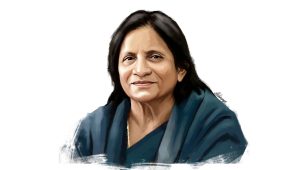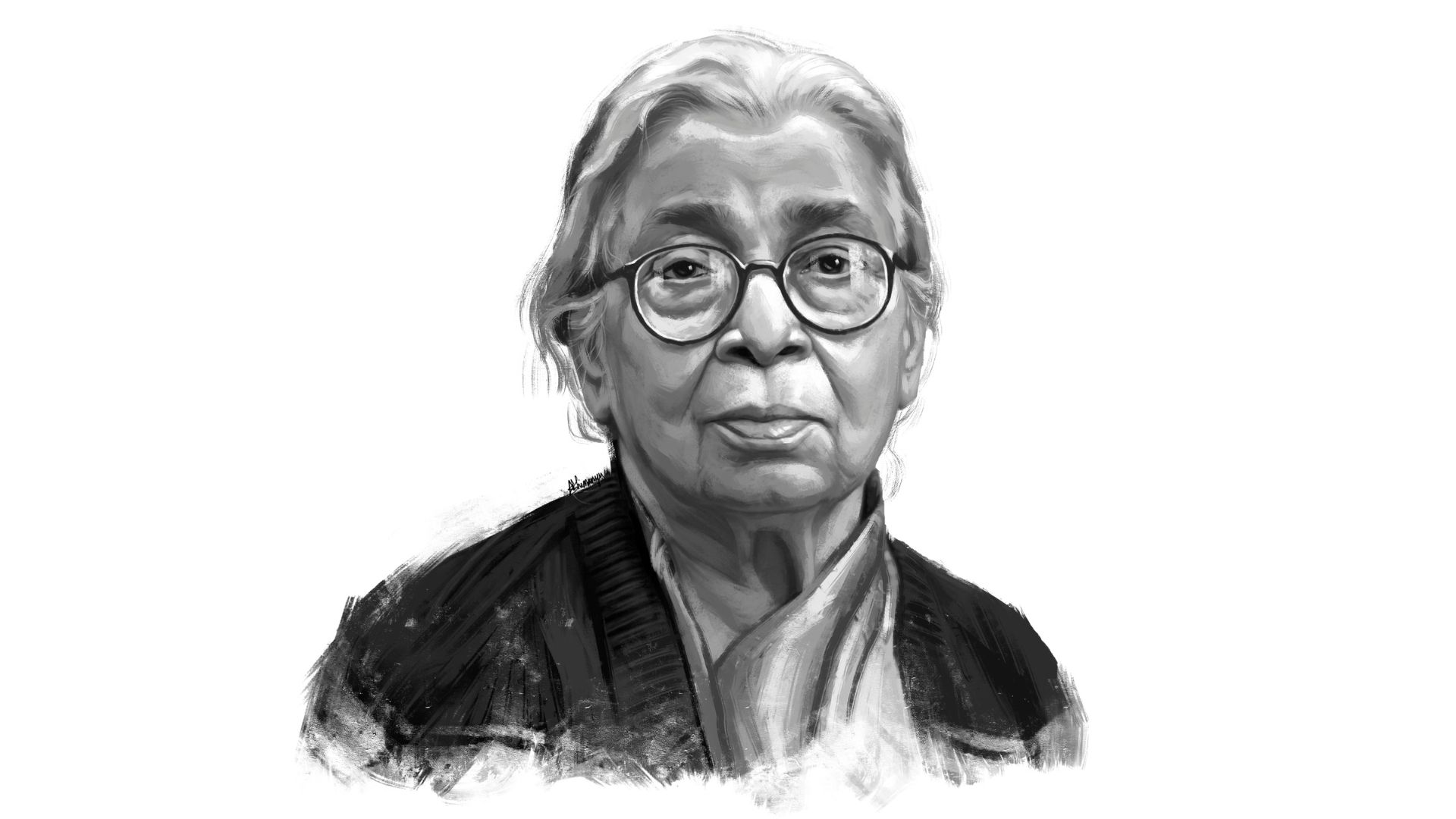

While searching the web about her, every description of Mahasweta Devi’s writing desk mentioned the same odd detail: A page-a-day calendar, absurdly named “Champion,” hanging crooked within arm’s reach.
Accordingly, around it sat the plain instruments of a workday, a pad for longhand drafts, an old anglepoise lamp, a shelf sagging under anthropology and science reference texts in which she had never read, disciplines in which she had had no “formal training”, in and read anyway.
The telephone stayed off the hook. She had little patience for people who wanted her at functions. She wanted to work.
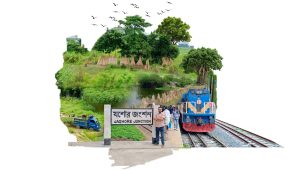
Last Tuesday, 28 July, marks a decade since that desk fell silent. It is worth remembering, on this side of the barbed wire border, that the woman at it was born in Dhaka, at her uncle’s house on Zindabahar Lane, Armanitola, in January 1926, the eldest of nine children to a poet father and a writer mother. The family moved west while she was still a girl. But the birth record stays borderless. She is part of this land too, whatever the map later decides.

Mahasweta studied English literature at Santiniketan and Calcutta University, and nothing in that record explains what she did next. She got on buses and country trains and walked into the forest and river-island villages of Bengal and Bihar. She stayed not for a season of fieldwork (as a visiting researcher often does); she stayed for years at a stretch among the Lodha and the Shaba.
British law had labelled these communities “criminal tribes” by birth, a label they were still fighting to shed. The Kheria Sabars of Purulia came to call her Ma. The Santals called her Marang dai, or elder sister. This was more than a figure of speech; she had built their bonded labourers’ unions, written their court petitions, and led their processions.


The clearest proof of what she meant by scholarship is the magazine Bortika. It had once been her father’s small literary journal. She rebuilt it into something close to unheard of among the contemporary elite middle-class literati: A quarterly where rickshaw-pullers, migrant labourers, and “landless” peasants wrote about their own lives, under their own names, unedited into someone else’s idea of how the subaltern should sound.
A rickshaw-puller had once stopped her to ask what a word in one of her books meant. The word was jijibisha: The will to live. She asked him to write for Bortika rather than just read it. Manoranjan Byapari, the rickshaw-puller, had taught himself to read and write in prison and is now one of Bengal’s most widely read Dalit writers, with dozens of books to his name.
This single anecdote highlights one of her most remarkable traits: She did not treat the poor as subjects to be written about. She treated them as writers who had been denied a page.
Her fiction ran on the same current but at a higher voltage. In “Draupadi”, a native Naxalite woman named Dopdi is captured, gang-raped, and expected, the next morning, to cover herself in shame. She refuses, undressed and unbroken by choice, meeting her captors and turning the violence done to her body into a weapon against the men who did it.
In “Aranyer Adhikar”, she reconstructed the life of Birsa Munda, the Adivasi rebel who had died in a British jail in 1900. He was from the same forests on whose soil she had walked for decades. Her activism during those decades is why, in June 2016, the Jharkhand government finally removed the chains from Munda’s memorial statue. A colonial photograph had been put there, and “independent” India had simply copied without asking why. She did not live to see the statue stand corrected for long. She died weeks later.
Ten years ago, this week, Mahasweta Devi passed away. Her method is still sitting there, unclaimed by most of the people who cite her. Her scholarship asks for nothing you need a university’s permission for: Go where the record has erased people, stay long enough to be trusted rather than merely informed, and when you finally write, write in a way that leaves room on the page for someone else’s hand. This can be done no matter which side of the barbed wire border you are on.
Just be present, notice, acknowledge, and stay with trouble. May the ghost of Mahsawati Devi never leave us.