


It did not start with a camera, a screenplay, or even a grand ambition to make a movie.
It began with a little girl tucked away in one of Dhaka’s oldest beauty salons, silently absorbing hushed whispers about a bride who had mysteriously met her end right there.
To most, it was just another local urban legend, but for filmmaker Rubaiyat Hossain, it became a haunting tale she could never quite shake.
Nearly two decades on, that lingering childhood memory has propelled Bangladeshi cinema onto one of its grandest international stages.
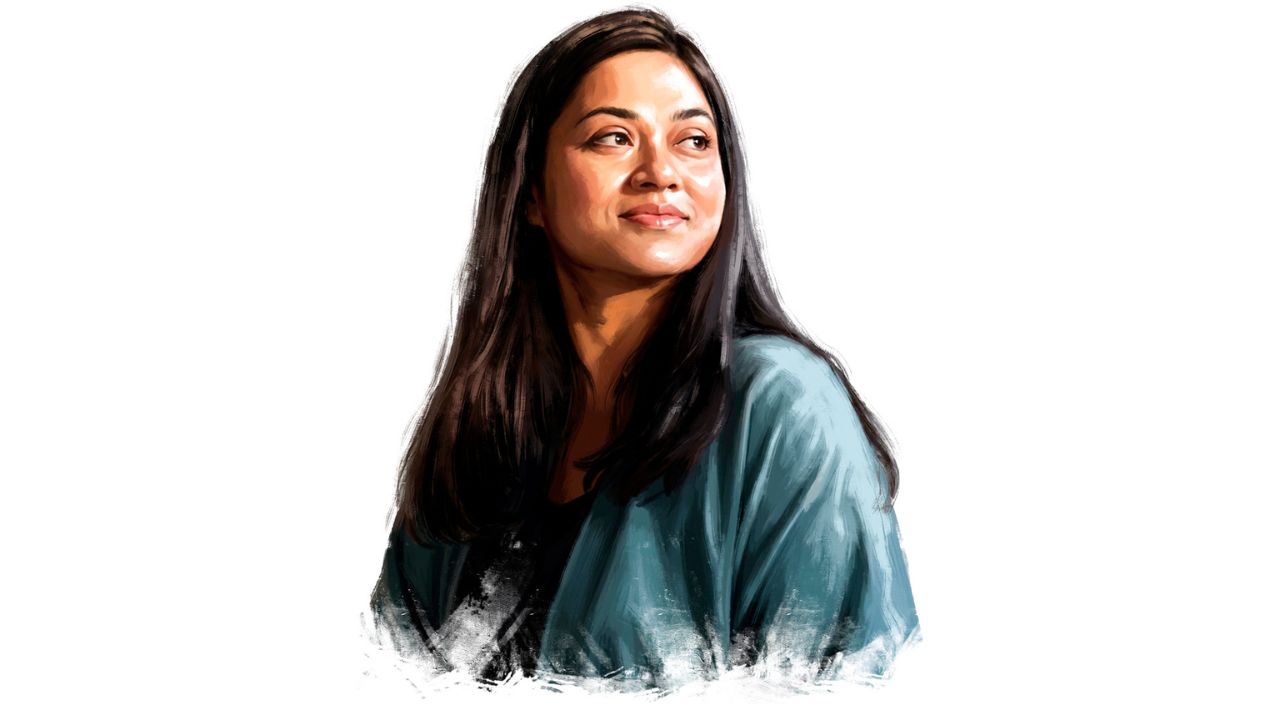
In an exclusive interview with TIMES of Bangladesh, Rubaiyat reflected on the extraordinary journey behind ‘The Difficult Bride’, the first full-length Bangladeshi feature film to be selected for the prestigious Orizzonti Competition at the 83rd Venice International Film Festival, where it will make its world premiere this September.
Standing shoulder-to-shoulder with Cannes and Berlin, Venice is widely considered a launchpad for cinema’s finest talent.
For Bangladesh, securing a spot in its official competition is a watershed moment, placing the nation’s storytelling front and centre on the global stage.
Yet for Rubaiyat, the deepest triumph remains intensely personal: finally giving life to a narrative she carried for nearly twenty years. “I worked on this screenplay for almost two decades,” she shared, bringing full circle a journey that began in the quiet corners of a Dhaka salon.

The origins of ‘The Difficult Bride’ reach back into the hazy memories of Rubaiyat’s childhood.
“When I was six or seven, my mother used to take me to Mayfair Beauty Parlour for haircuts, and that’s where I first caught wind of the story,” she told TIMES.
The chilling tale revolved around a bride who had allegedly died under mysterious circumstances inside the historic salon, a narrative that grew into a classic urban myth amongst Dhaka’s women, particularly those of her generation.
Over time, what initially read as a eerie ghost story began to unravel into something far more profound.
“I realised it wasn’t merely a supernatural tale,” Rubaiyat explained. “It was a mirror to our culture’s deeply ingrained ideas about women, beauty, marriage, and societal pressure. That’s how the film gradually took shape over all those years.”




The fruit of that long evolution is ‘The Difficult Bride’, a gripping psychological thriller grounded in the legendary salon.
“Another bride arrives at the parlour to prepare for her big day, only to be swept up in a web of strange, otherworldly occurrences,” Rubaiyat said. “The narrative slowly unspools through a blend of mystery, subtle psychology, and supernatural suspense.”
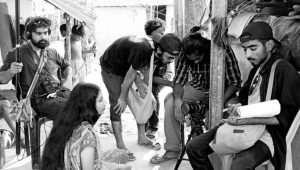
Although the screenplay was almost two decades in the making, principal cinematography was wrapped up in a swift 26 days.
“That was only possible thanks to years of groundwork, countless drafts, meticulous planning, and an outstanding international production crew,” Rubaiyat reflected.
Indeed, ‘The Difficult Bride’ is a truly global effort, bringing together production partners across Bangladesh, France, Germany, Norway, and Portugal.
Post-production was handled between Paris and Lisbon, backed by support from several leading European film funds, with international talent collaborating seamlessly across key creative and technical departments.
Yet despite its ambitious global footprint, Rubaiyat stresses that the film’s heart remains undeniably home-grown.
“International collaboration gave us access to world-class artistic and technical expertise,” she said. “But the story, the language, the characters, the culture, and the raw emotion are all deeply, authentically rooted in Bangladesh.”
Throughout her career, Rubaiyat has consistently mapped the multi-layered landscape of Bangladeshi society through the lens of women’s lived experiences.
Her debut feature, ‘Meherjaan’, courageously revisited the 1971 Liberation War from a woman’s perspective, igniting fiery debates before being pulled from cinema screens.
She followed this with ‘Under Construction’, an intimate portrait of an urban, middle-class woman wrestling with identity, and ‘Made in Bangladesh’, a sharp look at the grit and resilience of female garment workers. The latter premiered at the Toronto International Film Festival, garnering widespread international praise.
With ‘‘The Difficult Bride’’, Rubaiyat turns her gaze toward yet another facet of the nation’s social fabric. “Where ‘Under Construction’ examined middle-class women and ‘Made in Bangladesh’ focused on the working class, ‘‘The Difficult Bride’’ dives into the nuanced world and complex relationships of Bangladesh’s upper-class women,” she explained. “Each film stems from a distinct social reality, but together they strive to capture the rich complexity and diversity of our society.”
Crucially, women did not just inspire the story, they drove its execution, taking the lead both on screen and behind the lens. “Women headed key roles across acting, cinematography, editing, sound design, and international production,” Rubaiyat noted. “That shared female energy and collaborative environment truly enriched the soul of the film.”
The cast is anchored by newcomer Zaineen Karim alongside a stellar lineup of National Film Award winners, including Azmeri Haque Badhon, Sunerah Binte Kamal, and Reekita Nondine Shimu.
Despite ‘‘The Difficult Bride’’ marking Zaineen’s feature film debut, Rubaiyat was full of praise for the young actor’s remarkable performance.
“It’s Zaineen’s very first feature, yet she approached the role with incredible dedication, bravery, and emotional intelligence,” Rubaiyat shared. “She threw herself entirely into the character, pouring all her focus, energy, and heart into every single scene. I couldn’t be prouder of what she’s achieved on screen.”
Although ‘The Difficult Bride’ weaves a web of mystery, psychological depth, and supernatural suspense, Rubaiyat believes audiences will walk away with far more than the lingering chills of a genre film. “It’s a story that will stay with viewers long after the credits roll,” she observed. “It will prompt them to reflect, spark difficult questions, and perhaps even force them to confront their own buried fears and memories.”
For Rubaiyat, the film is the realisation of a vision that first took root in a Dhaka beauty salon nearly two decades ago.
For Bangladesh, it signifies a moment far grander: a distinctly local tale born in a familiar neighbourhood corner is now set to light up one of global cinema’s grandest stages, turning the page on a bold, historic new chapter for the nation’s filmmaking.