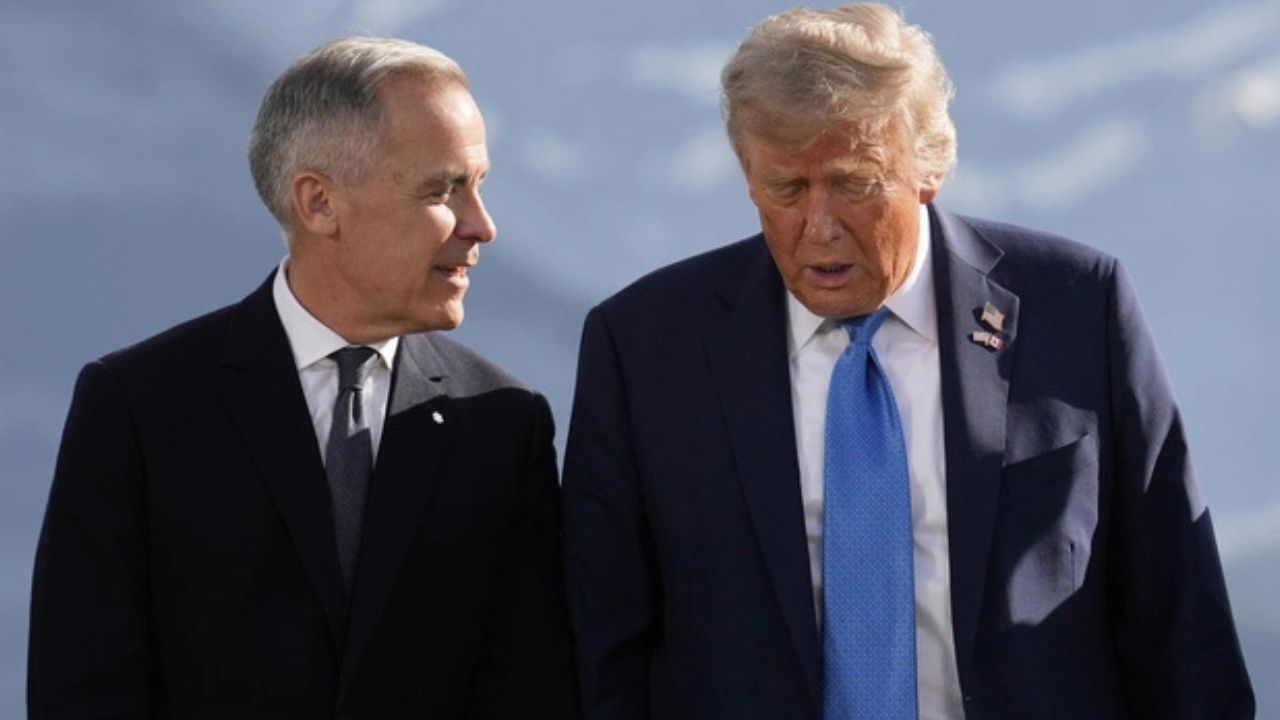



US President Donald Trump has announced a 50 per cent tariff on a broad range of Canadian goods, citing what he called “unequal treatment” of American cars, dairy and alcohol.
Everyday consumer items such as wine and hockey sticks, along with industrial products including cement, are among those targeted. Key Canadian exports including energy, potash, critical minerals and fish will be spared.
Prime Minister Mark Carney responded that Canada was prepared to “intensify” trade talks with Washington in the coming weeks. The White House said the new duties, set to take effect in 30 days, represent a major escalation in trade tensions between the two neighbours.
The tariffs apply to all covered goods regardless of whether they fall under the United States–Mexico–Canada Agreement (USMCA).

Carney, in a statement on X, condemned the move as “the latest in a series of unilateral US trade actions” taken in violation of USMCA.
He also warned of “threats to Canadian sovereignty,” a possible reference to Trump’s repeated calls to make Canada the 51st US state.
Monday’s announcement adds to existing barriers. The US already maintains tariffs ranging from 15 per cent to 50 per cent on Canadian steel, aluminium and copper, alongside a 35 per cent duty on softwood lumber and a 25 per cent tax on non‑US auto parts.




Canada has retaliated with its own 25 per cent counter‑tariff on selected imports of American steel, aluminium and vehicles.
The new duties follow Trump’s earlier threat to impose tariffs over Canadian wildfire smoke drifting into US cities, though the executive orders signed Monday make no mention of wildfires.
Instead, three proclamations cite longstanding US grievances over cars, dairy and alcohol, underscoring a breakdown in trade negotiations.
On automobiles, Trump accuses Canada of levying taxes on US vehicles and parts not covered by USMCA, calling the practice “unreasonable” and discriminatory.
Automotive manufacturing across North America is highly integrated, but Commerce Secretary Howard Lutnick has previously argued Canada should “come second” to the US.
Dairy remains another flashpoint. Canada’s supply management system caps foreign imports, with tariffs exceeding 300 per cent on goods above the quota. Alcohol has also become contentious, with most Canadian provinces boycotting US liquor since last year.
Premiers have said the boycott could be lifted if Washington removes tariffs on Canadian metals and automobiles.
Canadian negotiators have been working to secure a deal that would ease some of the existing US tariffs. The BBC has contacted both the White House and the Canadian government for comment.