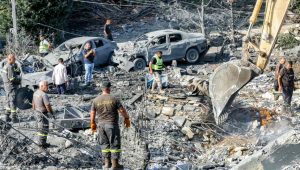
The ongoing war between the United States, Israel, and Iran is triggering significant economic and security realignments across Africa, forcing governments to rethink their strategic priorities.
While the initial shockwaves have been felt through oil markets, shipping routes, and financial uncertainty, the longer-term consequences are expected to reshape global energy markets and trade networks.
Across the continent, governments are currently reassessing energy security, defence partnerships, and investment strategies.
For countries already grappling with debt pressures and fragile economies, the crisis presents substantial risks; however, it is also accelerating efforts to strengthen domestic energy capacity and diversify foreign partnerships to reduce reliance on external powers.

Shifting security dynamics
As global powers confront competing security priorities, African governments are being encouraged to diversify their sources of finance and strengthen regional institutions.
Iran’s expanding political and security engagement in Africa is being closely examined, with analysts suggesting that a prolonged confrontation could hinder Tehran’s ability to sustain its overseas partnerships, reports Al Jazeera.
Any reduction in Iranian engagement is unlikely to decrease foreign involvement in African security affairs. Instead, Russia and Turkey are positioned to expand their roles. Moscow has recently increased military cooperation through initiatives such as the Africa Corps, while Ankara has expanded influence via drone technology, training programmes, and defence exports.




Analysts predict this will lead to increased competition among outside powers seeking influence on the continent.
Sudan and the Red Sea corridor
The impact of these geopolitical shifts is particularly evident in Sudan, where the civil war is increasingly viewed as being shaped by external alliances and Red Sea rivalries. Leena Badri, a researcher at the Tahrir Institute for Middle East Policy, told Al Jazeera that the rivalry between Saudi Arabia and the UAE over Sudan and the wider Red Sea is deepening.
The conflict has also highlighted the strategic importance of maritime access, including Iran’s reported military cooperation with Sudan’s military. There are concerns that as Washington focuses on the Middle East, diplomatic engagement and security assistance for the Sahel and Horn of Africa may diminish.
Energy security and economic resilience
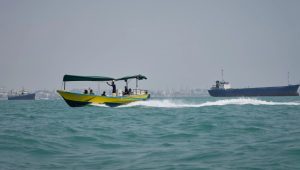
The crisis has exposed Africa’s vulnerability to disruptions in major maritime routes like the Strait of Hormuz. For economies dependent on imported fuel and fertiliser, rising transport costs have heightened concerns regarding economic resilience.
Aaliyah Vayez, a South Africa-based international relations analyst, noted that the situation reinforces the need for African nations to strengthen domestic capacity and reduce vulnerabilities across trade and supply chains. This has renewed calls for expanding refining capacities; currently, Africa exports most of its crude oil while importing refined petroleum products.
Nigeria’s Dangote Refinery, with a capacity of 650,000 barrels per day, is seen as a development that could reduce dependence on imported fuels. Similar discussions are reportedly under way in East Africa regarding a proposed regional refinery project to improve resilience along the Indian Ocean coast.
A window for strategic autonomy
Observers suggest the crisis provides an opportunity for Africa to pursue greater strategic autonomy. This includes strengthening regional infrastructure and accelerating integration through the African Continental Free Trade Area.
Marie Camara, head of the public sector at the Africa CEO Forum, stated that the crisis underscores the urgency of diversifying partnerships and accelerating intra-African trade. The challenge remains whether governments can translate this period of disruption into sustained policy change and long-term investment.