The FY2026-27 national budget has been presented under the banner of building a democratic, humane and inclusive economy. The ambition is clear – to expand access to education, healthcare and social protection while creating broader economic opportunities. The question is whether the budget’s fiscal priorities can translate those aspirations into meaningful improvements in people’s lives.
One useful way to assess the budget is through the lens of economist Amartya Sen, whose capability approach transformed thinking about development. Sen argued that development should be judged not merely by economic growth or rising incomes but by people’s ability to live healthy, educated and productive lives. In that sense, a budget is more than a financial statement. It is a policy instrument that shapes the opportunities available to citizens.
Education and capability expansion
The FY2026-27 budget proposes Tk1,36,606 crore for education, equivalent to 2 per cent of GDP, compared with Tk87,206 crore or 1.39 per cent of GDP previously. The government has also set a medium-term target of raising education spending to 5 per cent of GDP.
Education is one of the most important public investments because it expands people’s opportunities throughout their lives. Better education improves employability and productivity, but it also enables individuals to participate more effectively in society and make informed choices about their futures.
The budget’s education strategy signals a shift away from a narrow focus on examinations and certificates towards skills, creativity, problem-solving and innovation. Curriculum reforms, technical and vocational education from Class VI, third-language instruction and the One Teacher, One Tab initiative aim to equip students with capabilities that are increasingly important in a modern economy.
The proposed Mid-Day Meal Programme is equally significant. Poor nutrition often limits children’s ability to learn and perform in school. By addressing that barrier, the programme can improve educational outcomes, particularly among lower-income households.

Taken together, these measures suggest an effort to improve not only access to education but also its quality and relevance.
Health spending and human development
Healthcare receives an allocation equivalent to about 1 per cent of GDP, with the government targeting an increase to 5 per cent over the next five years. Although the gap between current spending and the target remains substantial, the policy direction is noteworthy.
The budget places greater emphasis on preventive healthcare rather than treatment alone. Strengthening primary healthcare, expanding maternal and child health services, increasing immunisation coverage and improving early detection of non-communicable diseases can deliver significant long-term benefits at relatively low cost.
Equally important is the focus on reducing out-of-pocket healthcare expenses. Medical costs remain a major source of financial stress for many households and can push vulnerable families into poverty. Expanding access to affordable healthcare, therefore, has both social and economic benefits.


The continued emphasis on community clinics and free primary healthcare reflects an effort to make essential health services more accessible, particularly for lower-income groups and rural communities.
Social protection and economic security
The budget allocates Tk1,44,338 crore to social protection programmes, up by about Tk17,607 crore from the revised FY2025-26 allocation. This represents one of the most significant social investments in the budget.
The effectiveness of social protection depends not only on the size of spending but also on how beneficiaries are identified and reached. The proposed Single Registry System and Dynamic Social Registry seek to improve targeting through data-driven identification of eligible recipients.
The government’s longer-term goal of establishing a universal, life-cycle-based social protection system is particularly significant. Such a framework recognises that citizens face different vulnerabilities throughout their lives, from childhood and working age to old age.
If implemented effectively, a more comprehensive social protection system could reduce economic insecurity, improve resilience against shocks and support more inclusive growth.
Fiscal realities and implementation challenges
Despite its strengths, the budget faces important constraints.
The most significant challenge is Bangladesh’s low revenue-to-GDP ratio, which remains around 8 per cent. This limits the government’s ability to sustain large investments in education, healthcare and social protection over the long term.
The proposed fiscal deficit of 3.6 per cent of GDP, financed partly through domestic borrowing, also raises questions about future fiscal space. Sustained investment in human development will require stronger revenue mobilisation and improvements in tax administration.
A second challenge concerns the quality of public spending. Increased allocations alone do not guarantee better outcomes. Bangladesh’s education sector continues to face concerns over learning quality, teacher training and skill development. Similarly, healthcare outcomes depend not only on spending levels but also on service delivery, governance and institutional capacity.
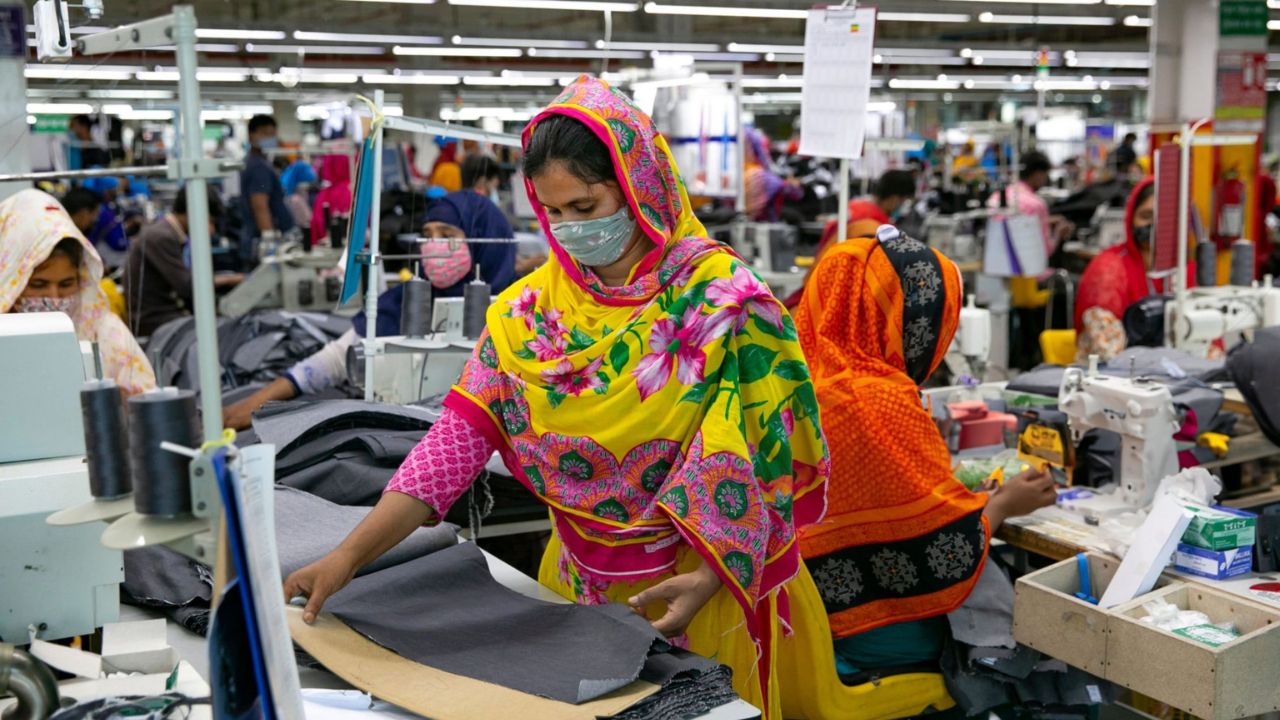
A third challenge relates to gender equality. Bangladesh has made notable progress in female education and labour force participation. However, barriers linked to safety, mobility, economic empowerment and decision-making authority continue to limit opportunities for many women. Future budgets will need to address these deeper structural constraints if the benefits of development are to be shared more broadly.
A budget that points in the right direction
Viewed through the lens of human development, the FY2026-27 budget represents a meaningful shift towards investments that expand opportunity and reduce vulnerability. Its emphasis on education, healthcare and social protection reflects an understanding that economic progress should ultimately be measured by improvements in people’s lives rather than by growth figures alone.
Yet ambition must be matched by execution. The success of the budget will depend on whether higher allocations translate into better schools, stronger healthcare services and more effective social protection. It will also depend on the government’s ability to strengthen revenue collection and maintain fiscal sustainability.
The budget points in the right direction. Whether it succeeds in expanding opportunity, freedom and economic security for millions of Bangladeshis will depend on implementation in the years ahead.
The author is a development practitioner and researcher.
Views expressed are solely those of the author.