Dhaka and Beijing have agreed to explore new avenues for regional connectivity, including a direct economic corridor linking China and Bangladesh through Myanmar.
The proposed corridor, involving Bangladesh, Myanmar and China, would be connected to Chattogram Port and focus on regional connectivity and infrastructure modernisation.
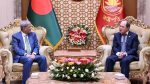
The initiative was discussed during talks between Chinese President Xi Jinping and Prime Minister Tarique Rahman in Beijing on Friday, Prime Minister’s Adviser Mahdi Amin said.
According to him, the proposed corridor aims to expand Bangladesh’s economy, increase economic transactions among the participating regions and strengthen multimodal transportation systems across the three countries.

Tarique Rahman arrived in China on June 22 and is scheduled to return to Dhaka on Friday. During his visit, he held bilateral talks with Chinese Premier Li Qiang and met senior government officials and business leaders.
Dhaka and Beijing also 17 memorandum of understandings that include 13 government-to-government MoUS, three MoUs signed by Bangladesh Investment Development Authority and one political MoU between BNP and China Communist Party.
Economic corridor
An earlier initiative to establish an economic corridor from Kunming to Kolkata through Myanmar and Bangladesh failed to materialise due to India’s lukewarm response.
Bangladesh and China are now discussing ways to revive the process without India.

A key issue in the discussions between Prime Minister Tarique Rahman and the Chinese leadership was the modernisation of Chattogram Port to transform it into a regional hub serving not only Bangladesh but also neighbouring countries.

Mahdi Amin said upgrading the port is essential to facilitate the movement of goods and support increased economic activity generated by the proposed corridor.
The two sides also prioritised the rapid implementation of the Anwara Economic and Industrial Zone in Chattogram to complement connectivity and trade initiatives.
2+2 arrangement
For the first time in their bilateral relations, Bangladesh and China have agreed to establish a “2+2” dialogue mechanism to facilitate regular high-level engagement.
The arrangement will bring together officials from the foreign and defence ministries of both countries for structured discussions on key diplomatic and security issues.

Mahdi Amin said the mechanism would institutionalise consultations on foreign policy and national defence matters, although both sides are still working out the details of its implementation.



The initiative forms part of broader efforts to elevate bilateral ties into a long-term strategic partnership while safeguarding Bangladesh’s sovereignty and territorial integrity.
Meeting with Xi Jinping
President Xi reaffirmed China’s commitment to its relationship with Bangladesh and discussed creating a “new blueprint” for a long-term strategic partnership.
The president described China as a trustworthy and long-term development partner for Bangladesh and praised Prime Minister Tarique Rahman’s development vision and the country’s rapid progress.
Xi also expressed support for Bangladesh’s application to join BRICS and said China would assist Bangladesh in addressing energy and electricity challenges.
He further indicated that Bangladesh would be prioritised in the relocation of Chinese factories to generate local employment.
A statement issued by the Chinese President’s Office said China supports Bangladesh’s current government in its governance efforts and is ready to deepen high-quality Belt and Road cooperation.

The statement said the two countries would further align development strategies, share development experiences and expand cooperation in green and low-carbon development, the digital economy, information technology and artificial intelligence.
It also highlighted plans to enhance cooperation in healthcare, culture, education and sub-national exchanges, while advancing the China-Myanmar-Bangladesh Economic Corridor to improve regional connectivity.
Prime Minister Tarique Rahman expressed hope for stronger exchanges between political parties and enhanced cooperation in trade, connectivity, agriculture, technology, green energy, education and health.
He reiterated Bangladesh’s commitment to the one-China principle, recognising Taiwan as an integral part of China and opposing any form of Taiwanese independence.
Four global initiatives
The Chinese statement noted that the vision of building a community with a shared future for humanity and the four global initiatives proposed by President Xi are important for global peace, development and international justice.
It said Bangladesh fully supports these initiatives and is willing to strengthen coordination with China on international and regional affairs while upholding the post-World War II international order centred on the United Nations.
However, the joint communique issued after the talks stated that Bangladesh appreciated and supported the vision of building a community with a shared future for humanity and the series of global initiatives proposed by President Xi, and was ready to cooperate with China in these areas.
Joint communique
The 13-point joint communique issued at the conclusion of the visit stated: “Both sides agreed to elevate their comprehensive strategic cooperative partnership to jointly build a China-Bangladesh community with a shared future in the new era, bringing greater benefits to the two countries and their peoples.”
The two countries also agreed to maintain high-level interactions, strengthen exchanges on governance and enhance cooperation among governments, legislative bodies and political parties.
“The two sides agreed to establish a strategic dialogue mechanism between the foreign ministers and explore a 2+2 dialogue mechanism on diplomacy and defence,” the communique said.
On development projects, both sides agreed to advance the Mongla Port Facilities Modernisation and Expansion Project and the Chinese Economic and Industrial Zone in Chattogram.

Regarding the Teesta issue, the communique said China would provide support within its capacity for the Teesta River Comprehensive Management and Restoration Project (TRCMRP) and assist in expediting feasibility studies and related work.
On regional cooperation, China expressed support for Bangladesh to play a greater role in multilateral institutions, including the United Nations, and backed Bangladesh’s participation in BRICS and its application to become a partner of the Shanghai Cooperation Organisation (SCO).
On the Rohingya issue, Bangladesh appreciated China’s constructive role in facilitating a solution to the crisis involving displaced people from Myanmar’s Rakhine State.
China commended Bangladesh for providing humanitarian assistance to the Rohingyas and supported efforts by Bangladesh and Myanmar to find a mutually acceptable solution through friendly consultations, pledging to continue facilitating the process.