The newly elected BNP government is facing mounting criticism over its failure to curb mob violence, with a series of recent incidents raising questions about law enforcement effectiveness and political will—echoing patterns seen under the previous interim administration.
Nearly two months after assuming office, the government is under scrutiny following violent incidents in Dhaka’s Shahbagh and Kushtia’s Philipnagar, where mobs carried out attacks and killings in broad daylight, in some cases in the presence of police.
When the BNP government took office in February, Home Minister Salahuddin Ahmed declared an end to “mob culture” with confidence. However, a succession of mob-related incidents since then has undermined that pledge, suggesting a widening gap between official rhetoric and reality.
Human rights organisations say that although mob violence initially declined following the election, it has recently resurged at an alarming rate. Saidur Rahman, chief executive of the Human Rights Culture Foundation, warned that if the current administration follows the same path as the interim government, it risks losing public trust.
“If there is no difference in approach, the outcome will also be no different,” he said, adding that failure to act decisively could lead to similar political consequences.
Experts say such incidents are recurring due to the lack of accountability for earlier cases. They warn that unless strict action is taken now, the violence is likely to escalate further.
During the 18-month tenure of the interim government led by Muhammad Yunus, extremist groups operating under the banner of “Touhidi Jonota” were accused of creating a climate of fear and instability.

According to a report by the Human Rights Support Society, there were 413 incidents of mob violence during that period, leaving 259 people dead and 313 injured. These included attacks on media outlets such as Prothom Alo and The Daily Star, as well as assaults on police officers.
Under the BNP government, the pattern appears to be continuing. One of the earliest high-profile incidents occurred at Bangladesh Bank on 25 February, when a mob allegedly forced out Governor Ahsan H Mansur and three officials during a tense leadership transition.
Further allegations of mob attacks have surfaced in Barishal court premises and even inside the Supreme Court, where lawyers’ chambers were reportedly vandalised. Within days of taking office, the new government faced multiple allegations of mob-organised violence involving its supporters.
Data from Ain o Salish Kendra shows that at least 23 people were killed in mob-related incidents across the country during January and February. In March alone, according to the Human Rights Support Society, at least 13 people were killed and 38 injured in 25 separate incidents of mob violence.



One particularly brutal case occurred on 4 March in Munshiganj’s Louhajang area, where two men—Sagar, 32, and Sanarul, 34—were tied to a tree and beaten to death overnight after being accused of theft.
The violence has since escalated further. On Saturday afternoon, a mob in Kushtia’s Daulatpur killed a local mystic, Shamim Reza, also known as Jahangir, after accusing him of blasphemy based on an old video. Witnesses say he was beaten and hacked to death in the presence of police, while his shrine was vandalised and set on fire.
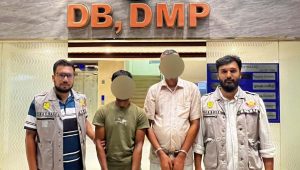
Kushtia Superintendent of Police Mohammad Jasim Uddin said officers at the scene were unable to control the attackers due to their overwhelming numbers. “Despite efforts, the police could not prevent the attack,” he said, adding that suspects are yet to be identified, though CCTV footage is being reviewed. A case is expected to be filed after the victim’s burial.
National Citizen Party (NCP) condemned the killing and called for swift identification and prosecution of those involved. It also criticised the government’s earlier declaration that mob culture had ended, alleging that in some cases pro-government mobs were being tolerated.
A day earlier, on Friday evening, another mob incident unfolded in Dhaka’s Shahbagh area, where several people were assaulted near the National Museum over allegations of homosexuality. Victims claimed that attackers, marching under the banner of “Azadi Andolon,” beat them severely, tore their clothes, and attempted to strip a female victim.
One victim, Kazi Tahsin, described being beaten on the head, chest, back, and genitals, adding that victims were attacked individually after being separated. Despite the proximity of Shahbagh police station, victims allege that officers failed to intervene effectively. They further claimed that when they attempted to file a case, police initially refused to register it, instead recording it as a general complaint.
Shahbagh Police Station officer-in-charge Moniruzzaman denied receiving any formal written complaint and said no suspects had been identified. He also stated that he was unaware of any organisation called “Azadi Andolon.”
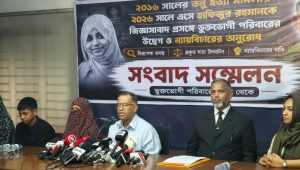
Elsewhere in the capital, allegations have emerged of extortion and intimidation at a private hospital in Shyamoli, where a local political figure was accused of using a mob to pressure hospital authorities into purchasing supplies at inflated prices. The allegations were made public at a press conference by Kamrul Islam, a renowned nephrologist.
Human rights activists say these incidents reflect a dangerous trend. Saidur Rahman noted that while mob violence had briefly declined after the election, recent incidents indicate a sharp resurgence. He also alleged that groups misusing the “Touhidi Jonota” banner, possibly with political affiliations, are playing a role in destabilising the situation.
“Our fact-finding suggests that supporters of Jamaat-Shibir have been active in some cases, using this banner as a tool to create instability and challenge the elected government,” he said.
Former inspector general of police Nurul Huda said that while isolated incidents may occur in a densely populated country, the real issue is the lack of accountability. “Those responsible are not being effectively punished,” he said. Asked whether he had seen any meaningful action by either the interim or current government, he replied, “It is not visible.”
He stressed that visible enforcement is critical to sending a clear message that the state is in control. “If action is taken, it shows the government is serious,” he added.
Current Inspector General of Police Ali Hossain Fakir has pledged strict action against mob violence and said directives have been issued to field police units nationwide. However, he acknowledged that eliminating the phenomenon entirely would require cooperation from all sections of society.
Assistant inspector general of police (Media) AHM Shahadat Hossain described mob violence as often emotionally driven but sometimes orchestrated by organised groups. “When mobs are planned, it becomes difficult for police to control,” he said, adding that operations to identify and prosecute those responsible are ongoing.
Despite repeated attempts, Home Minister Salahuddin Ahmed did not respond to phone calls or text messages seeking comment on what concrete measures the government is taking to address the crisis.
As mob violence continues to claim lives and spread fear, critics argue that the government’s response has so far fallen short—raising concerns that without swift and decisive action, the situation could spiral further out of control.