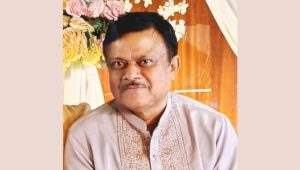
Former Bangladesh Army Chief General (Retd) Iqbal Karim Bhuiyan has said that, when the Awami League government was in charge, members of Indian intelligence agency, Research and Analysis Wing (RAW) used to work regularly at the offices of Bangladesh’s military intelligence agency, the Directorate General of Forces Intelligence (DGFI).
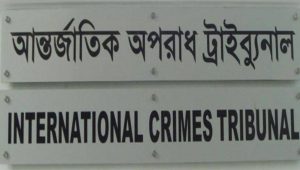
He made these claims on Monday, while testifying against former military officer Ziaul Ahsan, accused in a case of enforced disappearance and murder at the International Crimes Tribunal-1 (ICT-1). In his testimony, he said this work was done under the patronage of former prime minister Sheikh Hasina’s security adviser, Major General (Retd) Tarique Ahmed Siddique.
They were allowed to work in a meeting room at DGFI and would provide DGFI with lists identifying some people as “militants”.
After the general’s testimony was recorded, he was cross-examined by the defence lawyer, Aminul Ghani Titto, which was subsequently adjourned until 18 February. The former army chief was the first witness to testify in the case, beginning his testimony the day before on Sunday.
In his testimony, he blamed the Rapid Action Battalion (RAB) and DGFI for their anti-people and anti-state roles and demanded the dissolution of these two institutions. In his opinion, the army has been tainted through such activities, and it is now time for self-purification.

He stated that during his tenure as army chief, besides the Army Security Unit and the Directorate of Military Intelligence under his command, he also received information from various other sources. Based on this information, he had come to understand that junior army officers were being misled.
In his testimony, he mentioned three incidents. In the first incident, a junior officer returning from RAB informed him that six people had been killed in an operation, two of whom he had shot himself. The officer also mentioned receiving money for each killing and said he intended to donate that money to religious institutions.




The former army chief said he sensed a deep sense of guilt in the officer.
In the second, a lieutenant colonel informed him that he had killed six unarmed civilians on the orders of a superior officer. At the time, Iqbal Karim Bhuiyan asked him, “If I order you to eat my excrement, will you do it?” The lieutenant colonel said no. I asked him, “Which is more despicable: Killing an unarmed civilian or eating excrement?” He said killing an unarmed civilian. I asked him, “Then why did you do it?” The officer had no response.
In the third and final incident, he recounted a conversation with a RAB major. Following a widely discussed case of rape and murder, where the accused had been killed extrajudicially, he reprimanded the officer for taking the law into his own hands.
The former army chief further said, “I have heard stories of RAB slitting open the stomachs of those they killed, take out their intestines, tying them around stones, and throwing the bodies into the river so that they would sink.” Disturbed by such activities, he began visiting various divisions and training institutions in order to motivae officers so that they would refrain from such acts.
At one point, he called all the commanding officers of the Bangladesh Army to Dhaka to remind them of their duty towards junior officers. He reminded them that many officers had been hanged for their involvement in the assassinations of Sheikh Mujib and Ziaur Rahman. He also mentioned that some military officers in the “10-truck arms case” are currently in jail, awaiting the gallows.
The General (Retd) Iqbal Karim Bhuiyan stated that eventually, he stopped sending army officers to RAB, DGFI, and BGB, even though there was intense political and administrative pressure surrounding the matter.
He said that the then RAB Director General Benazir Ahmed and then prime minister Sheikh Hasina had personally requested him to provide officers to RAB. However, he remained firm in his decision and continued to endure the pressure until his retirement.
In the concluding part of his testimony as state’s witness, Iqbal Karim Bhuiyan said his statement was not against the army, but an attempt to restore the army’s dignity. In his view, the army’s honour would be further enhanced if accountability for crimes is acknowledged and ensured.
He called for the immediate dissolution of RAB, and if that is not possible, demanded that military members serving in the law enforcement agency be recalled to the army.
He also added that the DGFI has also lost its moral and institutional legitimacy and should be dissolved as well.