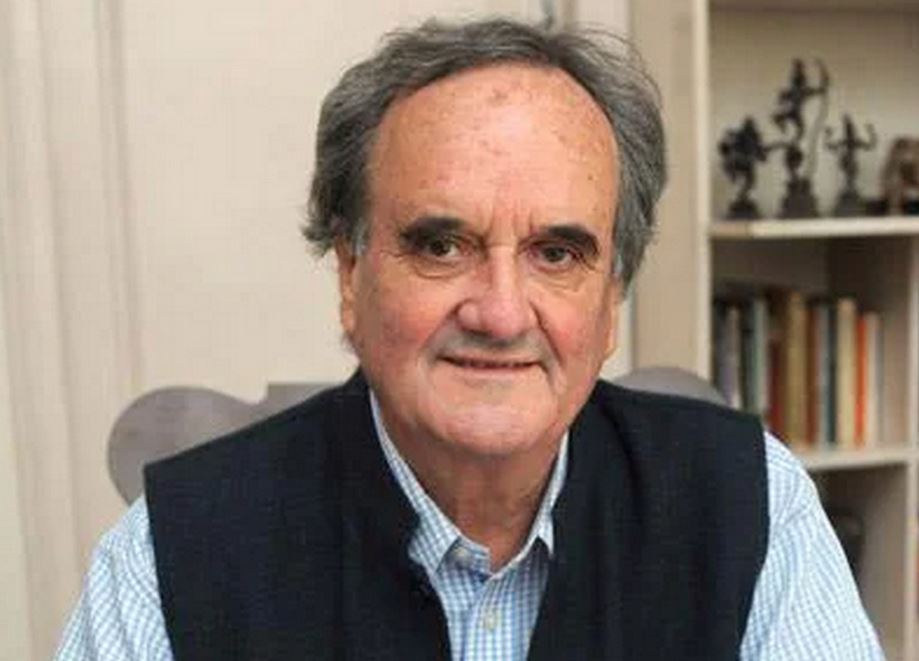

Sir Mark Tully’s dispatches during the Bangladesh Liberation War of 1971 constitute far more than a professional account of conflict. They represent an exercise in profound moral witness. While his technical objectivity is frequently cited, it was the fusion of this discipline with an almost sacred regard for human dignity that distinguished his work.
Tully did not merely report on a war; he documented the violent unraveling of a nation and the resilient spirit rising from its ashes, crafting a narrative that balanced cold fact with deep compassion. His role evolved from that of a journalist to a crucial ethical interlocutor for a global audience largely unaware of the catastrophe unfolding in the Bengal delta.
Tully’s commitment to neutrality was, in the supercharged atmosphere of 1971, a radical and courageous stance. With narratives sharply divided between Pakistani statecraft and Bangladeshi resistance, he cultivated a deliberate equilibrium. This was not the neutrality of indecision, but a principled resolve to bear witness to multifaceted truths. He gave microphone space to jittery Pakistani administrators, Indian border officials, Mukti Bahini fighters, and refugees in equal measure. This approach often drew criticism from all partisan corners, yet it cemented his credibility.
His broadcasts became a rare forum where the complex anatomy of the conflict, its political roots, its military escalations, and its human devastation, could be heard in one coherent, if agonising, tapestry. This dispassion was the bedrock upon which his extraordinary moral authority was built.
Perhaps Tully’s most defining virtue was his operationalisation of empathy as a core reporting methodology. Where other correspondents might have led with troop movements or political statements, Tully’s reports consistently foregrounded the human scale of the tragedy.

He translated the abstract, staggering figure of ten million refugees into intimate portraits: a father clutching a salvaged cooking pot, a child’s confusion in a rain-sodden camp, the silent grief etched on a mother’s face. His voice on the BBC World Service, measured yet imbued with palpable feeling, did not just inform listeners; it implored them to imagine.
He reported from within the crisis, not as a spectacle, but as a shared human experience. This empathetic lens ensured the world understood the liberation struggle not solely as a geopolitical event, but as a visceral fight for survival and identity. Intellectual rigor and historical consciousness Tully’s reporting was distinguished by its intellectual depth and historical consciousness.
He possessed the scholarly virtue of contextualising the immediate violence within centuries of regional history. His dispatches wove in the legacy of colonial partition, the cultural schism over the Bengali language, and the economic disparities between East and West Pakistan. He avoided the lazy framing of the war as a sudden “ethnic clash,” instead presenting it as the inevitable culmination of systemic oppression and broken political covenants. This rigorous context provided his audience with a framework to understand the why, not just the what.


It was journalism that educated, fostering a nuanced comprehension that transcended the daily headlines. The guardian of the unvarnished narrative Amid a fog of propaganda, from Islamabad’s denials of genocide to the often-simplified heroic narratives emerging from the Bangladeshi side, Tully assumed the role of guardian for the unvarnished, ground-level truth.
He understood that the core story was the assertion of Bengali self-determination and the extreme violence deployed to suppress it. By relentlessly focusing on the evidence before his eyes, burnt villages, testimonies of survivors, the exodus of millions, his reporting served as an irrefutable counterpoint to diplomatic obfuscation.
He protected the essential narrative from being diluted by the strategic interests of global powers, anchoring the world’s attention to the realities of the rice paddies and riverbanks of Bangladesh. An enduring legacy of trust and ethical fidelity The ultimate measure of Tully’s virtue is the unique, enduring trust he commands across the subcontinent. In Bangladesh, he is revered not as an outsider but as shroter shathi, a companion of the listener, who validated their profound struggle when few others would.
In India, his reporting was respected for its fairness, devoid of the triumphalism that often colors conflict journalism. This bilateral respect is a testament to a legacy built on ethical fidelity.
His work during those nine months established a paradigm for conflict journalism in South Asia: that the highest form of reporting is a blend of intellectual honesty, historical awareness, and unwavering human focus.
Tully demonstrated that truth, delivered with consistency and conscience, possesses a quiet power more enduring than the loudest propaganda. His subsequent decades living in and reporting from India reflect the same virtues – a patient, attentive engagement with the region’s complexities. Sir Mark Tully’s coverage of the Bangladesh Liberation War was an exemplar of journalism as a moral vocation.
His extraordinary virtues, a courageous equilibrium, an empathetic methodology, rigorous historical contextualisation, and a steadfast guardianship of the foundational truth, transformed his broadcasts into more than news. They became acts of ethical testimony.
He provided the world not merely with information, but with a moral lens; not just the chronology of a war, but the chronicle of a nation’s painful rebirth.
In an era increasingly defined by media fragmentation and narrative warfare, Tully’s legacy from 1971 stands as a potent reminder that integrity, wielded with compassion, remains the most indelible and honorable cornerstone of the journalistic craft.
The writer is a journalist and Chevening scholar