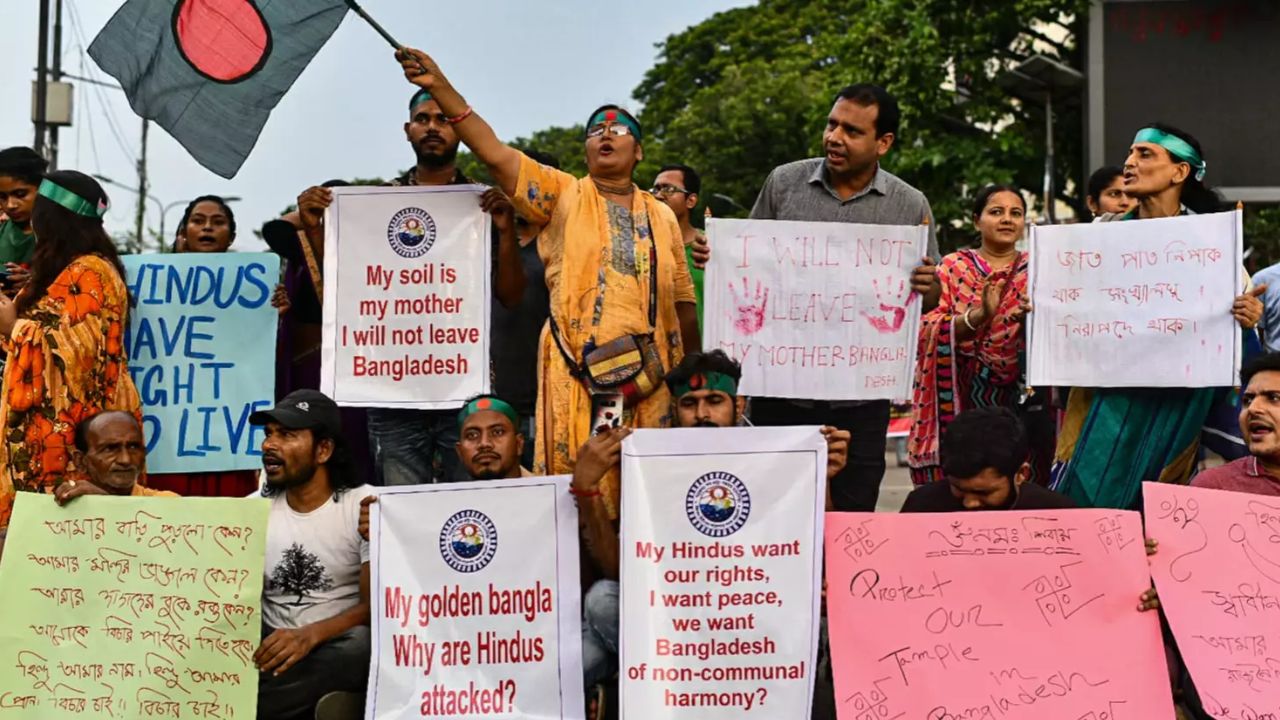

A yearlong review of police records shows that most reported incidents involving people of minority communities in 2025 were criminal rather than communal in nature.
According to a statement from the Chief Adviser’s Office on Monday, 645 incidents nationwide between January and December 2025, of which 574 were assessed as non-communal. Only 71 incidents contained communal elements.
According to the findings, communal incidents largely involved vandalism or desecration of temples and idols, arson, and a small number of other offences. In contrast, the overwhelming majority of cases stemmed from wider criminal activity unrelated to religion, including neighbourhood disputes, land conflicts, political rivalries, theft, rape, and cases linked to prior personal enmity.
The review drew on verified First Information Reports, General Diaries, charge sheets, and investigation updates.

According to the police headquarters’ compilation for January to December 2025, a total of 645 incidents involving minorities were recorded. Of these, 71 incidents contained communal elements, including 38 cases of temple vandalism, one case of temple theft, eight cases of temple arson, one murder, and 23 other offences such as threats to damage idols or social media incitement. Police filed 50 cases, made 50 arrests, and took 21 other measures in these incidents.
In the same period, 574 incidents were assessed as non-communal. These comprised 51 neighbourhood disputes, 23 land-related disputes, 106 thefts, 26 cases linked to prior enmity, 172 unnatural deaths, 58 rapes, and 138 other offences including abduction, intimidation, and extortion. Police filed 390 cases, recorded 154 unnatural death cases, made 498 arrests, and took 30 other measures.




The Chief Adviser’s Office said the distinction is significant and helps prevent misinformation and fear from shaping public perceptions. It said the evidence shows that crimes affecting minority groups do not predominantly arise from communal hostility but from the same socio-criminal factors that affect citizens across the country.
The statement also mentioned, hundreds of cases were registered and arrests were made in many incidents, with investigations ongoing in others. It said this reflects institutional commitment to addressing crime and protecting vulnerable communities, particularly in cases involving religious sites.
The statement placed the findings within the broader national law-and-order context. Bangladesh records an estimated 3,000 to 3,500 deaths from violent crime each year.
Although the figure remains high, the office said indicators show steady improvement due to enhanced policing, better intelligence coordination, faster response, and increased accountability within law enforcement.
The CA office statement says, Bangladesh is home to Muslim, Hindu, Buddhist, Christian, and other communities. The state has a constitutional and moral obligation to ensure safety and justice for all citizens, protect places of worship, prevent incitement, respond quickly to criminal acts, and safeguard social harmony.
The statement said the report was presented in the spirit of transparency and accountability and called for constructive scrutiny, responsible reporting, and continued institutional reform.
It said the law-and-order situation is not defined by isolated incidents but by the collective effort to confront them, adding that conditions are improving for citizens of all faiths.
The Chief Adviser’s Office concluded that while every incident remains a matter of concern, the data supports an evidence-based understanding of crime affecting minority communities and underscores the importance of grounding public discussion in facts rather than fear.