


The first time I sat behind a placard with a country named ‘The Republic of Liberia’ printed on it, I was representing not only a country, but also a nation. I had barely researched before that week; I remember my hands were unsteady as I raised it to request the floor.
That small, shaky gesture, made in a conference room at Bangladesh University of Professionals (BUP), ended up teaching me more about the world, foreign policy, and my inner self than most of my academic coursework combined.
Model United Nations (MUN) has quietly become one of the most transformative extracurricular movements among Bangladeshi university and college students over the past decade.
What began as a niche activity confined to a handful of elite institutions has now spread to universities across Dhaka, Chattogram, Sylhet and beyond, with conferences such as BUPIMUN, DUNMUN, NSUMUN and dozens of others drawing thousands of delegates every year.
For an outsider, it might look like students in blazers arguing over resolutions. For those of us who have lived inside these committee rooms, it is something far more significant.
At its core, MUN simulates the actual workings of the United Nations. Students are assigned to represent a country in committees such as the Security Council (UNSC), UNHCR, SOCHUM, DISEC, UNNA, LPAD or ECOSOC and must debate global issues strictly from the perspective of that country’s foreign policy, not their own opinions.
There, I represented a country in the United Nations Security Council (UNSC) committee, discussing a conflict-affected region, a position that forced me to set aside my personal views entirely and instead study Liberian strategic interests, policy and historical claims in the region.

That exercise in intellectual humility, learning to argue a case you may not personally believe in, is something no textbook back home had ever asked of me. You cannot memorise your way through a crisis committee when a hypothetical coup breaks out mid-session and you have 90 seconds to draft an emergency response with your bloc.
Before every conference, delegates spend weeks preparing position papers, sometimes 50 to 80 pages of policy research on a single country’s stance on a single issue. Having to genuinely understand why another nation might resist certain UN interventions, rather than simply condemning it, changed how I read international news altogether. I stopped seeing headlines as simple stories of right and wrong, and started noticing the layers of interest, history and compromise behind every diplomatic statement. This kind of research, done under deadline pressure and applied immediately in debate, tends to stick far longer than anything learned by rote for an exam.
Ask any novice MUN delegate what they actually gained and usually public speaking comes up first. I was, by nature, someone who avoided speaking in front of people. My first speech at the conference lasted perhaps 90 seconds before I sat down, convinced I had embarrassed myself.
By my first conference, I was chairing a committee consisting of 20 delegates, mediating disputes between blocs and improvising responses to points of order I had never anticipated.
Beyond speaking, there is negotiation. Resolutions in MUN are rarely passed by one delegate’s brilliance alone; they require forming blocs, trading clauses, persuading rival factions and sometimes conceding ground gracefully.



I have watched friendships form in an unconventional way, between delegates representing bitterly opposed countries on paper, who ended up co-authoring a resolution together over a tea break in a university common room. And then there is the writing itself.
Drafting a resolution that is legally coherent, diplomatically careful and persuasive enough to secure votes is an underrated skill.
For Bangladeshi students in particular, this is a rare opportunity. Our education system, for all its strengths, rarely trains us to think on our feet or defend a position under pressure in real time. MUN fills that gap directly.
What makes MUN particularly meaningful from a Bangladeshi perspective is the chance to represent our own country on issues where we genuinely have moral and historical authority, including climate vulnerability, refugee response and maritime boundary disputes.
Representing Liberia in a Security Council committee, arguing forcefully for loss and damage compensation for nations that have contributed least to global emissions, was one of the proudest moments of my academic life. It was not an abstract debate for me. In the meantime, being assigned to represent other countries fosters a kind of empathy that is rare to acquire otherwise.
Bangladeshi students, including myself, often carry a fairly narrow lens into these rooms, shaped by our own national narrative. MUN quietly dismantles that. You learn, sometimes uncomfortably, that every country believes its own position is the reasonable one.
Model United Nations provides an outstanding opportunity for the younger generation to expand their knowledge and express themselves by visualising a society that is both peaceful and harmonious.
In the era of globalisation, fostering technological innovation and promoting sustainable technological practices are some of the most innovative and practical ways to achieve a resilient economy, especially on the post-pandemic planet. It gives them a platform to fight for a cause against different global challenges by combining diplomatic skills and reasoning powers, critical analysis and honing research capabilities.
The year 2026 has been full of transitions for our world: humanitarian crises, global warming, human rights violations and devastation caused by the Russia-Ukraine war, the Sudan civil war and many other persistent conflicts, intensifying major geopolitical hostilities.

All have made themselves known as some of the greatest challenges of our generation. As the world tries to break the shackles of this hostility, hope and unity bring us together to heal our planet. This is our opportunity to learn from our past and move forward to the future.
We hold the key to making our world a better place. If not us, then who will stand up to be the leaders of tomorrow? Who will guide the way towards a sustainable society? Who will be a beacon of hope for humanity? It is our responsibility to take the lead in global transformation through diplomacy and leadership.
Our views and ideas can open up new doors to find potential solutions to national and international challenges. Our choices and decisions can go a long way towards achieving global peace.
It is we, the youth, who will draw the blueprint of a better world through 12 compelling committees and their eye-opening agendas. The three-day conference gave us a chance to raise our voices and prove ourselves as the leaders of the future world.
As Bangladesh continues to expand its diplomatic footprint, whether in UN peacekeeping, climate negotiations or regional trade blocs, we need a generation of young people who understand negotiation, policy nuance and international law fluently. MUN, for all its student-friendly formality, is quietly producing exactly that generation.
Several of my own MUN peers have gone on to work in foreign missions, international NGOs and policy research institutions, careers that trace back, in no small part, to the confidence and skills they built standing behind a placard, defending a position that was never really their own to begin with and learning, in the process, how to understand the world through someone else’s eyes.
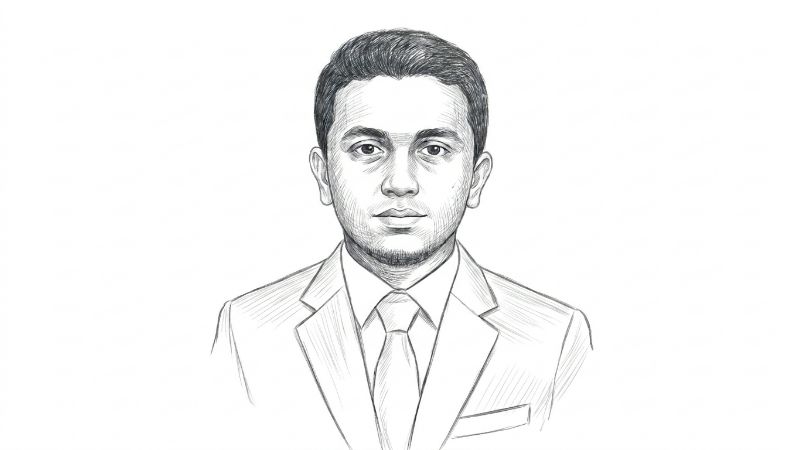
The writer is a student at the Army Institute of Business Administration. He is reachable at [email protected]
Views expressed are solely those of the author