


King Charles is on a Caribbean tour but it’s certainly not all sun, sand, reggae and exuberance.
The rather inconvenient matter of slavery has crept up; along with it, the unwillingness of Britain plus the visiting royal to say sorry for slavery in the 18th and 19th centuries.
Time and again, during royal visits to former colonies, the issue of repression during the empire rears its head; almost every time, the former colonial ruler’s language has been guarded at best and equivocal at worst.
Although Britain’s current PM, Andy Burnham, has given an inkling that Britain might offer an apology, not reparation.
Britain’s opposition leader, Kemi Badenoch, of Nigerian descent, cautioned that if such a line were issued officially, there would be demands for reparation.
The King, during his visit, has used the lines ‘sincere sorrow ‘, although that does not seem to be convincing lot of the Caribbeans.
Whether Britain issues a formal statement of apology or not, the issue of slavery and the exploitation of people shipped in inhuman conditions will continue to haunt Britain because we now live in a time when pushing inconvenient truths under the carpet is not easy.

Empire history is one of contradictions:
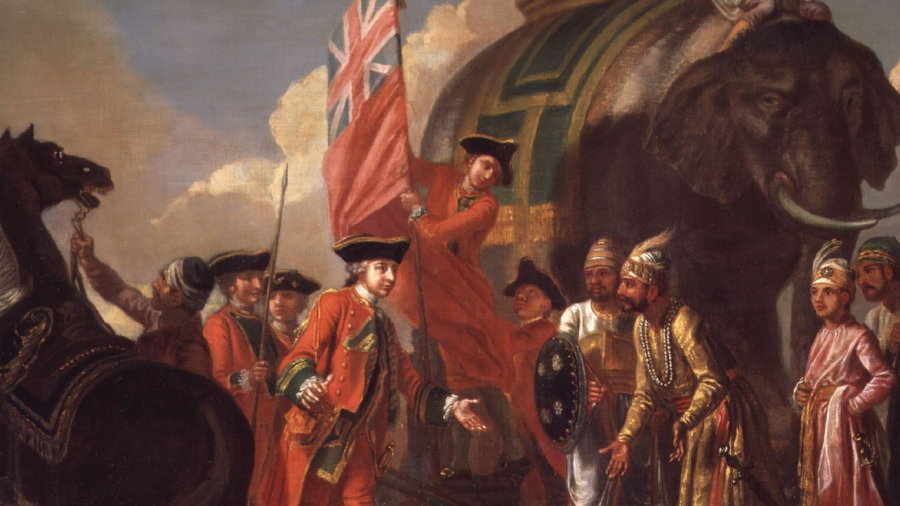
For ages, Britain actively propagated the narrative that empire was for the benefit of nations under colonial administration. Objectively speaking, there’s truth in that line. To understand the colonial complexity, let’s turn to the Indian subcontinent. This will make it easier to grasp the ‘agathokakological’ nature of empire.
It was the colonial administration, with support from a few enlightened people like Raja Ram Mohan Roy, which actively opposed and then proscribed the abhorrent practice of Sati or the burning of a widow on the funeral pyre of her husband. The colonial administration was instrumental in bringing innovations to the Indian subcontinent, helping in the advancement of society.
One can also point to the introduction of sports, mainly cricket, football, tennis, badminton, polo and others. Arguably, these were done primarily to provide leisure time entertainment to the sahibs stationed in the sub-continent, but the Englishmen were limited in number and, therefore, to make a team, locals or natives, as we were called, became essential. These locals learnt the game and then beat their masters.
But sport is only a lighter aspect of empire – on the other, less savoury side, there are years of oppression, the abominable ‘divide and rule’ policy plus the systematic injection of an inferiority complex carried out with ‘European only’ clubs, ‘first class only for sahibs’ and other overt and covert discriminatory policies.




In an age of the Internet, this is known to us all, at least in countries which were once subjugated by the British.
The same applies to nations under colonial rule of European nations. Overt colonialism, as it existed one hundred years ago, is no longer pursued and countries which were once under a colonial power now take a resigned and relaxed approach to the issue because their previous colonial masters run after them for trade and commerce.
An interesting report a couple of years back said that the British TV series Downton Abbey inspired Chinese tycoons to hire trained English butlers and valets – a reversal in roles since Britain once controlled large parts of China through the ruthlessly enforced opium trade.
However, the absence of a formal apology often irks people in countries that were colonised.
Also disturbing is the fact that colonial nations, which, in 2026, are vociferous advocates of human rights, freedom of expression and social justice, do not teach the dark side of their colonial history to their children.
If we take Britain, the school curriculum hardly gives an honest narrative of the colonial past, presenting the empire as a sort of benevolent civilising enterprise which only offered progress and development.
This, per se, is incongruous with the integrity of expression which once imperial nations, including Britain, assertively propagate across the world.
No country is perfect, and neither is Britain:
No state in the world can claim to be perfect, taking a moral high ground. Britain, for centuries, was an aggressive colonial power along with her neighbour, France.
These two nations were at loggerheads over controlling trade and commerce in distant parts of the world.

To add more context: in 1757, when Nawab Sirajuddaula was fighting the East India Company, the French joined hands with the Nawab simply because if the English were defeated, they would get better trade concessions.
In the same manner, Tipu Sultan was promised support by Napoleon during his Egyptian campaign, although the letter of assistance was intercepted by the British. But since the 17th, 18th and 19th centuries are characterised by domination, expansion and empire building, we need to accept it.
However, in dissecting or presenting colonial-period history, the airbrushing of oppressive measures should not be sanitised, expurgated or diluted. The suppression of Mau Mau in Kenya, brutality during the Malaya Emergency, Jallianwala Bagh massacre, concentration camps during the Boer War, cruelty unleashed by indigo planters in Bengal, slavery and other dark episodes, where savagery was applied to preserve colonial authority, should be taught to students.
Empire is a history of contradictions – innovation and progress on one hand, suppression and subjugation on the other. An objective history must be taught at British schools, which are very pluralist in nature.
Several years ago, noted writer and eminent Indian politician Shashi Tharoor said very clearly that an apology is essential; a reparation is not. The narrative that a demand for an apology will inevitably be followed by calls for massive reparations appears flawed. In the modern context, many nations will not even want any compensation and just a heartfelt line admitting a mistake would be sufficient. Did Britain ever have a national debate as to whether they should apologise for colonial crimes?
Perhaps the first step should be to hold a parliamentary plebiscite on the matter and then use the result as a stepping stone for further action. Saying sorry never belittles anyone; on the contrary, it illustrates genuine benevolence.
Britain’s soft power will see a surge if such an apology is issued.
Maybe to find an answer to the slavery conundrum, Britain should look at none other than Shakespeare’s King Lear: “Time shall unfold what plighted cunning hides: Who cover faults, at last shame them derides.”
The writer is the Current Affairs Editor, Daily TIMES of Bangladesh