
BNP’s announcement of candidates for 237 parliamentary constituencies marks a crucial step towards an election that could reshape the country’s political landscape. Yet the list, instead of projecting bold renewal or generational change, reveals a cautious, brand-centred strategy revolving around Khaleda Zia’s enduring legacy and Tarique Rahman’s return to electoral politics.
While BNP leaders describe the list as “preliminary”, it already underlines the party’s tactical priorities and internal limitations. Sixty-three constituencies remain unannounced, reportedly held back for allies and coalition partners. But the broader message emerging from this first slate is that the BNP has chosen continuity over experimentation, a move that may reinforce its core base while exposing its struggle to modernise in a changing political era.
Khaleda Zia: The enduring symbol
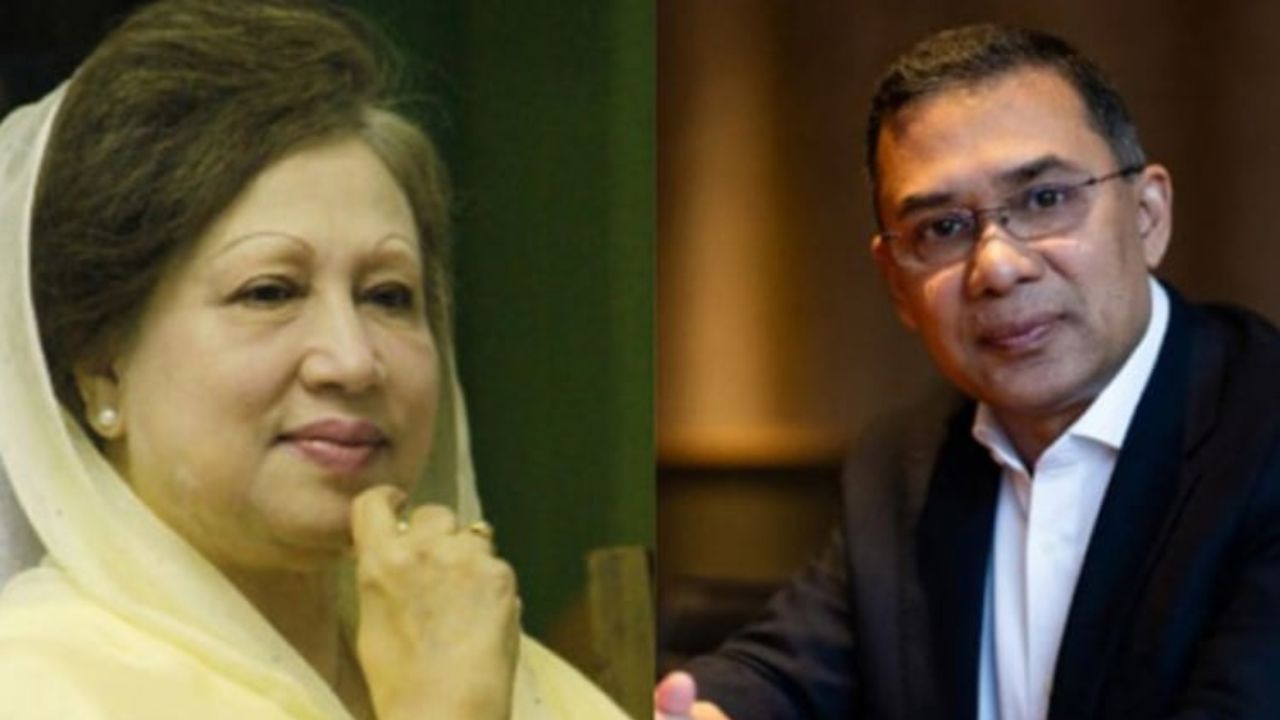
BNP Chairperson is set to contest from three constituencies — the constitutional limit — reaffirming her symbolic role at the forefront of the campaign. Despite her prolonged illness and absence from active politics, she remains the party’s emotional and electoral anchor.
Historically, Khaleda has won every seat she contested, strengthening her image as a “winning brand” in Bangladesh’s political narrative. Even critics admit that her name continues to mobilise the BNP’s traditional voter base. The decision to place her prominently on the ballot reflects a deliberate use of political nostalgia.
Khaleda embodies both resistance and legitimacy — the leader who, even in 2018, refused a compromise offer that would have guaranteed her freedom in exchange for political submission. Her presence allows the BNP to project both continuity and defiance, countering the Awami League’s portrayal of a weakened opposition.

Tarique Rahman steps into the arena
For the first time, Tarique Rahman, the party’s acting chair and de facto leader for about a decade, will formally contest an election, from Bogura-6. His nomination, covered by Reuters and the Financial Times, signals an effort to close the BNP’s leadership vacuum and to reconnect the party’s senior hierarchy with the grassroots.
Tarique’s candidacy carries both promise and peril. His long absence from Bangladesh and legal entanglements under previous regimes have kept him distant from direct accountability. Yet his name on the ballot transforms BNP’s campaign into a family-led revival effort.




Party insiders believe his participation could re-energise a demoralised organisation and help restore internal discipline. Whether he will physically return to lead the campaign remains a defining question in the weeks ahead.
The Fazlur Rahman question
Among the most debated names is Md Fazlur Rahman, nominated from Kishoreganj-4, who had previously been served a show-cause notice for controversial remarks about the Liberation War and the Awami League. His nomination, despite earlier censure, underscores the BNP’s attempt to balance ideological diversity with symbolic messaging.
Political observers see two motives. First, the nomination demonstrates that the BNP is willing to accommodate internal dissent rather than impose rigid conformity. Second, it reflects a calculated effort to reclaim the Liberation War narrative from the Awami League’s dominance.
Fazlur, himself a freedom fighter, is expected to champion the BNP’s historical claim to 1971 — emphasising Ziaur Rahman’s role as a sector commander and the party’s foundation by veterans of the Liberation War.
Continuity over renewal, but glimmers of change
What stands out most from the candidate list is its lack of bold experimentation. Many had expected the BNP to bring in a generation of new, younger leaders, particularly given that nearly 40 per cent of Bangladesh’s electorate is under 35. Instead, the list largely features established figures and long-serving politicians.
This conservatism, many argue, reflects internal pressures rather than a lack of imagination. After 17 years without a competitive election, many senior leaders see this as their last realistic opportunity to contest.
However, there are exceptions that hint at BNP’s potential for renewal. The inclusion of Sanjida Islam Tuli, a well-known figure and convenor of Mayer Daak for Dhaka-14 seat, has drawn positive reactions from both within and outside the party. Tuli played a key role in forming the organisation with the families of those who forcibly disappeared during Hasina’s authoritarian rule.
Political observers suggest that figures like Tuli could give BNP a sharper appeal among urban and first-time voters, especially women and younger professionals.
A cautious step forward
BNP’s nomination strategy reflects the dilemmas of a party caught between tradition and transformation. By foregrounding Khaleda Zia and Tarique Rahman, it seeks to reassert emotional loyalty among its base. By retaining figures such as Fazlur Rahman, it experiments with ideological inclusiveness. And by nominating individuals like Sanjida Islam Tuli, it cautiously tests generational transition.
Yet, by avoiding a comprehensive generational overhaul, BNP may have missed an opportunity to reshape its image for a new electorate. The full electoral picture will emerge once the remaining 63 nominations and alliance seats are finalised. But one thing is clear: BNP has chosen safety over surprise — a strategy that may preserve unity in the short term but leaves open the question of whether it can generate the momentum needed to challenge its political rivals — Jamaat-e-Islami in the immediate term, and the Awami League in the longer run — in a transforming political era.