


The detention of 21 journalists from the online news portal Bangladesh Times office by army personnel has ignited widespread criticism and debate regarding press freedom.
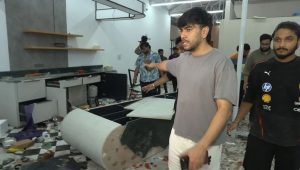
On Saturday night, armed soldiers entered the media outlet’s office in Dhaka’s Nikunja area, eventually taking the newsroom staff to a military camp before releasing them several hours later.
Night of the incident
The incident began around 9:30pm Saturday when a vehicle carrying armed army members arrived at the Bangladesh Times office.
According to the organisation’s Editor-in-Chief, Sabbir Ahmed, he was not present at the time, but security guards reported that soldiers entered the newsroom by force.
Witnesses described the personnel shouting “hurry up” and ordering the staff to prepare for departure, causing significant alarm among the journalists. By 9:44pm, the outlet posted on its verified Facebook page that its office had been surrounded and its staff taken away.

The journalists were transported to the Uttara Army Camp. During their detention, their mobile phones and watches were seized, and they were questioned in a room.
Al Mamun Mia, the visual editor of Bangladesh Times, told BBC Bangla that sixteen individuals were released initially, followed by others, while five remained for further questioning.



He noted that military officials repeatedly requested that the outlet delete social media posts regarding the detention, suggesting the incident be framed as a “misunderstanding.” All staff were eventually released and returned to their office by approximately 11:38pm.
Triggered by viral content
The friction reportedly stemmed from a video reel published by the news portal featuring a woman’s comments during an Inqilab Moncho protest in Dhaka. The footage, which had gone viral, included a “public bite” regarding the Army chief.
Sabbir Ahmed told BBC Bangla that earlier that evening, he received a WhatsApp message from an unknown number requesting the identity of the woman in the video and summoning him to the Uttara camp.
Ahmed had refused the informal summons, suggesting instead that any official communication should go through the Inter-Services Public Relations (ISPR). Although the outlet subsequently restricted the video’s reach, the military arrived at the office shortly thereafter.
Official responses and criticisms
Lt Col Sami-Ud-Dowla Chowdhury, the director of ISPR, described the situation as a “misunderstanding.” He told BBC Bangla that the journalists were brought to the camp for a “discussion” regarding certain news items and were subsequently escorted back to their office.
He maintained that the matter has been resolved and there is no further room for confusion.
However, the leadership of Bangladesh Times has condemned the move as an unprecedented assault on independent journalism.
Sabbir Ahmed argued that if the military was aggrieved by any specific news report, there are established legal and professional channels for communication, rather than the forced removal of staff from a newsroom.
Concerns over media freedom
The incident has drawn sharp reactions from observers. Md Saiful Alam Chowdhury, a teacher at Dhaka University’s Department of Mass Communication and Journalism, described the late-night removal of so many journalists as unprecedented.
He noted that while various governments in Bangladesh have historically used state agencies to pressure the media, such actions under the current interim government raise serious questions.