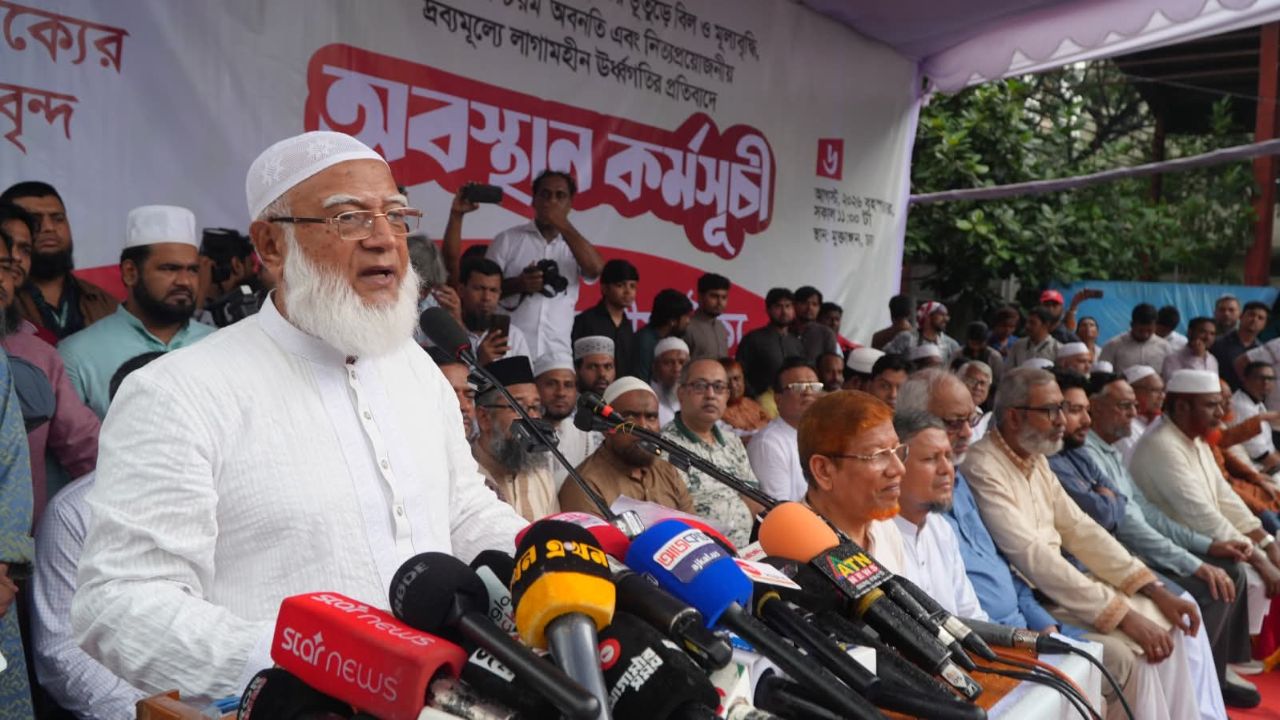



The Jamaat-e-Islami-led 11-party alliance on Thursday announced a series of nationwide long marches and a grand rally in Dhaka to press home its 10-point demands, including the withdrawal of “ghost” electricity bills, control of rising commodity prices and improvement of the law and order.
The announcement came at a sit-in programme held at Zero Point in the capital, where the alliance protested against the ongoing fuel and gas crisis, soaring electricity bills and deteriorating law and order.
The sit-in began at 11:30am and continued until around 12:45pm. Later, alliance leaders and activists marched towards the Secretariat, but police stopped them near Gate No. 1. The protesters ended the programme around 2:00pm and left the area.
Addressing the rally, Jamaat-e-Islami Ameer Shafiqur Rahman said the campaign would begin with a long march from Dhaka to Chattogram on 5 September. It will be followed by marches from Dhaka to Rangpur on 19 September, Khulna on 10 October, and Sylhet on 24 October. The alliance will conclude the campaign with a grand rally in Dhaka on 14 November.
Shafiqur Rahman said the long marches would include roadside public meetings at several locations.

Following the Khulna programme, the alliance plans to return to Dhaka via Jashore and Kushtia, holding additional public gatherings along the route. While the Chattogram, Rangpur and Khulna programmes will be conducted by road, the Sylhet march will take place by train.
Despite heavy rain, leaders and activists from the alliance participated in Thursday’s sit-in at Zero Point.
Urging the government not to obstruct the planned programmes, the Jamaat chief alleged that any attempt to block the marches through “fascist tactics” would only strengthen the movement.




He said the alliance would continue its nationwide campaign until its demands, including the implementation of the referendum verdict and measures to curb the prices of fuel, gas, electricity and essential commodities, are met.
The Jamaat chief also said the alliance’s movement seeks justice for those killed during the July mass uprising, adding that those allegedly involved in the killings, enforced disappearances and extrajudicial executions should not be allowed to reassert themselves in the country.
Referring to the recent increase in liquefied petroleum gas (LPG) prices, Shafiqur Rahman demanded an immediate reduction in prices.
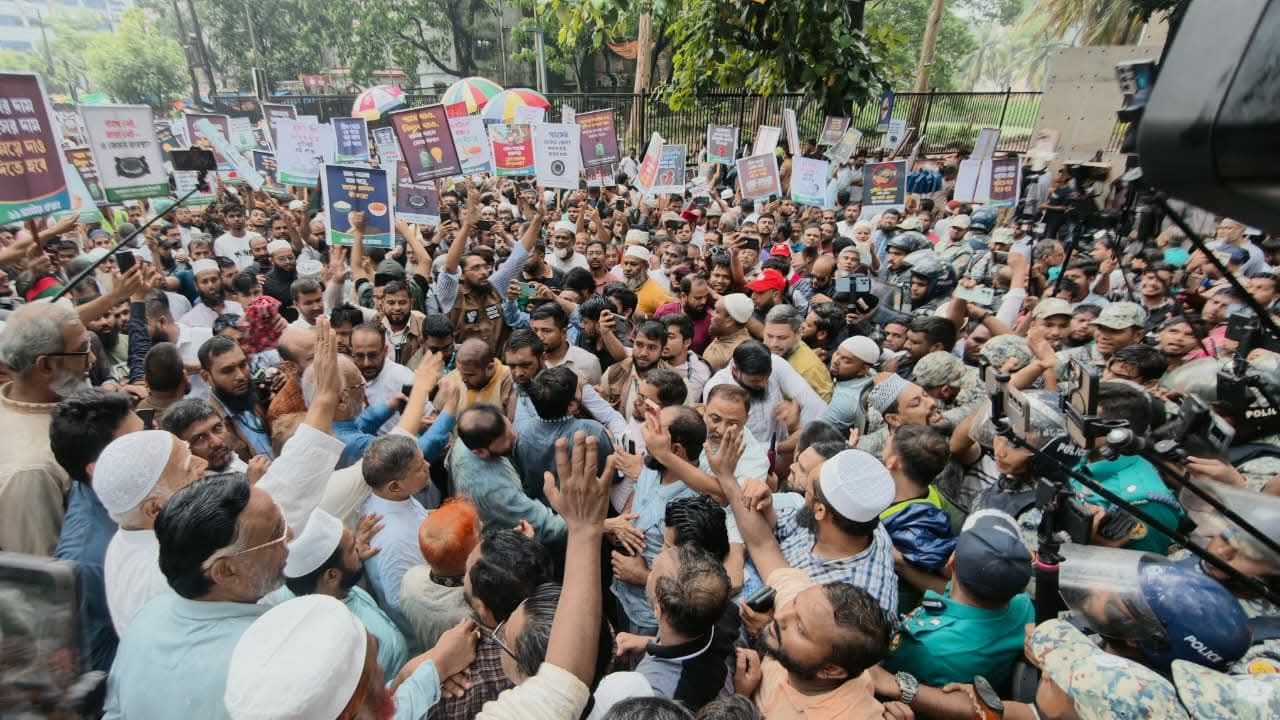
He warned that if the government failed to act, the alliance would launch a siege programme targeting the offices of the relevant authorities.
Leaders of other parties affiliated with the 11-party alliance, including NCP Convener and Opposition Chief Whip Nahid Islam and Liberal Democratic Party (LDP) President Oli Ahmed, attended the programme.
Speaking at the rally, alliance leaders alleged that the gas and electricity crises were being prolonged artificially and claimed that the government was preparing to increase gas prices further using the crisis as a justification.
They warned that any additional burden on consumers would intensify their movement.
The leaders said the long marches and roadside meetings would be used to mobilise public opinion across the country ahead of the 14 November rally in Dhaka.
The alliance’s 10-point demands include a public hearing into excess electricity bills collected over the past three months, punishment for those responsible, and compensation for affected customers.
The alliance also demanded cancellation of demand charges, meter rent and other additional fees on prepaid and postpaid electricity meters, as well as full transparency in the billing system.
Other demands include stopping gas billing during periods of supply disruption, increasing domestic gas production, exploring new gas fields, investigating alleged failures at the Maheshkhali LNG terminal and ensuring alternative fuel supplies.
The alliance further called for strict action against gas theft, system losses and wastage, uninterrupted energy supply for industries, businesses and power generation, and exemplary punishment for those involved in corruption and irregularities in the energy sector.