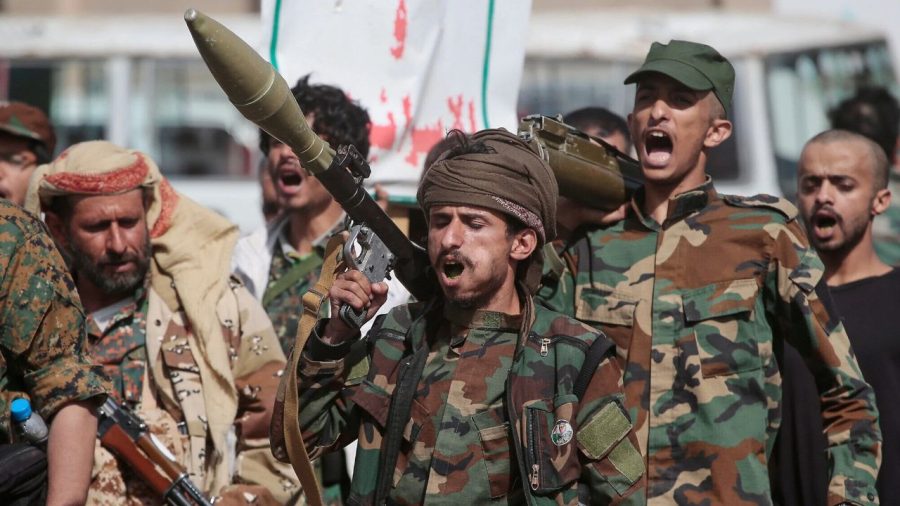

Yemen’s Iran-backed Houthi rebels have captured the strategic islands of Greater and Lesser Hanish, extending their rapid advance around the Bab el-Mandeb Strait, a critical passage for Saudi oil shipments that has grown even more important as an alternative to the Strait of Hormuz during the ongoing Iran war.
The islands, located 160 kilometres north of Bab el-Mandeb, were taken after hundreds of government-allied forces withdrew, according to government and Houthi officials.
Like Hormuz at the mouth of the Persian Gulf, Bab el-Mandeb is a chokepoint linking the Red Sea to open ocean routes and Saudi Arabia’s key Asian markets.
The Houthis’ advance has brought them within 20 miles of the US military base in Djibouti, across the strait.
This followed their earlier capture of the port city of Mokha and the island of Mayun (also referred to as Perim Island) inside the strait itself.
For more than a month, the Houthis have struck Saudi oil infrastructure and shipping, pressuring global oil prices and boosting Iran’s leverage in its broader confrontation with the United States.
The renewed fighting threatens to plunge Yemen back into full civil war after a truce that had largely held since 2022.

The conflict previously killed more than 150,000 people and pushed the country to the edge of famine.
The Houthis have controlled the north, including the capital Sanaa, since 2014, while the internationally recognized government holds the south and east, including Aden.
Alongside the coastal advance, the Houthis have pushed an offensive inland, particularly in Taiz province.
Yemen’s Human Rights Ministry reported roughly 150 civilians killed since September 3, including a pregnant woman killed in a Taiz village, with more than 200 wounded.
Aid group Islamic Relief said thousands of families have fled Taiz and nearby provinces, with entire villages reportedly emptied as people left with only what they could carry.



The United Nations estimates more than 80,000 people displaced in the past two weeks, including over 2,000 who fled by boat to Djibouti.
Some residents describe being trapped, unable to reach family members blocked from markets and water sources.
Saudi authorities sounded sirens in Abha and Khamis Mushait, warning residents to shelter from possible incoming fire.
A Houthi spokesman said the group fired dozens of missiles and drones at the King Khalid Air Base in Khamis Mushait, targeting hangars, radar systems, runways, and ammunition depots, describing it as retaliation for Saudi airstrikes.
Saudi civil defence separately reported a projectile striking near the Yemen border, injuring two people and damaging a mosque and other buildings, which it blamed on the Houthis.
Government forces have launched airstrikes on Houthi positions in Mokha, Dhubab, and elsewhere in Taiz, while the Houthis reported strikes by Saudi-backed forces in Taiz and shelling in their northern stronghold of Saada.
Despite these efforts, the Houthi advance has met little resistance overall.
The Hanish islands had previously been controlled by the United Arab Emirates and its Yemeni allies, but the UAE dismantled its military infrastructure there after falling out with Saudi Arabia and the Yemeni government earlier this year.
Saudi Arabia, which waged a long air campaign against the Houthis in past years, has appeared reluctant to fully re-enter the fight.
Gulf Arab states cancelled a planned meeting with Iran scheduled for Monday as the Houthis launched their attack on the Khamis Mushait airbase, further straining regional diplomacy as the war expands into a new theatre.
The escalation poses a dilemma for the Trump administration, which faces pressure to support Saudi Arabia without expanding US involvement in a costly new front.
Reuters sources say Washington has so far rebuffed appeals from Saudi Crown Prince Mohammed bin Salman for direct intervention.
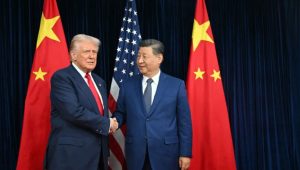
Trump confirmed speaking with the prince and said the Houthis had also contacted Washington asking it to stay out of the dispute.
The US bombed Houthi positions for two months in 2025 before Trump ended the campaign following a ceasefire in which the group pledged not to attack Red Sea shipping.
Speaking from Ireland, where he attended the Irish Open, Trump said he expects the Iran war to end this year, possibly shortly after November’s US midterm elections.
He said Iran has been “calling constantly” for peace talks, though Tehran has previously disputed such claims.
He also raised the possibility of a longer-term US presence, comparing it to the August deal pursuing a stake in Venezuela’s oil reserves.
Trump predicted gasoline prices would “drop like a rock” once the Iran war concludes.
In the meantime, oil traders expect prices to climb further after an attack, which Riyadh has blamed on Iran-backed fighters in Iraq, knocked out Saudi Arabia’s east-west pipeline, the kingdom’s main route for bypassing the blockaded Strait of Hormuz.