


The World Bank has projected Bangladesh’s GDP growth to rise to 4.8% in FY26, recovering from a 4% slowdown in FY25.
The growth is expected to further increase to 6.3% in FY27 as the economy stabilizes, driven by strong exports, record remittances, and an increase in foreign exchange reserves, according to the World Bank’s latest Bangladesh Development Update, released on Tuesday.
While the country is on an upward growth trajectory, the World Bank emphasizes that urgent reforms are crucial to sustaining growth and creating jobs, especially for youth and women.
The report highlights easing inflation, which is expected to ease pressure on household consumption, though challenges remain, including political uncertainty surrounding the national elections, vulnerabilities in the banking sector, and global economic pressures.

External pressures eased in FY25 with the adoption of a market-based exchange rate, stabilization of foreign exchange reserves, and robust export growth. However, the fiscal deficit widened due to weak tax revenue, higher subsidies, and rising interest payments.
Labor force participation fell from 60.9% to 58.9%, with women disproportionately affected. Of the 3 million additional working-age people outside the labor force, 2.4 million were women.
“The economy has shown resilience, but this cannot be taken for granted,” said Jean Pesme, World Bank Division Director for Bangladesh and Bhutan.




“To ensure strong growth and more and better jobs, Bangladesh needs bold reforms and faster implementation, particularly in domestic revenue mobilization, banking sector vulnerailities, energy subsidy reduction, urbanization planning, and improving the investment climate.”
The report urges Bangladesh to reassess spatial development strategies to reduce regional disparities and foster inclusive job creation. Industrial jobs are increasingly concentrated in Dhaka and Chattogram, highlighting the need for more balanced infrastructure development and job distribution.
The fiscal deficit is expected to remain below 5% of GDP, while public debt is projected to rise to 40.3% of GDP by FY27, underscoring the need for sound debt management strategies.
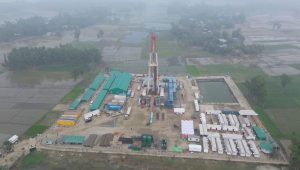
Several risks remain, including banking sector weaknesses, political instability, and Bangladesh’s reliance on natural gas for power generation, which could impact energy supply. Global trade disruptions and extreme weather events also pose risks to the recovery.
The export sector, particularly the ready-made garment (RMG) industry, is expected to remain resilient despite global tariff uncertainties. The industrial sector is expected to grow moderately, with the RMG sector leading, while non-RMG industries may face constraints due to high operational costs and political instability.
Inflation is expected to ease gradually, with consumer prices potentially reducing to around 5.5% by FY27. The services sector could benefit from increased household purchasing power, and the agricultural sector is expected to maintain its long-term average growth rate of 3.1%.
The World Bank has outlined several urgent reform priorities, including improving domestic resource mobilization, addressing banking sector vulnerabilities, controlling inflation, reducing energy subsidies, and improving the business climate.
“The economy has shown resilience, but this cannot be taken for granted,” said Jean Pesme.
While Bangladesh’s growth forecast for FY26 remains modest, the implementation of these urgent reforms will be key to ensuring the country’s long-term economic stability and growth. Political stability, effective governance, and commitment to reform will be critical to the nation’s success.