


The US administration has suspended Microsoft, software maker Adobe and major IT outsourcing firms from a key green-card programme while launching formal investigations into nine elite universities.
The twin actions mark the broadest crackdown yet by US President Donald Trump on skilled-worker immigration programmes, targeting alleged fraud and seeking to protect domestic jobs while placing leading research institutions under scrutiny, reports Reuters.
Labour Secretary Keith Sonderling confirmed that the suspension from the permanent labour certification process (PERM) also covers Cognizant, Infosys, Tata Consultancy Services (TCS), Wipro, HCL Technologies and Capgemini. He said the government would neither accept new applications nor process pending permanent labour certification submissions involving the specified companies.
Since 2009, these corporations had sought nearly three million foreign workers, securing more than 230,000 H-1B visa approvals and over 100,000 permanent labour certifications, Sonderling added.
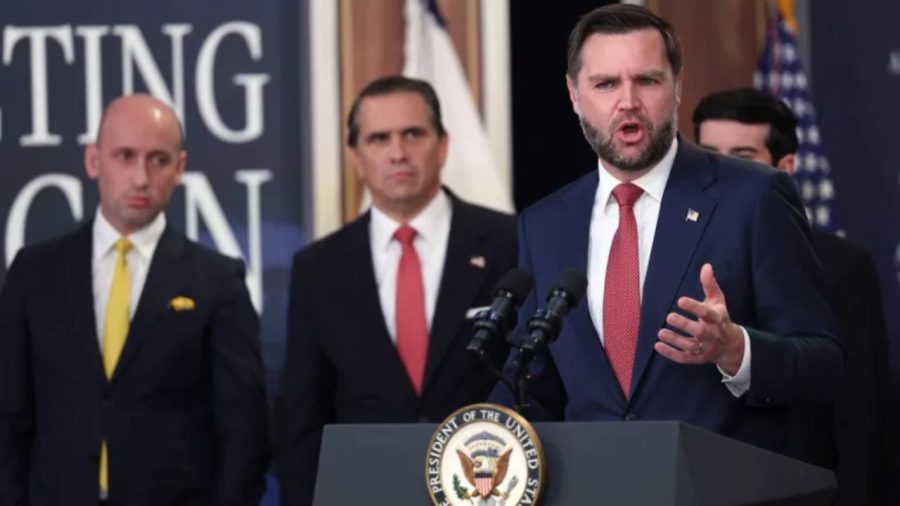
Vice President JD Vance sharply criticised Microsoft, claiming that no company in the US had abused the system more than the technology giant. He said Microsoft laid off 6,000 American workers last year while benefiting from 6,300 H-1B temporary worker visas and nearly 3,000 green cards.

Vance said the green-card suspensions would remain in place for as long as necessary to force the companies to change their hiring practices. He accused some businesses of publishing ineffective job advertisements to create the false impression that no domestic applicants were available, thereby justifying the recruitment of lower-paid foreign workers.
In response, Microsoft said approximately 80 per cent of the H-1B applications it submitted during the previous fiscal year were intended to extend or modify the status of existing employees rather than recruit new workers. The company also maintained that it pays H-1B visa holders the same salaries as other employees performing comparable roles.
Microsoft is the largest filer of PERM applications. Under the process, employers must demonstrate that hiring a foreign worker will not adversely affect the wages or employment of US workers.
The company had previously announced plans in July to cut 4,800 jobs, representing approximately 2.1 per cent of its global workforce.




According to US immigration data, Amazon.com was the leading employer of approved H-1B beneficiaries in fiscal 2026, followed by TCS, Infosys, Apple and Microsoft.
Vance made the remarks hours before Trump honoured several technology billionaires for their contributions to the US, including Microsoft Chief Executive Satya Nadella and Elon Musk. Both Nadella and Musk previously held H-1B visas, while three other chief executives honoured at the event are also immigrants.
Nadella thanked Trump for the medal in a post on X, pledging to continue advancing technology and driving American prosperity.
Adobe, Cognizant, Infosys, HCL Technologies, Wipro and Capgemini did not immediately respond to requests for comment, while TCS declined to comment.
Indian technology industry body Nasscom said Indian IT companies operating in the US had significantly reduced their reliance on H-1B visas. It added that relatively few of their employees sought green cards through the PERM process.
The latest action follows the Labour Department’s launch of an enforcement drive, known as Project Firewall, in September last year. The initiative accompanied a White House proclamation imposing a one-time $100,000 fee on new H-1B petitions for workers recruited from overseas.
Alongside the corporate restrictions, Vance announced investigations into nine universities, including Harvard, Yale, Stanford, Brown and the Massachusetts Institute of Technology, over allegations that they had misused exchange-visitor visas to undercut American wages.
Labour Inspector General Anthony D’Esposito confirmed that subpoenas had already been served. Investigators will examine whether foreign influence, improper financial relationships or visa abuse have compromised federally funded research, he added.
Sarah Spreitzer, vice president of the American Council on Education, which represents university leadership, warned that the investigations could have an enormous economic impact on the US economy. She noted that international students historically spend $40 billion annually while in the country.
The inquiry adds to a long-running dispute between the administration and Harvard over international students. Last year, the Department of Homeland Security subpoenaed Harvard over alleged misconduct involving international students and compliance with immigration laws.
Harvard described the move as “unfounded retribution” while pledging to comply with legal requirements.
Meanwhile, rapidly changing visa regulations have recently triggered a sharp decline in international applications to Columbia University, contributing to a decision to pause admissions to one of its journalism programmes.