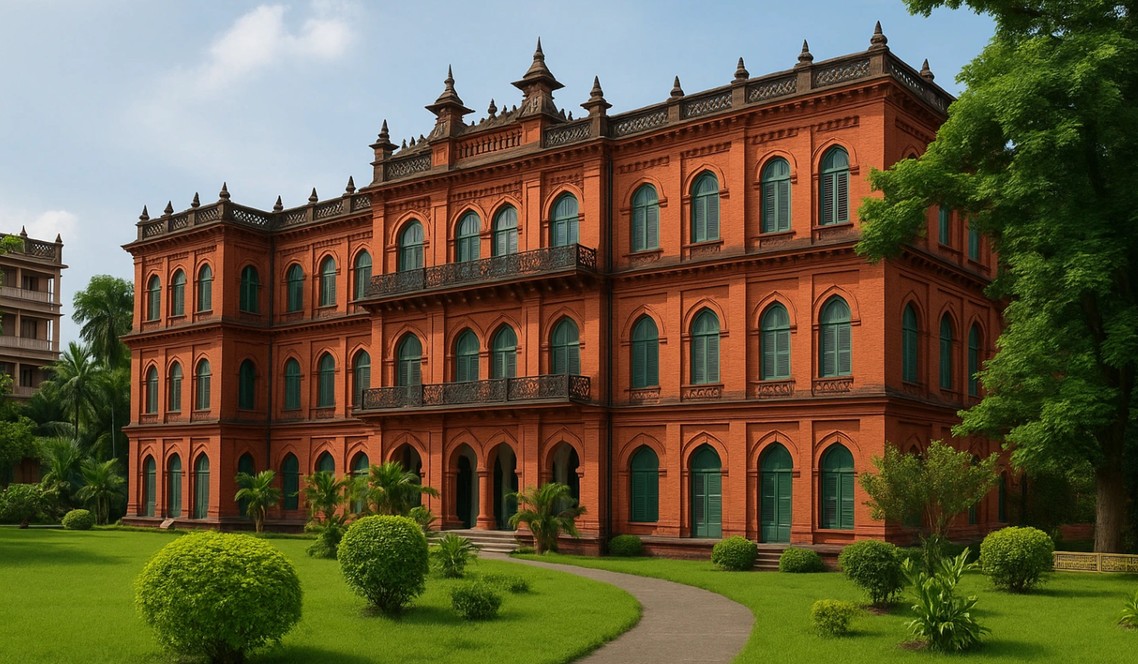



A large number of female students at the University of Dhaka do not receive residential accommodation. Due to the shortage of seats, they are forced to remain non-residential students. Yet, non-residential female students are not allowed to enter the halls to which they are officially attached.
Students travelling to campus from distant areas remain busy from morning to afternoon with classes, examinations, laboratory work, assignments, and other academic activities. During breaks, they may reasonably wish to rest for a while in their hall, have lunch, or sit in a friend’s room. However, simply because they are classified as non-residential students, they are deprived of these facilities. A student remains non-residential mainly because the university has failed to provide sufficient accommodation. Why, then, should students be punished for an administrative failure? Even more surprisingly, a female student from one hall is not permitted to enter another female hall.
A mother may spend an entire day travelling from a distant village to see her daughter. Yet in many women’s halls, even the mothers of residential students are denied entry and left waiting outside the gate. What possible justification can there be for preventing a mother from seeing her own daughter’s living space? Security concerns can be addressed through identity checks, visitor registration and fixed visiting hours. But instead of adopting such reasonable measures, the authorities impose a long official procedure which requires around a week to complete, offering only one hour to stay.
The University of Dhaka is a coeducational institution. Male and female students study in the same classrooms, move around the same campus, and participate in the same social and cultural activities. Yet, female students have reportedly been discouraged or prevented from sitting on the upper decks of university buses. Preventing a woman from sitting in a particular place despite the availability of empty seats is not a matter of security. It is an unreasonable interference with her freedom of movement and decision-making.

Although women constitute nearly half of the students at the University of Dhaka, the number of residential halls available to them is significantly lower. Nearly half of the university’s students are women. Yet, there are only 5 halls for female students, compared with 13 for male students. As a result, most female students who wish to live on campus are unable to secure a seat. They are forced to commute daily from distant areas. Despite the shortage of hygienic and affordable food around the university, non-residential students are also denied access to dining halls and canteens in their own halls. The housing shortage is an administrative failure. It is therefore unjust to deprive female students of opportunities for rest, food, and a safe place to stay because of that failure.
However, the rule requiring women’s hall gates to close at 10:00 p.m. restricts female students’ participation in activities, such as volunteering and so on. A resident student who is delayed while carrying out responsibilities at a cultural or social programme may be forced to remain outside the hall gate.




Ensuring the safety of students within the university area is the responsibility of the university administration. Yet female students are being forced to pay the price for the administration’s failure to provide adequate security by surrendering their freedom of mobility and independence. Instead of addressing the real causes of insecurity, the authorities impose restrictive rules on women, making them bear the burden of an institutional failure for which they are not responsible.
An adult female student should have the right to decide when she will return to her hall, when she must leave during an emergency, where she will sit on a bus, and when she may enter her own hall. The university’s responsibility is to provide safe transport, effective emergency services, adequate security personnel, well-lit roads, and rapid access to medical care. Confining students is not a sustainable solution to safety concerns. Male students enjoy many rights and freedoms as a matter of course, while female students must face additional rules, permission requirements, and questioning to exercise the same rights. This discrimination is not merely administrative. It reflects a wider social mentality that views women not as independent individuals, but as people who must remain under control.
The safety of female students should be ensured not by taking away their freedom, but by expanding necessary facilities and services. Measures could include opening hall gates without prior permission during emergencies, providing round-the-clock ambulance and medical services, introducing digital access systems, allowing visitors to enter after identity verification, granting non-residential students access to common hall facilities, and adopting equal rules for male and female students. Encouragingly, female students themselves are now speaking out against these discriminatory regulations, raising questions, and building public awareness. Their demand is not for special privilege. It is a demand for equal dignity, freedom, and citizenship rights.
If the University of Dhaka truly wishes to represent intellectual freedom, progress, and equality, it must move beyond the outdated mentality of controlling female students in the name of security. Security should never be treated as the opposite of freedom. Genuine security exists in an environment where a woman can make her own decisions without fear, discrimination, or unreasonable restrictions.
The views expressed in this article are solely those of the author
The writer is a Student, Economics, Dhaka University. E-mail: [email protected]