Durga Puja is not just a religious festival but the victory of the divine feminine power of Maa Durga over the demon Mahishashur. Bengal celebrates this in an illustrious manner where the air thrums with the rhythm of the dhaak-dhol and the aroma of the Shiuli flowers encompass an electrifying spirit of community. Reunion, reflection and unparalleled artistic expression are the essence of it all.
This year, the epicentre of this creativity has been around the neighbourhoods of Shah Para and Tan Bazar in Narayanganj, where the mandaps offered an absolute visual treat. As the cool autumn breeze rustled through fields the festive air felt even more enchanting. One cannot miss the unique aesthetic voices of these mandaps.
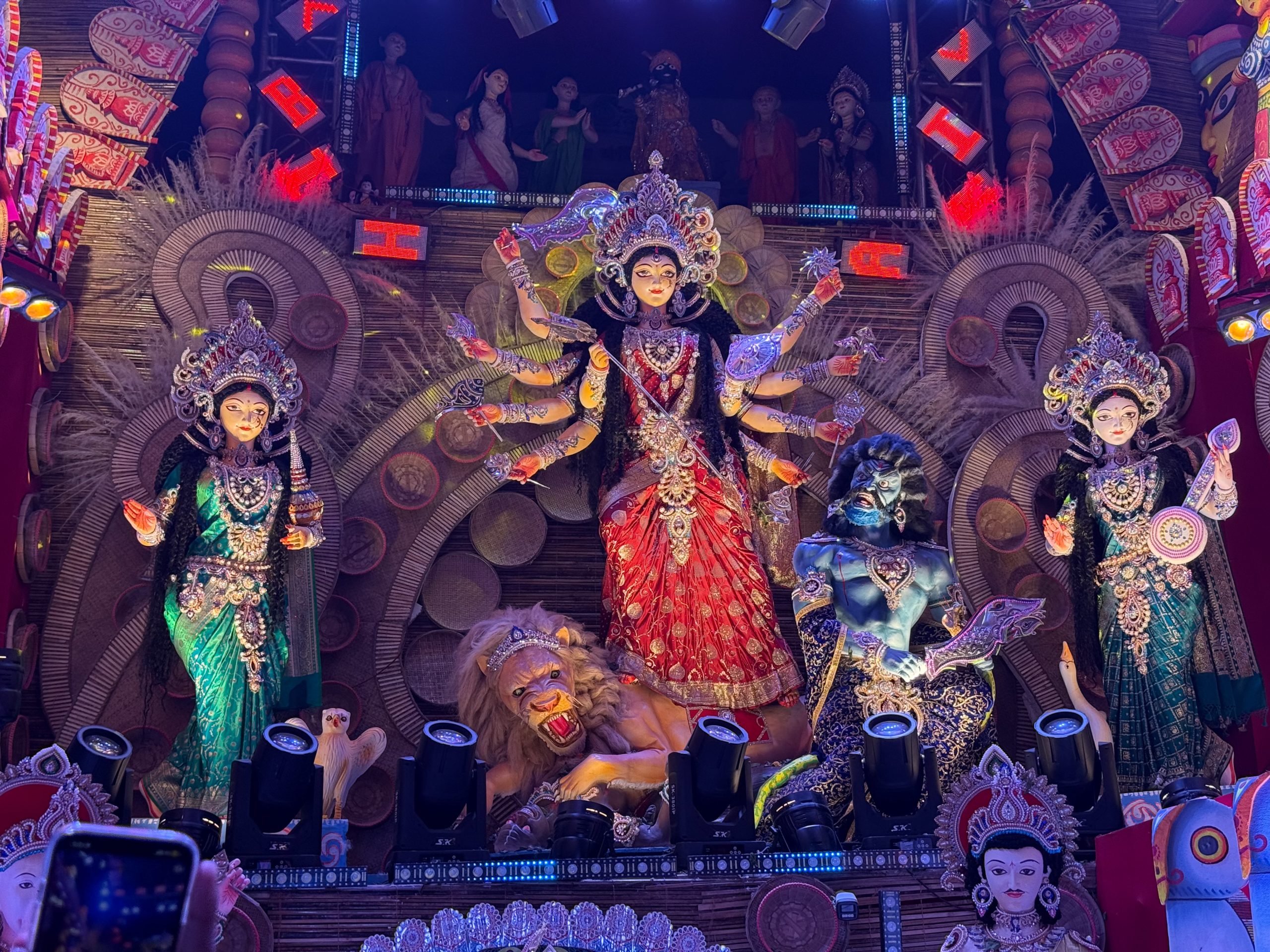
The mandaps were a spectacular ode to custom and sustainability. While one was created entirely from cane and bamboo, the assembly felt like a gorgeous, intricate latticework forest. The organic authenticity, the earthy scent of materials made the divine experience a sanctuary of peace reminding everyone about Bengal’s rich heritage in craftsmanship.

One mandap was heavily decorated with an intricate backdrop of coloured paper, woven bamboo or fabric in different striking colours resembling large ornate fans. The ceilings are as decorative as the walls. There was a dramatic arrangement of red clay pots in repeating cylindrical shapes and chandeliers made from folded fabrics where another one featured ‘palo’ as a lamp shade. The aesthetics of the mandaps are remarkable.
Then there were others that equally presented a vibrant and contemporary contrast. The artists here had masterfully used unusual materials like cork sheets, ‘kashful’, that formed the backdrop, and plenty of fishing hats were assembled into stunning installations. It was a nod to the city’s riverine roots or a commentary on upcycling. The modern, almost avant-garde approach was as stimulating as it was attractive.




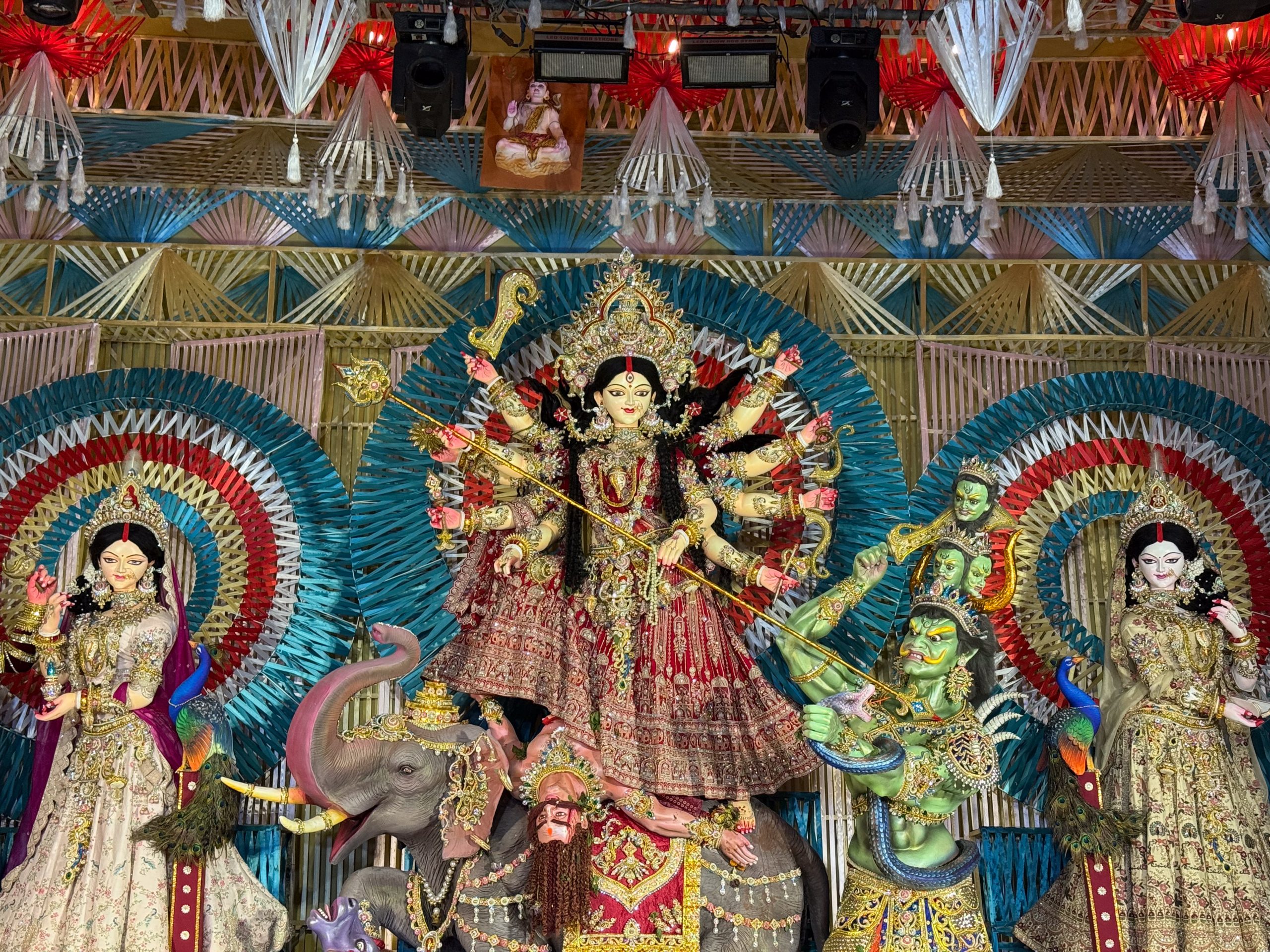
The deities sat at the heart of both these artistic marvels, who were nothing short of grandeur and exquisiteness. The devis were draped in striking attires, a spectacular fusion of traditional Banarasi silks and modern-day designs with stones studded in them along with ‘zari’ work that were shimmering under the lights. Each embroidery and carefully chosen ornaments spoke of the meticulous dedication and love of the makers that made the masterpieces of textile art. Truly, each mandap was a complete treat for the eyes.
A bittersweet feeling descends as we stand on the eve of Doshomi. Today, as the Devi will be taken for immersion the air will be full of the warm chants of ‘Aashche Bochhor Abar Hobe’ (It will happen again next year).
The immersion signifies life’s cycle- it reminds us that endings are merely introductions to new beginnings. It is a reflective lesson in letting go, emphasising the eternal hope that good will always conquer evil and light will forever emerge from darkness, guiding mankind forward with renewed hope.
Durga departs, but the artistry, the community spirit, and the memories crafted in cane, cork, and exquisite fabric remain etched in our hearts, sustaining us until her return once more.