
A controversial drive to revise West Bengal’s voters’ roll ahead of crucial state elections has triggered widespread fear, allegations of harassment, and a growing human toll, with critics accusing India’s ruling Bharatiya Janata Party (BJP) of targeting vulnerable citizens in its push to remove what it calls “illegal immigrants”.
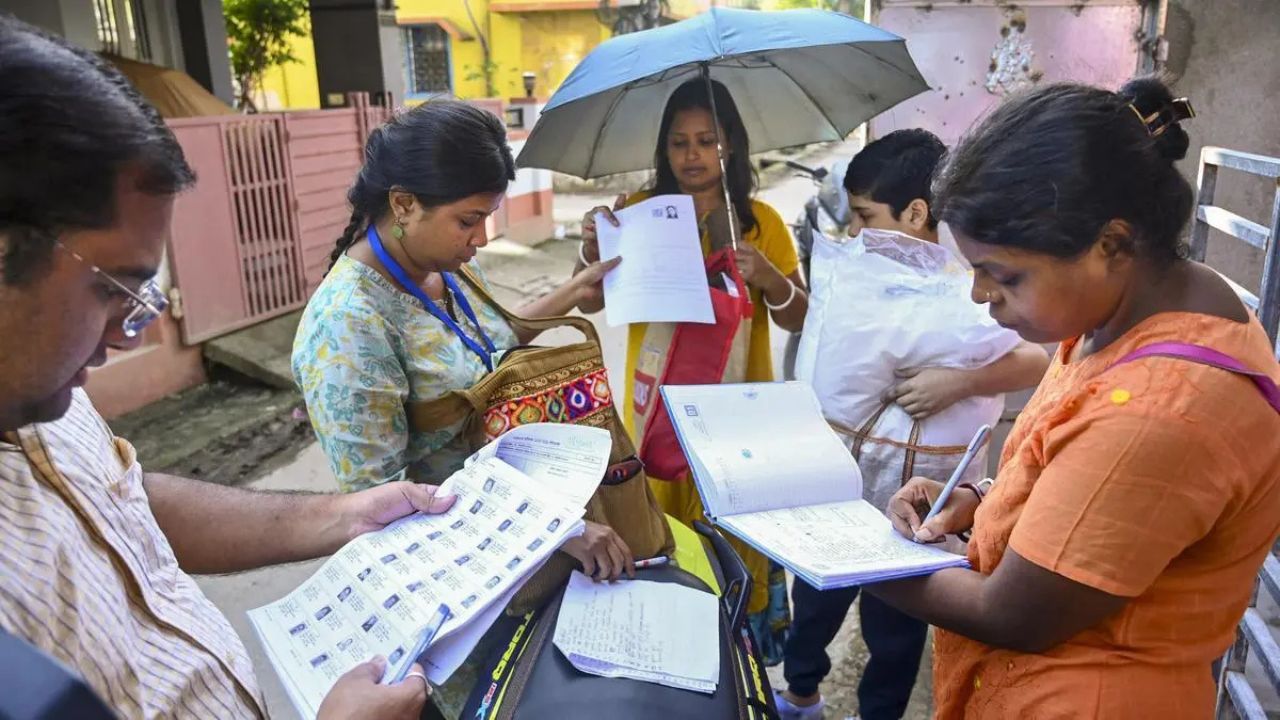
The Special Intensive Revision (SIR), launched barely two months before the March–April 2026 assembly polls, was introduced as a clean-up exercise to remove suspected undocumented migrants and duplicate voters. But across the state, the process has instead left thousands scrambling to prove their citizenship and right to vote, often after decades of uninterrupted participation in elections.
Many residents now say they fear losing not only their franchise but also their sense of belonging.
A bureaucratic ordeal
For many, the process has become deeply personal.
After submitting enrolment documents under the revision programme, Kolkata resident Probir Pramanik was summoned to a local administrative hearing over what officials described as “logical discrepancies” in his application.
He says the notice contained little explanation. At the hearing, he was asked to prove that the age difference between him and his father was at least 15 years. The actual difference, he says, is 32 years, yet officials demanded documentary proof.
“I have voted for decades,” he said. “Yet suddenly I had to defend who I am.”

Around him, hundreds of residents waited in long queues outside the sub-divisional office. Elderly citizens clutched ration cards and faded birth certificates, while students nervously held voter slips. Many had travelled long distances and waited for hours in cold winter conditions.
Human rights campaigners say such experiences are increasingly common and reflect what they describe as an opaque and intimidating verification process.
BJP claims and disputed figures
BJP has defended the revision, arguing that electoral rolls in West Bengal contain large numbers of undocumented migrants from Bangladesh and Rohingya. Party leaders repeatedly framed the exercise as essential to protecting electoral integrity.
Senior BJP figures earlier suggested that more than one crore suspicious or illegal entries could be removed from voter lists.


However, draft rolls released during the revision reportedly identified only about 1.83 lakh ghost or duplicate voters, far fewer than initially projected. Political analysts say the discrepancy has fuelled questions about the scale and intent of the operation.
“The infiltration narrative has created a climate of suspicion,” said one Kolkata-based political observer. “But the verification drive has largely failed to support those claims while creating distress among genuine voters.”
Leaders of Trinamool Congress, which rules West Bengal, have also accused BJP of weaponising citizenship fears to gain political ground in a state where it suffered defeat in the 2021 elections.
BJP has rejected those allegations, maintaining that strict voter verification is necessary to ensure free and fair polls.
Deaths linked to revision drive
Beyond political disputes, the revision has been marked by tragedy.
Local activists and civil society groups say more than 130 people have died in circumstances linked to the verification process over the past two months.
Among them was 72-year-old Shanti Devi, a widow from Nadia district, who collapsed outside a hearing centre after waiting for hours with her documents, according to local reports.
In Howrah, migrant labourer Rafiqul Islam was killed in a road accident while travelling to attend a verification hearing. In northern Jalpaiguri, schoolteacher Madhuri Pal reportedly suffered a fatal heart attack after days of stress gathering documents and responding to official notices.
Authorities have not released an official consolidated figure linking deaths directly to the revision, but the cases have intensified public anger and fear.
Impact on vulnerable communities
Campaigners say the exercise has disproportionately affected poorer residents, migrants and minority communities, many of whom struggle to produce decades-old documentation.
Exclusion from voter rolls in India can have consequences beyond elections. In many cases, voter identity is closely linked to access to welfare schemes and official recognition.
“The threat of deletion is not just political,” said a civil rights advocate in Kolkata. “It risks pushing people into bureaucratic invisibility.”
Rising distrust before crucial election
West Bengal has long been politically volatile, with elections frequently accompanied by tension and violence. Observers say the revision has deepened mistrust at a particularly sensitive moment.
Many residents who once viewed voter identification as a symbol of democratic inclusion now say they fear it could become a tool of exclusion.
Critics argue the short timeline, vague notices and repeated demands for proof have created a system where citizens must repeatedly justify their existence before the state.
Unless transparency improves, analysts warn the revision risks overshadowing the election itself and further eroding public confidence in democratic institutions.
For voters standing in queues clutching fading documents, the process has already left scars. For some families, it has proved fatal.