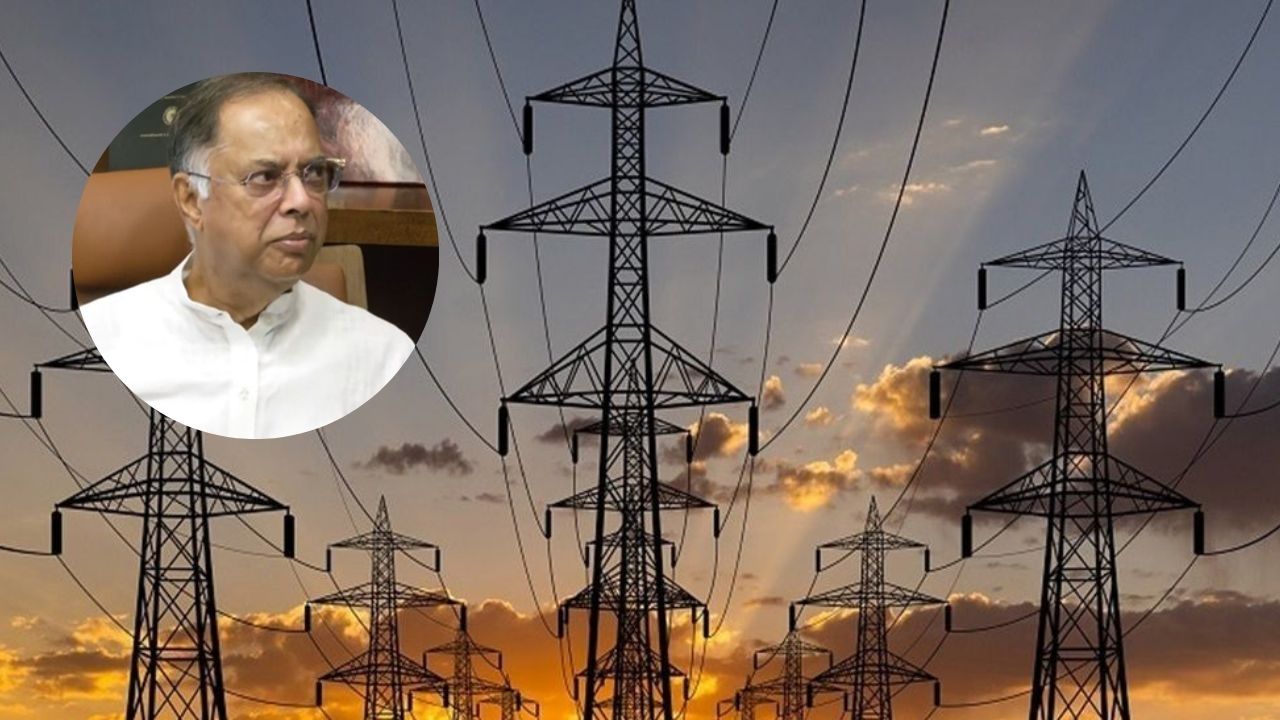



The government has no option but to manage load-shedding and wait for the repair of the damaged Floating Storage and Re-gasification Unit (FSRU) to address the ongoing gas and power crisis, Power, Energy and Mineral Resources Minister Iqbal Hassan Mahmood has said.
Speaking at a dialogue on Thursday, the minister described the FSRU fire incident as “unexpected” and said the government is now dependent on engineers working to restore the unit.
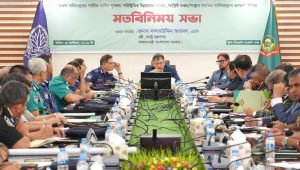
The dialogue titled “Navigating Bangladesh Energy Crisis: Immediate Priorities and the Path to a Sustainable Energy Future” was organised by the Centre for Policy Dialogue (CPD).
“We cannot extract gas now, and we cannot unload gas without the FSRU,” Mahmood said. “Apart from counting days and relying on the work of engineers on the FSRU, there is nothing else in my hands now. Our management is focused on reducing load-shedding and ensuring gas supply to industries. What else can we do?”
He said engineers were working round the clock at the offshore site, while ministry officials were supervising the repair work continuously.

Despite the damage to the FSRU, LNG imports have not been stopped, the minister said.
“Even yesterday, four LNG cargoes were purchased so that they can be brought and unloaded as soon as the FSRU is repaired,” he added.
Mahmood said the country is currently facing a severe gas deficit. Allocating more gas to power plants increases electricity generation but reduces supply to industries, while prioritising industries creates pressure on power generation.



The minister also said electricity demand patterns have changed significantly. Previously, peak demand was mainly between 7pm and midnight, but now demand of nearly 18,000MW continues until midnight, largely due to the growing number of battery-powered rickshaws charging at night.
He also highlighted challenges in disconnecting illegal power connections, saying such drives often trigger protests and attacks on power sector employees.
The minister blamed the current crisis on infrastructure weaknesses inherited from previous governments. He said gas exploration across the country was neglected over the past 17 years due to excessive dependence on imports, while the necessary infrastructure to bring imported gas into the country was not developed.
“If four FSRUs had been installed instead of two, we would not have faced this situation today,” he said.
The government has planned to install three more FSRUs by 2029, with possible locations under consideration at Payra, Mongla and Hiron Point. Plans are also underway to develop new gas supply infrastructure in the Khulna region.
However, Mahmood said the absence of a gas pipeline from Chattogram to Bakhrabad means additional FSRUs alone would not solve the problem due to pipeline limitations. The government has therefore planned to build a new underground gas pipeline up to Bakhrabad.
He said efforts were also underway to increase domestic gas production. Since assuming office, the government has started drilling wells through state-run Bapex and placed orders for two additional rigs to enhance its capacity.
As alternative measures to address the gas shortage, the government is discussing importing containerised gas from Malaysia for industries. A private company has also been re-authorised to transport gas from Bhola using CNG containers for industrial use.
Mahmood said the government has held three rounds of discussions with industrial entrepreneurs since taking office to resolve the energy crisis.
Regarding the FSRU repair, the minister said the responsibility lies with the private American company that owns the facility. He said although the fire was unexpected, the government ensured that damaged parts were imported and transported to the site within 24 hours of customs clearance.
“We are all very serious. Under the leadership of the Prime Minister, we are working as we would in a war-like situation,” Mahmood said. “But some things are simply beyond our control.”