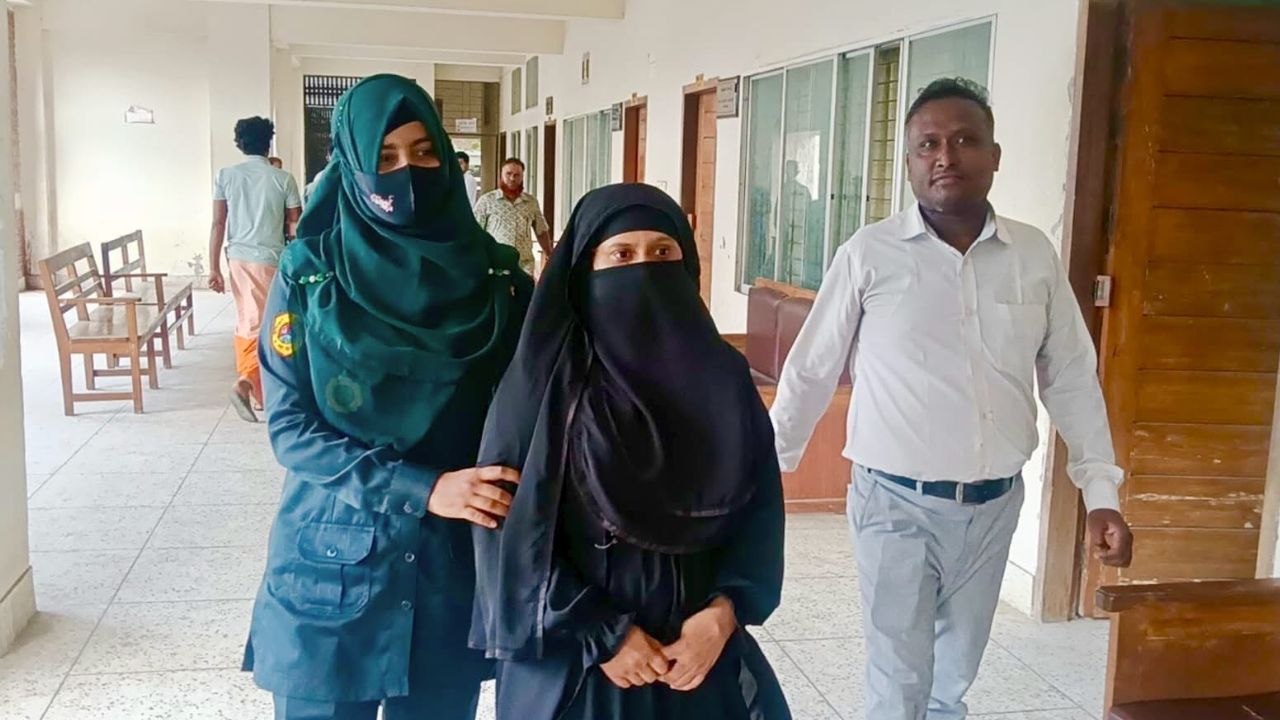



A court in Manikganj has sentenced a woman to 10 days’ imprisonment for filing a false dowry case against her husband. At the same time, the court acquitted the accused husband, Md Ariful Islam Ratan, of all charges.
Judge Dolon Biswas of Manikganj Judicial Magistrate Court delivered the verdict on Thursday in the presence of both the plaintiff and accused. The court subsequently ordered the convict, Lovely Akter, to be sent to jail.
According to the case details, Md Ariful Islam Ratan married Lovely Akter on 22 January 2021. However, disputes arose between the couple over various marital issues soon after their marriage.

Consequently, on 15 March 2022, Lovely filed a lawsuit under Dowry Prohibition Act at Singair Thana Cognizance Court, alleging that her husband had demanded Tk5 lakh in dowry, assaulted her, and driven her out of their home.
A total of three witnesses, including the plaintiff, testified during the trial. However, during cross-examination by the defence counsel, it was established in court that Ratan had gone abroad approximately seven months prior to the date of the alleged incident described in the plaintiff’s petition.




As the prosecution failed to prove the allegations, the court acquitted Ratan of the charges. Simultaneously, the court found the plaintiff’s allegations to be entirely fabricated and sentenced Lovely Akter to 10 days in prison for filing a false lawsuit.
Following the verdict, Lovely Akter’s lawyer, Advocate Samapti Akter, said they had applied for bail on the condition of filing an appeal against the 10-day sentence. On humanitarian grounds, the court granted bail to Lovely Akter on a Tk1,000 bond, ordering her to file an appeal within one month.
Commenting on the ruling, Advocate Mahabubul Islam said such verdicts are highly significant in curbing the practice of harassing innocent people with false cases.
He said although the prison term is short, it sends a clear warning that those who abuse the legal system to harass others will face punishment. He added that such exemplary judgments would help substantially reduce tendency to file sweepingly false lawsuits in society.