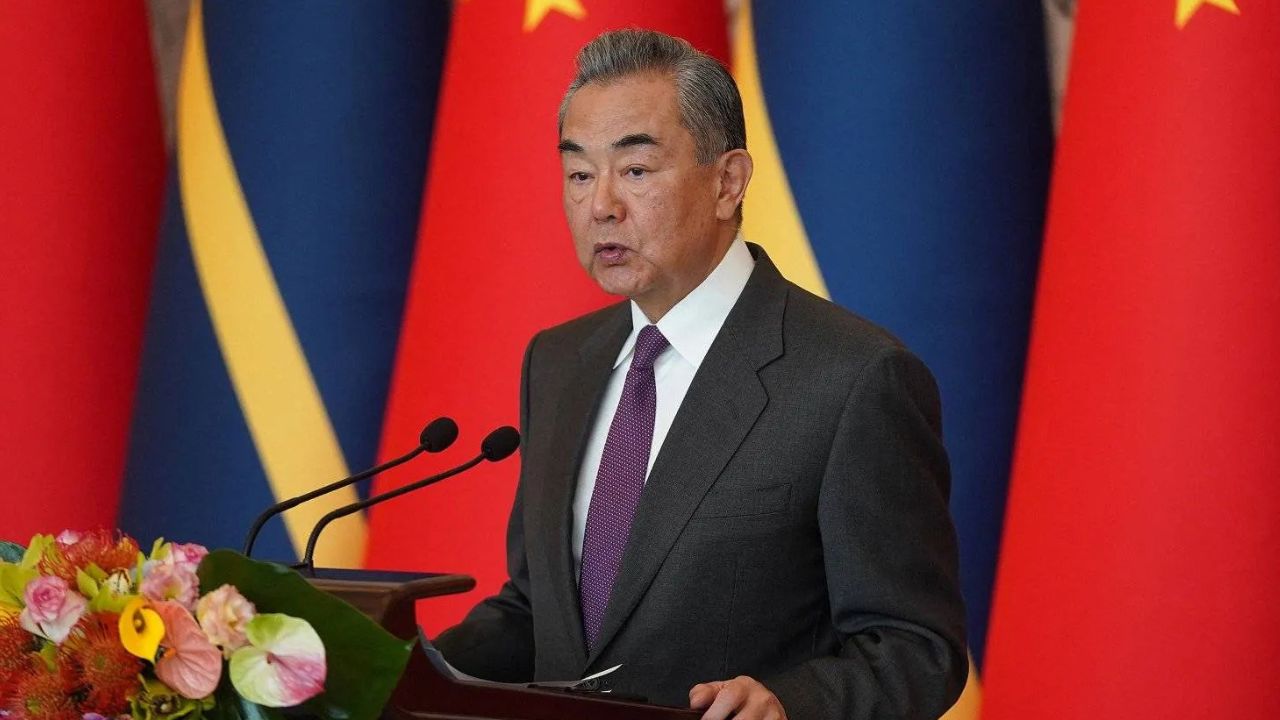

Amid a turbulent international landscape, Chinese Foreign Minister Wang Yi arrived in New Delhi to attend the 16th Meeting of BRICS National Security Advisers and High Representatives on National Security, taking place from Monday to Tuesday, reports Global Times and Xinhua.
Analysts expect the gathering to help build greater consensus among member states and contribute to long-term stability in global governance.
According to India’s Ministry of External Affairs, the meeting is being chaired by National Security Adviser Ajit Doval. Delegates are discussing the rapidly evolving nature of national security challenges, the role of emerging technologies in new security threats, and the outcomes of recent BRICS joint working groups on counter-terrorism and the security of information and communication technologies.
Alongside Wang, who is also a member of the Political Bureau of the Communist Party of China Central Committee, senior participants include Russian Security Council Secretary Sergei Shoigu and Qadir Nizamipour, deputy secretary of Iran’s Supreme National Security Council.
During a meeting with Nizamipour on Monday, Wang said China, as Iran’s comprehensive strategic partner, has consistently supported efforts conducive to peace and backed Iran in safeguarding its sovereignty, security and national dignity, according to Xinhua News Agency.

Nizamipour briefed Wang on the latest developments in the Middle East and ongoing Iran-US negotiations. He expressed hope that China would continue to play a constructive role in facilitating the implementation of the first phase of the memorandum of understanding between Iran and the United States.
Reaffirming Tehran’s commitment to strengthening ties with Beijing, Nizamipour said Iran highly values China’s role in regional and international affairs. He reiterated Iran’s support for the one-China principle and called for deeper cooperation under multilateral frameworks, including BRICS, to address shared challenges.




The BRICS security meeting comes shortly after the G7 summit in France and recent Iran-US talks in Switzerland. Indian media have described the event as a key security-track initiative under India’s 2026 BRICS chairmanship and a preparatory platform for the 18th BRICS Summit, which New Delhi will host later this year.
Chinese Foreign Ministry spokesperson Lin Jian previously said BRICS countries, as leading members of the Global South, remain committed to promoting world peace, common development, multilateralism and more equitable global governance.
“China looks forward to strengthening communication and coordination with BRICS partners at the meeting, deepening political and security cooperation, and contributing to global peace and security,” Lin said.
Wang Youming, director of the Institute of Developing Countries at the China Institute of International Studies in Beijing, said growing geopolitical tensions, renewed unilateralism and increasing global instability have made security cooperation more important than ever for BRICS members.
He argued that traditional Western-led approaches to managing geopolitical crises no longer reflect current global realities and have failed to gain broad acceptance across the Global South. In contrast, he said, BRICS seeks to address the root causes of conflicts while taking into account the legitimate security concerns of all parties.
According to Wang, the bloc is helping shape a more sustainable and inclusive security cooperation framework based on fairness, mutual respect and shared interests, reflecting the principles underpinning China’s Global Development Initiative and Global Security Initiative.
BRICS members have intensified diplomatic engagement in recent months. Foreign ministers from member states met in India in May to discuss global and regional issues, while deputy foreign ministers and special envoys held consultations on Middle East affairs in New Delhi in April.
With BRICS countries representing nearly half of the world’s population and around 40 per cent of global GDP, Indian media noted that the bloc’s ability to forge consensus on security issues could have wider implications for global governance.
The outcomes of the New Delhi meeting are expected to feed into broader BRICS discussions on peace, stability and collective responses to emerging security threats.
Wang Youming said two major shifts are reshaping global security governance: the decline of a Western-dominated international order and the growing influence of the Global South in shaping global agendas.