






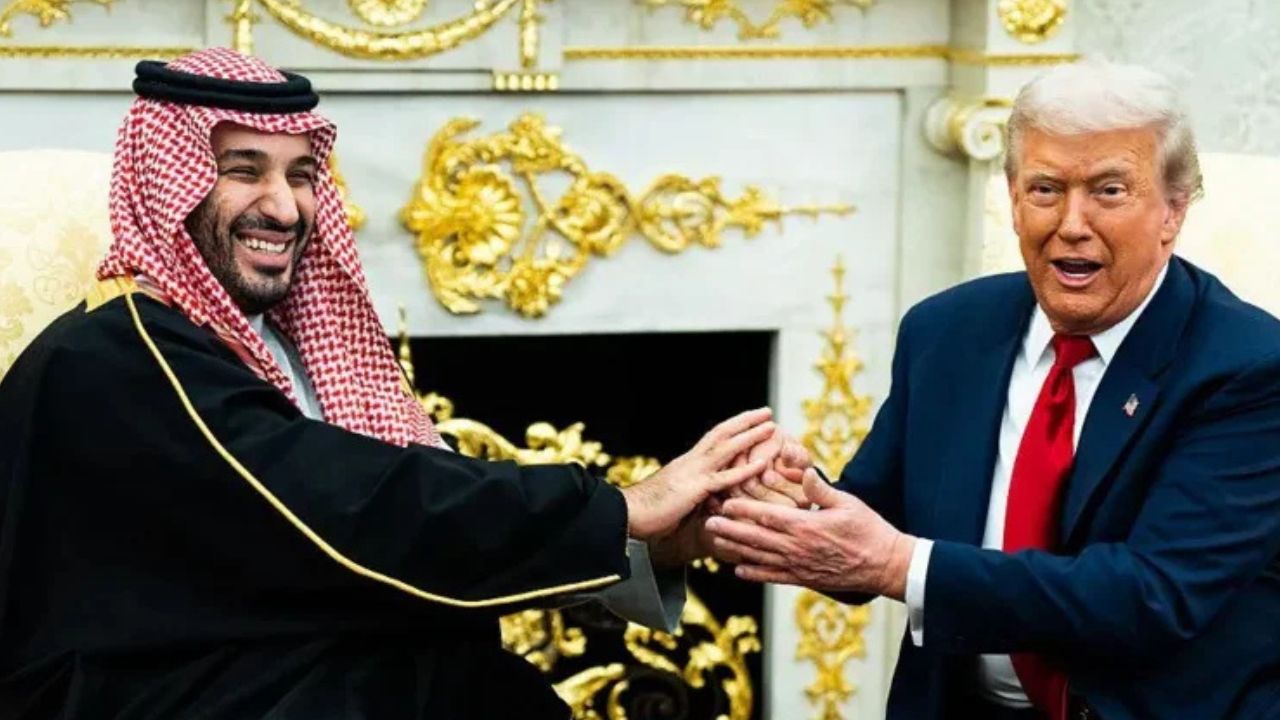
The Trump administration signed a nuclear agreement with Saudi Arabia that could lead the country to enrich its own fuel for nuclear reactors.
Mohammed bin Salman, the Saudi crown prince, has been trying to secure the deal for several years.

The agreement further strengthens US-Saudi political ties. The deal is expected to last 30 years and would exclude other countries from involvement in the kingdom’s nuclear industry.

The agreement will require review by Congress, where it is likely to receive support from many Republicans. But some US lawmakers along with Israeli officials have raised fears that the Saudis could use a civilian nuclear project to eventually develop nuclear weapons.
The US has dozens of similar agreements with governments around the world. But in order to get this deal done, American officials agreed to terms that may limit the ability for international inspectors to evaluate Saudi Arabia’s nuclear programme.
Although the full text of the deal has not been released, US media reports suggest it could permit Saudi Arabia to enrich uranium in the future, BBC reports.
Enriched uranium can serve as fuel for civilian power plants but also has potential military applications, raising concerns about nuclear proliferation in a volatile region. Analysts note that such a provision would be unprecedented for Washington.
Alongside the co‑operation pact, the Department of Energy confirmed that a “bilateral safeguards agreement” was also signed.
According to its statement, “Together, these two agreements lay the legal foundation for a decades‑long, multi‑billion‑dollar partnership that advances several priority economic and strategic objectives, including nuclear nonproliferation.”
Riyadh issued its own statement describing the deal as an extension of existing energy sector collaboration with Washington, noting that it follows the Saudi leader’s visit to the US capital last November.
The announcement comes amid escalating hostilities between the US and Iran. Saudi Arabia, a longstanding American ally that hosts multiple US bases, has seen those facilities targeted by Iranian strikes.
The deal was unveiled just two days after Yemen’s Houthi movement, aligned with Tehran, declared a “maritime blockade” against the kingdom.
While specific terms remain undisclosed, earlier reports indicated that after a joint study with Washington, Saudi Arabia may be permitted to enrich uranium domestically at a US‑built facility rather than rely on imported fuel.
Such a project could be worth billions of dollars to American firms involved in constructing and operating enrichment plants.
US Energy Secretary Chris Wright sought to reassure critics, stating: “Rest assured, these agreements uphold the highest standards of nuclear safety and nonproliferation, while relying on the world’s best nuclear technology and scientists, designed right here in the United States.”
The department added that the deal strengthens both “US and regional security” while enhancing America’s competitive edge in civil nuclear technology.
Still, nuclear experts and former Israeli officials voiced concern that the arrangement could eventually enable Saudi Arabia to develop nuclear weapons.
Many specialists argue that such a path would take decades and face strong international resistance. Rosemary Kelanic, director of the Middle East program at the US‑based Defense Priorities think tank, said it would be “quite shocking” if the agreement allows Riyadh to operate uranium enrichment facilities.


