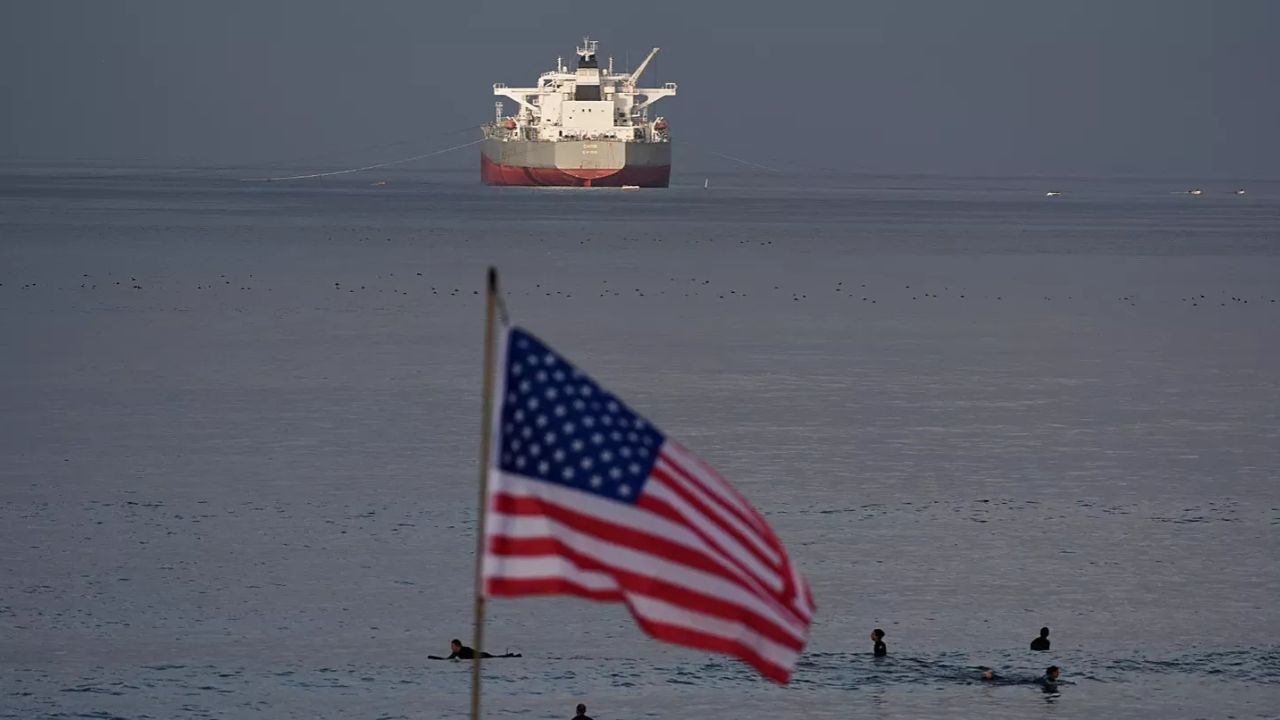

The United States has authorised countries to purchase sanctioned Russian oil and petroleum currently in transit at sea, in a bid to ease the economic fallout from the ongoing US-Israel conflict with Iran.
US Treasury Secretary Scott Bessent described the move as a temporary measure aimed at “promoting stability in global energy markets” during the conflict. The authorisation will remain in effect until 11 April, reports say.
Bessent emphasised that the measure is narrowly targeted and applies only to oil already loaded on vessels. He added it would not provide substantial financial gain to the Russian government.

Energy markets have been shaken by attacks on ships and infrastructure in the Gulf, alongside the near closure of the strategic Strait of Hormuz, through which around a fifth of the world’s oil normally passes.




Oil prices surged back above $100 a barrel on Thursday following attacks on three more cargo vessels, coupled with Iran’s new supreme leader vowing to continue blocking the strait. In Friday morning trading in Asia, Brent crude was slightly lower at $100.29 a barrel, while US-traded oil fell 0.3 percent to $95.41.
Authorities have acted swiftly to contain the crisis. On Wednesday, the International Energy Agency announced it would release a record 400 million barrels of oil. Asian governments, heavily dependent on Gulf oil, have also implemented emergency measures. The Philippines, which imports around 95 percent of its crude from the Middle East, advised public workers to adopt a four-day workweek to save fuel. Japan, South Korea and Thailand have introduced petrol price caps.
Bessent said the temporary rise in oil prices represents a short-term disruption that will ultimately benefit the US economy in the long run. He also confirmed that the US plans to begin escorting vessels through the Strait of Hormuz “as soon as it is militarily possible,” adding that military escort arrangements had always been part of planning to ensure safe passage.
The measure signals Washington’s intent to stabilise global energy markets while safeguarding the transit of goods and energy amid heightened Middle East tensions.