The old politics of muscle power and extortion, long practised by parties like the BNP and Awami League, is losing ground, particularly among the younger generation in the country’s evolving political reality, say analysts and political leaders.
They observe that parties offering fresh, pragmatic visions are gaining ground, as seen in the elections to the Dhaka University Central Students’ Union (Ducsu) and Jahangirnagar University Central Students’ Union (Jucsu).
Riding on a pro-student and positive narrative, Jamaat-e-Islami’s student wing, Islami Chhatra Shibir, secured victories in both elections despite a three-and-a-half-decade ban on its activities and a dark history, they said.
The Islamist student organisation has managed to project a positive image against the backdrop of the tarnished reputations of the two leading student fronts—the BNP’s Jatiyatabadi Chhatra Dal and the Awami League’s Bangladesh Chhatra League.
They pointed out that the approach of “tagging” others to defeat political opponents, without ideological confrontation, is no longer working. Public perception, outside of a party’s hardcore supporters, now largely aligns.

The youth of the country are seeking to move away from conventional politics. Instead, they are favouring practical and timely programmes. They want democratic practices, transparency, and a new vision from political parties, said Professor Dilara Choudhury, former chair of the Department of Governance and Politics at Jahangirnagar University.
“The tragic outcome of Chhatra Dal in the two university elections is a result of leadership crisis, drifting away from the party’s ideology, and the influence of extortion within the organisation after the fall of the Sheikh Hasina regime,” said the political analyst, pointing out that BNP chose the tactics of tagging rather than strengthening the organisation.
“The public is no longer accepting such narratives. Neither are the youth. They are seeking up-to-date programmes and ideas, which are missing within BNP’s affiliated organisations,” Choudhury told TIMES of Bangladesh.




After the fall of Sheikh Hasina’s Awami League government in a student-led movement in August 2024, the party has been sidelined from politics in Bangladesh. In this changed political scenario, Jamaat has been steadily increasing its influence by quietly positioning its supporters in administrative roles within educational institutes.
Jamaat’s strategy also includes winning the upcoming general elections and the student union polls by gaining support for Shibir. On the other hand, BNP and its affiliated organisations have been heavily involved in extortion in various sectors. Despite the expulsion of many leaders and supporters from the party, they haven’t ceased these activities.
Writer Mohiuddin Ahmad believes there was a lack of trust among the students about Chhatra Dal and whether the student organisation would be able to overcome the oppressive atmosphere in the dormitories and restore confidence among students. “Shibir has been able to get close to the students, not Chhatra Dal.”
Indicating BNP, he said the outcome of the university elections is a special cautionary signal for large political parties.
Despite the realities in the changed political battleground, BNP leaders are trying to find conspiracies behind the defeats of Chhatra Dal, a major weakness of BNP leadership, as pointed out by Dilara Choudhury.
“Coming out of the conspiracy theories and abandoning the path chosen by the ousted Awami League, BNP has to give a new vision to the nation,” she said, but doubted whether the current BNP leadership could do it.
BNP’s Standing Committee member Selima Rahman argued that Chhatra Dal faced defeat not because of BNP, but due to other factors, such as university authorities’ favouritism towards Shibir.
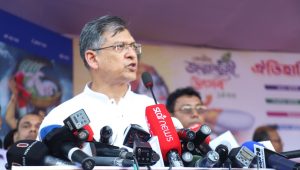
Another standing committee member, AZM Zahid Hossain, also found a deep-rooted conspiracy in Chhatra Dal’s defeats. “Chhatra Dal is being defeated as part of a conspiracy hatched against BNP,” he told a programme in the capital on Friday, indicating the interim government.
“The major political parties will face dire consequences unless they take a lesson from the university elections,” said Abdul Latif Masum, another retired professor of the Department of Governance and Politics at Jahangirnagar University.
The political analysts also emphasised practising democracy among political parties. Both BNP and AL have always talked about democracy, but neither of them practises democracy within their own parties, which the new generation doesn’t want to see anymore. In contrast, Jamaat and Shibir maintain a democratic practice, said both Dilara Choudhury and Abdul Latif Masum.