Bangladesh led the adoption of a landmark resolution on the sustainable bioeconomy at the 82nd session of the United Nations Economic and Social Commission for Asia and the Pacific (UNESCAP).
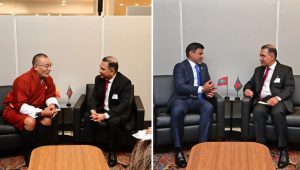
Minister for Posts, Telecommunications and Information Technology as well as Science and Technology Faqir Mahbub Anam led the delegation on behalf of Bangladesh on the final day of the UNESCAP session held in Bangkok on Friday.
This achievement has further solidified Bangladesh’s burgeoning leadership in setting regional development agendas.

The resolution, titled “Supporting the Transition Towards a Sustainable Bioeconomy in Asia and the Pacific,” was initiated by Bangladesh and adopted with the unanimous support of member states – an achievement viewed as a recognition of the country’s diplomatic prowess in the region.
This initiative was co-sponsored by several nations, including India, Thailand, Sri Lanka, Maldives, Nepal, Bhutan, China, Mongolia, Armenia, and Kazakhstan, reflecting a regional consensus towards sustainable development goals.




The resolution aligns with Bangladesh’s national priorities of achieving sustainable, innovation-led, and inclusive growth. It emphasises the circular economy, resource efficiency, and economic transformation through the application of science and technology.
Moreover, the resolution calls for bolstered regional cooperation to facilitate knowledge exchange, capacity building, and investment attraction, alongside the development of sustainable bioeconomy value chains in the Asia-Pacific region.
Addressing the session, Faqir said, “Bioeconomy is not just a new concept; it is an effective path to tackle climate challenges, increase resilience and ensure inclusive growth.”
The session also saw the adoption of the Baku-Bangkok Declaration on “Strengthening social development for inclusive societies for all ages,” which reaffirms the commitment to inclusive and sustainable social development within the region.