
Under the sweeping shadow of a giant satellite dish, researchers at the Chilbolton Observatory in southern England are monitoring an increasing number of objects orbiting Earth, providing vital data for Britain’s space surveillance efforts.
The massive antenna regularly turns towards the sky as screens inside the control room display objects detected by its radar system, including stars, satellites and discarded rocket parts, reports AFP.
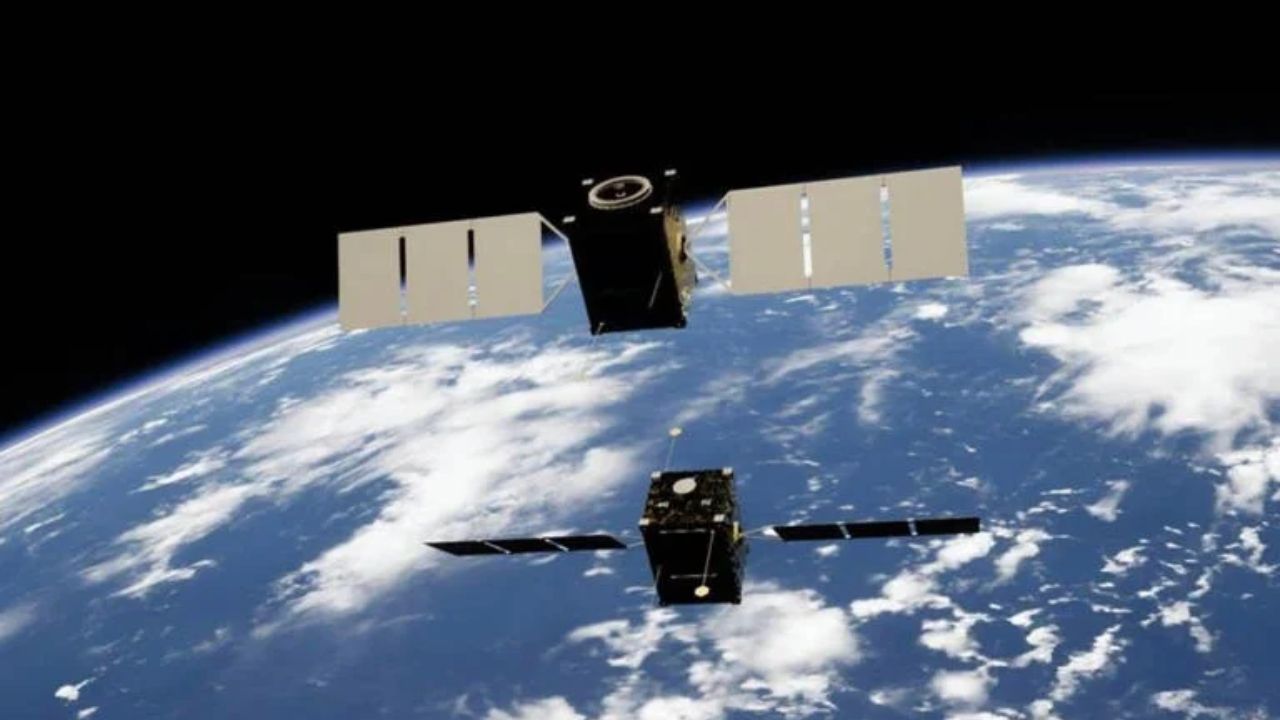
Operated by the UK’s national space laboratory RAL Space, the observatory tracks UK-licensed satellites as well as the rapidly growing amount of space debris moving through Earth’s orbit.
Space debris includes abandoned man-made objects such as old rocket bodies, inactive satellites and fragments created by launches, explosions and collisions. These objects pose risks by potentially re-entering Earth’s atmosphere or striking operational satellites.
The European Space Agency estimates that more than 46,000 pieces of debris, with a combined weight of around 17,000 tonnes, are currently orbiting Earth.
“Most of those don’t collide with anything, most of the time,” Matthew Archer, deputy director for launch and space domain awareness at the UK Space Agency, said during a visit to the observatory.
“But any of them can cause significant damage or even destroy potential satellites.”

The warning comes after part of a SpaceX rocket, roughly the size of a bus, crashed into the Moon on Wednesday, sending debris across the lunar surface. Scientists have warned that increasing congestion in space could lead to a chain reaction of collisions known as the “Kessler syndrome”.
Monitoring a crowded orbit
Chilbolton Observatory supplies data to the National Space Operations Centre (NSpOC), jointly led by the UK Space Agency and UK Space Command. The centre operates around the clock to prevent satellite collisions and monitor debris re-entering Earth’s atmosphere.
“Our role is to look at everything that happens and is in space,” Archer said.



Space infrastructure supports around 20 per cent of the UK economy, Archer said, adding that the growing “number of objects is making space far more congested, so the need for this capability is growing all the time.”
During the visit, multiple Starlink satellites, part of the thousands-strong internet satellite network launched by US billionaire Elon Musk’s SpaceX, appeared on the observatory’s monitoring screens.
Around 14,000 satellites are currently orbiting Earth, while plans are in place for approximately 1.7 million more satellites in the coming years. SpaceX alone has announced plans to begin launching more than one million satellites from 2028.
The UK government has pledged £85 million ($114 million) to the NSpOC, which sends around 3,000 collision warnings each month to satellite operators.
Researchers at the centre also monitor whether satellite operators follow licensing requirements and track the activities of foreign “adversaries”.
“We see examples of countries that have demonstrated the ability to get close or to fly by certain objects,” Archer said. “We do have to track … threats regularly from a military perspective.”
Scientists also remain prepared to issue warnings when space debris falls back to Earth, particularly for objects that may survive atmospheric re-entry.
In January, Britain and other European countries closely monitored the return of a Chinese rocket, amid concerns that fragments could fall on British territory. The rocket eventually landed in the Pacific Ocean.
Tracking asteroids and planetary threats
Researchers at Chilbolton are also involved in planetary defence efforts, including identifying potential threats from asteroids and comets.
The UK Space Agency joined the International Asteroid Warning Network (IAWN) last year, becoming part of global efforts to track asteroids, including those that could potentially impact Earth.
“We work in partnership with NASA and others in the US to effectively give a percentage chance that (it) might hit the Earth and when that might happen,” Archer said.
While smaller space rocks often burn up after entering Earth’s atmosphere, larger objects such as asteroids pose a more serious but less frequent threat.
The UK will support the European Space Agency’s 2029 mission to study Apophis, a 375-metre (1,230 feet) wide asteroid that will pass close to Earth.
“Asteroids are a really interesting challenge in many ways. It’s unusual for an asteroid to come out of nowhere,” Nash explained.
Large asteroids are usually monitored through optical sensors because they are too distant for Chilbolton’s radar system to detect.
“If they’re close enough for the (radar) antenna to see them, then we have bigger problems,” station manager Graham Marshall said with a laugh.