US President Donald Trump left Beijing on Friday claiming he had secured “fantastic trade deals” after talks with Chinese President Xi Jinping, although the two-day summit produced few concrete agreements despite extensive symbolism and warm rhetoric.
Trump described US-China ties as “the world’s most consequential economic relationship” after arriving in China with a high-profile business delegation representing agriculture, aviation, electric vehicles and artificial intelligence (AI) chips, reports BBC.
The summit featured elaborate ceremonies and optimistic language, but ended without a major trade pact or structural economic agreement.
After the talks, Trump called the visit “very successful”, while Xi described it as “historic and landmark”.
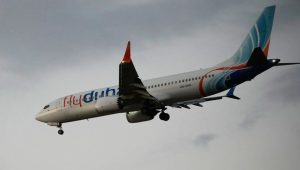
In an interview with Fox News, Trump said China had agreed to buy 200 Boeing aircraft, marking its first purchase of US-made commercial jets in nearly a decade, although the number fell short of analyst expectations.
Beijing did not confirm the claim.
Chinese foreign ministry spokesperson Guo Jiakun said the “essence of China-US economic and trade relations is mutual benefit and win-win co-operation”.
He urged both countries to implement the “important consensus” reached by the leaders to bring greater stability to trade ties and the global economy.

Questions also remain over the trade truce agreed in October, under which Washington suspended steep tariffs on Chinese goods while Beijing eased restrictions on rare earth exports.
US Trade Representative Jamieson Greer said it remained undecided whether the truce would be extended beyond November.
The White House said both leaders agreed to establish a “Board of Trade” to manage bilateral relations without reopening tariff negotiations.
US Treasury Secretary Scott Bessent said talks also included discussions on a mechanism to support future investment, although US officials acknowledged significant work remained before such frameworks could become operational.
The visit highlighted the growing role of technology in US-China relations.
Tesla chief Elon Musk and Nvidia CEO Jensen Huang joined Trump’s delegation and drew attention during the welcome ceremony in Beijing.


Tesla remains heavily dependent on its Shanghai gigafactory and Chinese consumers, while Nvidia sits at the centre of the AI and semiconductor race affected by US export restrictions.
Huang’s attendance fuelled speculation that AI and chip access featured prominently in private discussions, although no formal agreement emerged.
Trump later said “China is going to invest hundreds of billions of dollars with those people”, without providing details.
Agricultural trade also featured in discussions.
US farmers have been seeking greater Chinese access for soybeans, beef and poultry.
Greer said agreements on Chinese purchases of farm products and beef had been strengthened.
However, China’s foreign ministry stopped short of confirming new agricultural deals, saying only that both sides had agreed to expand co-operation based on “equality, mutual respect and mutual benefit”.
According to Chinese state media Xinhua, Xi told US business leaders that China’s “doors will open wider” and American firms would enjoy “broader prospects” in the Chinese market.
He also called for wider co-operation in trade, agriculture, healthcare, tourism and law enforcement.
Taiwan emerged as one of the most sensitive topics during the summit.
Chinese state media quoted Xi as warning that “The Taiwan question is the most important issue in China-US relations.”
“If mishandled, the two nations could collide or even come into conflict,” he said.
Technology restrictions remained another unresolved issue.
US export controls on advanced semiconductors and chipmaking equipment remain in place, while Beijing continues pressing for greater access to advanced technologies.
Although AI was expected to dominate discussions, it was largely absent from official summit statements.
Bessent said both sides discussed AI guardrails and stressed the importance of maintaining US leadership in the sector.
“What we don’t want to do is stifle innovation. So our responsibility is to come up with the highest performance calculus where we can get the most innovation and the highest level of safety,” he said.
Trump also sought Chinese support regarding the Iran conflict and stability in the Strait of Hormuz.
China later called for “a comprehensive and lasting ceasefire” and urged shipping lanes to reopen quickly.
At a state banquet on Thursday evening, Trump invited Xi to visit the White House on 24 September.
Further negotiations are expected before that meeting as both countries continue efforts to reach a broader trade breakthrough that remained elusive in Beijing.