Bangladesh’s politics has long been synonymous with confrontation, polarisation, and a chronic absence of consensus. The national stage has repeatedly turned into a battleground where compromise is rare, and conflict is routine.
For decades, political activity has spilled from parliament to the streets, where protests, strikes, and counter-programmes dominate the culture.
But in recent weeks, this toxic and often petty brand of politics has leapt beyond Bangladesh’s borders, staining the country’s global reputation. What was once dismissed as domestic political theatrics is now playing out on international soil, embarrassing the nation at a time when world leaders are watching.
Earlier this month in London, supporters of Awami League (AL)—ousted in the 2024 mass uprising—pelted eggs at the car of information adviser Mahfuj Alam. The incident sparked outrage, raising questions about whether Bangladesh’s political brawls were becoming an international nuisance.
If London was troubling, what followed in New York was unprecedented. Several hundred AL leaders and activists gathered at John F Kennedy International Airport, unleashing derogatory slogans and insults at rival BNP and National Citizen Party (NCP) leaders. The episode reached a low point when an egg was hurled at NCP leader Akter Hossain.
The timing could not have been worse. As heads of state and dignitaries from across the world converged on New York for the UN General Assembly, Bangladesh was making headlines—not for diplomacy or progress, but for the crude behaviour of its politicians and their supporters.

A pattern of indecency
Egg-throwing is not entirely new in Bangladeshi politics. Eggs have been hurled at political figures across the spectrum. After the fall of Sheikh Hasina, some of her loyalists faced similar treatment inside the country, with eggs and even physical assault marking the vengeance of opponents.
But the export of this unruly culture to global venues like London and New York underscores how deeply ingrained and shameless such tactics have become. Politicians and their followers appear to care little about decency, discipline, or the damage to their homeland’s image.



Inside Bangladesh, rival parties have long fought bitterly, often engaging in street battles that resemble open warfare rather than democratic contestation. Leaders focus less on policy or governance and more on annihilating their rivals, refusing to cede space, share credit, or accept legitimate opposition. The habit of reducing politics to a zero-sum game has created an environment where rules mean little, civility is absent, and confrontation is the default mode.
The global fallout
By carrying these antics abroad, Bangladesh’s political class has ensured that the country is noticed internationally for the wrong reasons. Instead of projecting a picture of a resilient democracy healing from years of authoritarianism, the world now sees images of airport mobs, egg-throwing, and crude insults.
Such spectacles undermine Bangladesh’s credibility at a crucial moment. With a fragile interim administration at home and urgent economic challenges ahead, the country needs goodwill, investment, and global partnerships. Instead, it risks being branded as a land where politics is indistinguishable from street brawling, even on foreign soil.
The culture of intolerance
Underlying these incidents is a deeper malaise: a political culture built on intolerance. Bangladeshi politicians—whether from the ruling camp or the opposition—are notoriously impatient. Their speeches are often laced with venom, their rhetoric designed to inflame rather than inspire.
Leaders openly encourage supporters to “teach rivals a lesson,” turning political competition into a cycle of hatred and violence. This tendency has reached alarming levels in recent times.
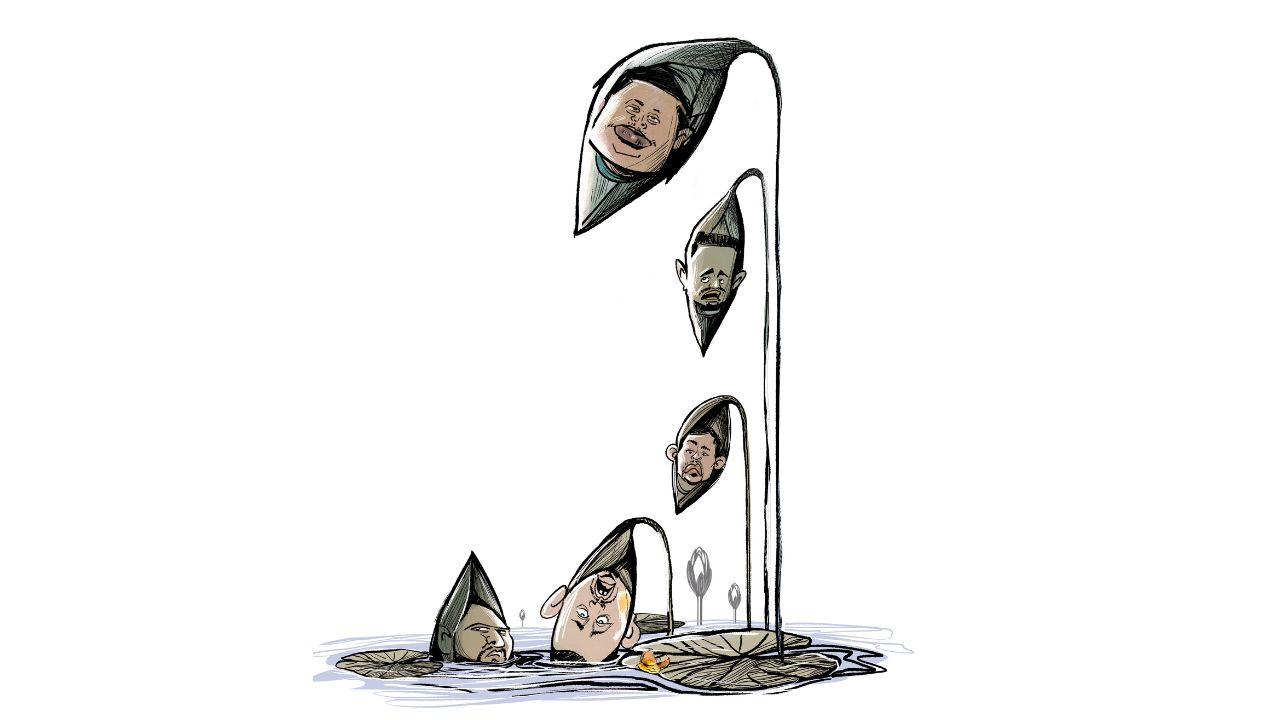
Eggs may seem trivial, but they symbolise something larger. They embody a politics where humiliating opponents takes precedence over solving national problems. They reveal a mindset in which spectacle matters more than substance, and where victory is measured not by governance or vision, but by how effectively one can insult, intimidate, or silence the other side.
A dangerous descent
The New York airport incident has set a dangerous precedent. If leaders and activists continue exporting their domestic rivalries abroad, Bangladesh risks becoming a global laughing stock.
The episode has also exposed the bankruptcy of political imagination. When parties have nothing constructive to offer, when policy debates give way to pettiness, throwing eggs becomes the symbol of a politics that has run out of ideas.
Bangladesh’s politics, once defined by the struggle for independence and democracy, is now remembered for egg-throwing, street fights, and insults. It is a descent that tarnishes not only its politicians but the nation they claim to serve.
Until leaders rediscover civility and the discipline of democratic compromise, Bangladesh will continue to pay the price for its silly, confrontational politics – at home and abroad.