A Dhaka court on Tuesday has fixed 30 September for the hearing on charge framing in a sedition case filed against former prime minister Sheikh Hasina and 285 others.
Dhaka’s Third Additional Metropolitan Sessions Judge Moin Uddin Chowdhury set the new date after hearing arguments on framing charges in the case.
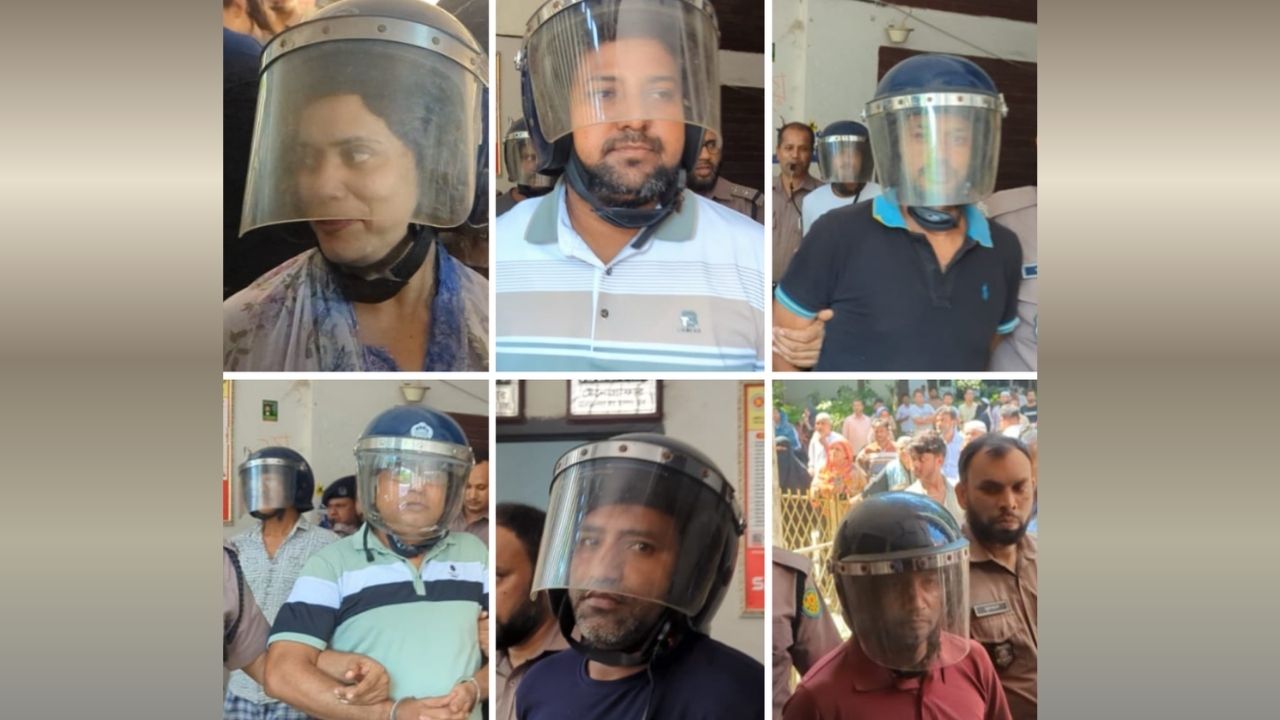
Twenty-four accused currently in jail, including 20 men and four women, were produced before the court during the hearing.
They were placed in the dock as the court began hearing arguments on charge framing.

Several defence lawyers sought more time to represent their clients, and the court granted the petitions before scheduling the next hearing date.
The case was filed on 27 March last year by CID Assistant Superintendent of Police Md Enamul Haque against Sheikh Hasina and 72 others on charges of sedition.
Following an investigation, the CID submitted a chargesheet on 30 July, naming 286 people, including the former prime minister, as accused.




The court accepted the chargesheet on 14 August and issued arrest warrants against the accused.
Later, on 11 September, the court imposed a travel ban on the accused.
On 14 October, it ordered newspaper notices asking 256 absconding accused to appear before the court.
As the case became ready for trial, it was transferred from the Chief Metropolitan Magistrate’s Court to the Metropolitan Sessions Judge’s Court on 11 November.
The charge framing hearing was first partially held at Dhaka Special Judge Court-9 on 21 January.
Later, the case was transferred to the Third Additional Metropolitan Sessions Judge’s Court for expedited proceedings.
According to the case statement, Sheikh Hasina and several hundred Awami League leaders and activists allegedly joined a Zoom meeting of the “Joy Bangla Brigade” on 19 December, 2024, organised by Rabbi Alam, vice-president of the US Awami League.
The complaint alleged that Sheikh Hasina made anti-state remarks during the meeting and called on party supporters to remove the interim government led by Chief Adviser Muhammad Yunus. The statements were later circulated on social media, according to the case documents.
—