
For six unrelenting weeks, the planet organised itself around football. The 2026 FIFA World Cup — the first ever staged across three nations, the United States, Mexico, and Canada — was also the biggest in history: 48 teams and a record 104 matches, a sprawling footprint that turned entire continents into one enormous, sleep-deprived viewing party.
When the trophy was finally lifted in New Jersey, it closed out what may be remembered as football’s most maximalist, most complicated chapter yet.
The old guard refused to fade
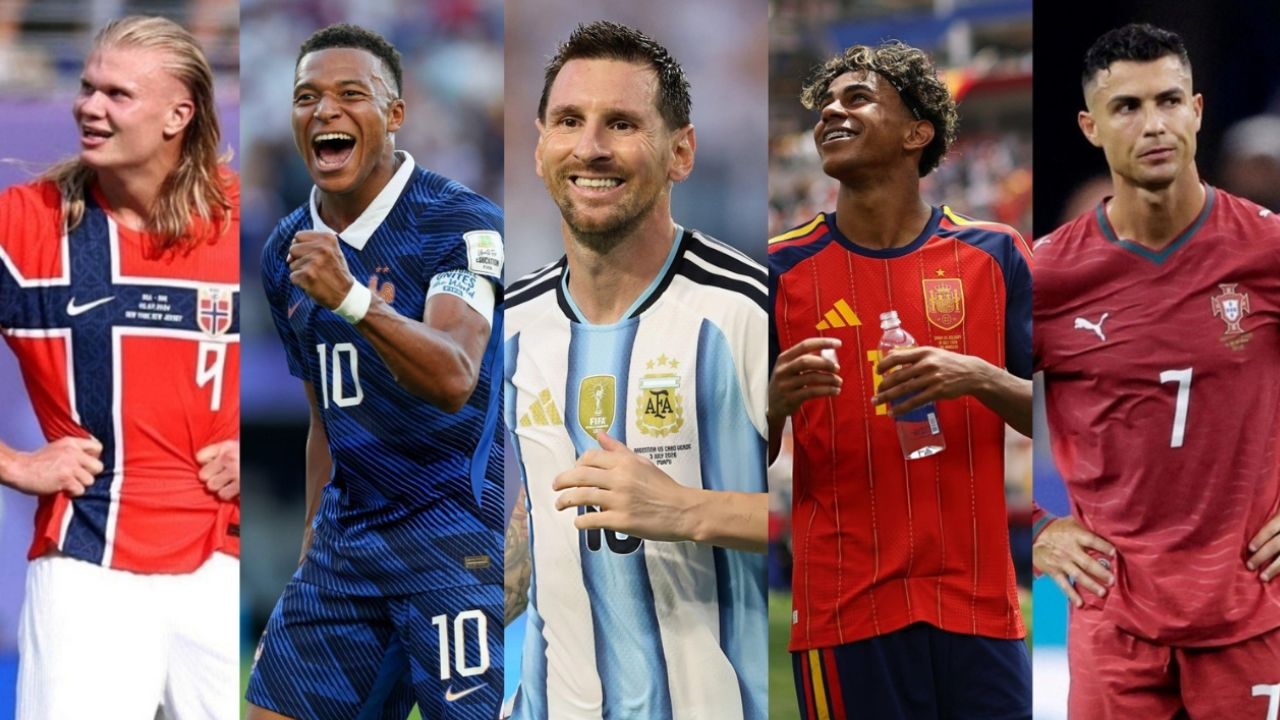
Before the tournament even reached its business end, the group stage alone felt like a highlight reel. Lionel Messi, 39 years old and still conducting matches like a maestro half his age, gave Argentina’s title defence its heartbeat from the very first whistle.
Cristiano Ronaldo produced moments of vintage brilliance even as Portugal’s run eventually ended. Erling Haaland and Harry Kane bullied defences with ruthless efficiency, Kylian Mbappé finished the tournament with a record 22 career World Cup goals.
The bigger bracket also had room for fairy tales. Cape Verde, a nation of fewer than 600,000 people, held Spain to a draw, reached the round of 32, and pushed reigning champions Argentina to extra time before finally falling 3-2 in one of the tournament’s most talked-about matches — with 40-year-old goalkeeper Vozinha becoming an unlikely global star along the way.

Curaçao, a nation of roughly 150,000, kept its knockout hopes alive until its final group game. FIFA’s gamble on a bigger, riskier format paid off in romance, even if it was ultimately the usual heavyweights — Argentina, Spain, France, and England — who filled the semifinal slots.
A world that needed something to agree on
Away from the pitch, the tournament did what football has always done best: it gave a fractured, anxious world a shared appointment. In a moment defined by wars, trade disputes, and diplomatic standoffs, strangers in Dhaka, Lagos, Jakarta, and Buenos Aires found themselves united by nothing more complicated than a ball rolling toward a goal.
Nowhere was that fever more visible than in Bangladesh, a country with no team on the pitch but arguably the most passionate fandom in Asia. Streets turned into open-air stadiums, rooftops bloomed with Argentine sky-blue and Brazilian yellow-green flags, and entire neighbourhoods negotiated a six-week truce with sleep.
A festival stitched entirely out of borrowed loyalty to teams thousands of miles away.


The shadow side of the spectacle
Yet the tournament’s scale also amplified its flaws. Contentious calls piled up through the knockout rounds. Egypt’s coach Hossam Hassan was left furious after a disallowed goal helped Argentina complete a stunning comeback in the round of 16, while Croatia’s Zlatko Dalić — who has since stepped down as coach — complained that the technology was draining the joy from the game after the smart ball ruled out a late equalizer against Portugal by the narrowest of margins.
Even FIFA’s refereeing chief, Pierluigi Collina, found himself repeatedly defending decisions that technology could clarify but not fully settle, since a human being still has to interpret what the replay shows.
FIFA’s other big experiment, mandatory mid-half hydration breaks, fared little better with the football world. Introduced to protect players from summer heat regardless of actual conditions, the breaks were jeered by fans in stadiums, mocked by former players as glorified American-style timeouts.
England’s FA has already signalled the breaks are unlikely to survive to the 2028 European Championship.
Politics on the pitch
No World Cup exists in a bubble, and this one was shadowed by real-world tension from start to finish. Iran’s participation was thrown into doubt by the war in the Middle East, forcing the team to relocate its training base from Arizona to Mexico after visa troubles for several delegation members and travel restrictions requiring the squad to leave the U.S. immediately after each match.
When Iran was eliminated in the group stage, a senior U.S. official’s blunt relief at their exit only underlined how far politics had bled into sport.
Even the host nation’s own team wasn’t immune to questions of political interference. Ahead of the US’s round of 16 clash with Belgium, striker Folarin Balogun’s one-game suspension was controversially lifted after President Trump said he had personally called FIFA president Gianni Infantino to request a review — a claim FIFA disputed, insisting its disciplinary process remained independent.
The US lost 4-1 to Belgium anyway, but the episode left lingering questions about how much influence sits behind football’s supposedly neutral machinery.
When passion turns dangerous
The most sobering thread of this World Cup, though, ran through Bangladesh itself. At least a dozen people lost their lives in incidents connected to the tournament – some electrocuted while hoisting flags from rooftops, others stabbed in disputes between rival supporters, one killed in a motorcycle accident rushing to watch a match.
Tragedies that researchers have linked to a broader, troubling pattern: fans investing so much identity in teams they will never meet that a loss abroad becomes a private catastrophe at home. It echoed a similarly grim toll from 2022, a reminder that football’s power to unite can, in its most extreme form, curdle into something that consumes rather than connects.
A festival worth celebrating, carefully
The 2026 World Cup leaves behind a strange, layered legacy: record crowds and record joy, brilliant football from old greats and rising stars, a fractured world briefly finding common ground — and a body count that no trophy can justify.
As the confetti settles and the streets of Dhaka finally go quiet at night again, the lesson is not to love the game less, but to hold it a little more carefully. Football, at its best, brings people together. It should never cost anyone their life to feel that closeness.