
As global banking pivots to data-driven decisioning, Bangladesh’s lenders must reconcile traditional caution with intelligent underwriting — not merely to cut costs, but to widen the door to credit for those the balance sheet has long left out.
For decades, credit in Bangladesh has been underwritten on paper. The borrower’s journey — collecting documents, verifying them by hand, then routing the file through layers of review — is slow, costly and, above all, conservative.
It rewards those who already look creditworthy on a balance sheet and quietly turns away everyone else. For a country where the informal economy is vast and formal credit histories are thin, that is a structural problem, not merely an operational one.
The question facing our banks and non-bank financial institutions is no longer whether artificial intelligence (AI) has a role in lending. It is whether we can afford the cost of ignoring it while the rest of the world moves on.
From static checks to a living picture of risk
Traditional underwriting looks backward. It leans on the credit score, the salary certificate, the length of a banking relationship — a static snapshot of where a borrower stood at a moment in the past. AI-powered underwriting, by contrast, assembles a living, 360-degree view: transaction behaviour, spending patterns, digital footprints and alternative data such as utility payments, mobile wallet activity and even e-commerce history.
This is not about replacing prudence with novelty. It is about seeing more of the borrower than a ledger allows. A model that can weigh thousands of variables at once can distinguish a genuinely risky applicant from one who is simply invisible to the traditional system — the difference between caution and blindness.

Why this matters more here than almost anywhere
For Bangladesh, the most compelling case for AI in lending is not efficiency. It is inclusion.
Our formal credit system has never served the “thin-file” borrower well — the first-time salaried worker, the gig earner, the rural entrepreneur and, above all, the micro, small and medium-sized enterprises that drive employment and output yet sit outside the reach of conventional scoring. The MSME financing gap runs into billions of taka, and much of it exists not because these borrowers are uncreditworthy, but because we have lacked the tools to assess them affordably.
Here, Bangladesh holds an unusual advantage. Tens of millions of people transact daily through mobile financial services such as bKash and Nagad. Agent banking has pushed formal touchpoints deep into rural areas. Bangladesh Bank’s e-KYC framework has already opened the door to digital onboarding, and the Credit Information Bureau gives lenders a shared spine of repayment data.




A further step would compound these gains: if Bangladesh Bank standardised the format and terminology of bank statements, and allowed a customer’s statements to be retrieved securely through an application programming interface (API) — with the customer’s consent — from any bank, credit risk management would take another leap forward.
Together, these are exactly the kind of signals AI models turn into credit insight. The raw material for smarter, fairer underwriting is already flowing through our system — we have simply not been using it.
Consider a typical lending journey: document collection, customer verification, credit assessment, risk evaluation and, finally, approval and disbursement. Traditionally, each stage means separate hand-offs, manual reviews and long turnaround times.
AI collapses that friction across the lifecycle. It can verify identity documents and flag forgeries in seconds, compressing onboarding from days to minutes. It can automate data extraction and eligibility checks so that underwriters spend their time on judgement, not clerical work. It can price risk dynamically using alternative data sources, monitor portfolios for early warning signals and detect synthetic identities and income manipulation before a single taka is disbursed — no small consideration in a sector that has long wrestled with classified loans and application fraud.
The result is faster processing, sharper fraud detection and a markedly better experience for the borrower.
The mindset shift matters more than the software
It would be a mistake to treat this as a technology purchase. The harder change is cultural — a shift in how the underwriter sees the job.
The most successful lenders are not replacing human judgement with AI; they are pairing it with human oversight. The future underwriter is not made redundant — the role is elevated.
AI becomes a co-pilot that handles the mechanical work and surfaces patterns no human could hold in mind at once, while the credit professional brings context, sector knowledge and the judgement to interpret what the model cannot. The best outcomes will come not from automation alone, nor from human intuition alone, but from the two working together — faster, smarter and more responsible decisions than either could reach on its own.
That balance has to be built deliberately. Several realities demand attention:
- Data quality and governance: A model is only as sound as the data beneath it. Banks must invest in clean data infrastructure and clear governance before they trust an algorithm with a credit decision.
- Explainability and fair lending: An underwriting model that cannot explain why it declined an applicant is a regulatory and reputational liability. As decisions are automated, we must guard against models that quietly encode bias by gender, geography or occupation.
- Cybersecurity and fraud: The same intelligence that detects fraud can be turned against the lender. Stronger digital lending controls must advance in step with AI adoption.
- Regulatory readiness: Bangladesh Bank and the wider ecosystem will need clear expectations on ethical AI, model risk and consumer protection — and the country’s emerging data protection regime will shape what data lenders may use and how.
- Human oversight: For any material decision, a human must remain accountable. Automation should widen access to credit, not remove responsibility for it.
The road ahead
The winning formula is not AI for its own sake. The future of lending will belong to the institutions that strike the right balance between automation, risk management, governance and customer trust. Master that combination and you will not simply approve loans faster; you will lend to people and businesses that were previously unreachable while managing risk more intelligently than manual processes ever allowed.
For that, our sector must invest as much in people as in platforms — in data literacy, risk thinking, AI awareness and adaptability among a generation of banking professionals who will supervise these systems.
The goal was never to approve loans faster for its own sake. In my view, AI’s greatest impact in lending is not just quicker approvals — it is enabling lenders to make better decisions at scale while maintaining strong risk controls. It is a chance to enable opportunity while managing risk responsibly, and to look, at last, beyond the balance sheet.
The future of underwriting is intelligent and inclusive. For Bangladesh, that future is not a distant prospect. It starts now.
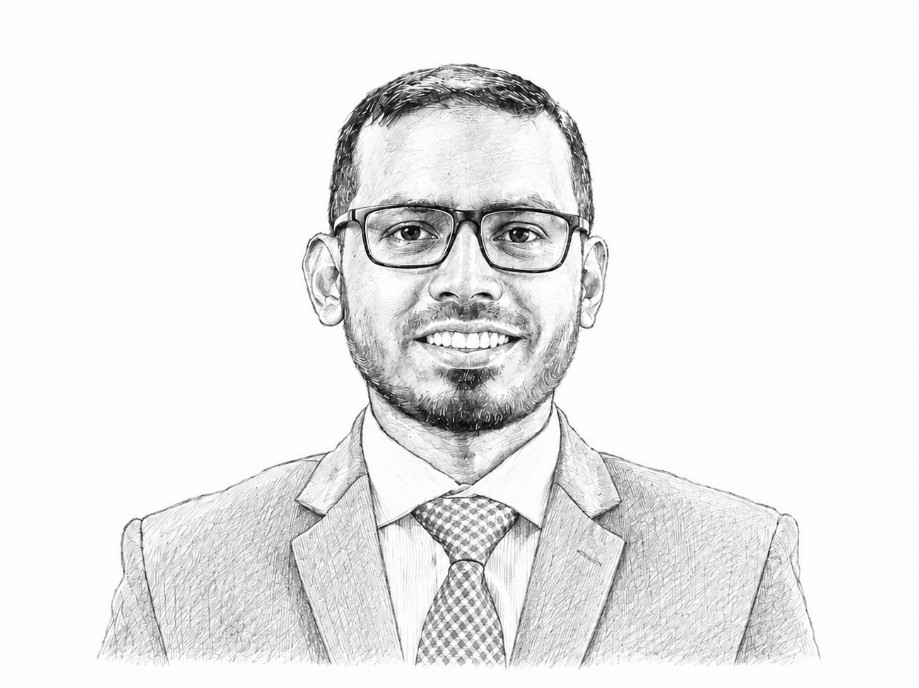
The author is an assistant general manager for credit risk management at IDLC Finance PLC with more than 17 years of experience in corporate and SME lending. Views expressed in the article are solely those of the author.